
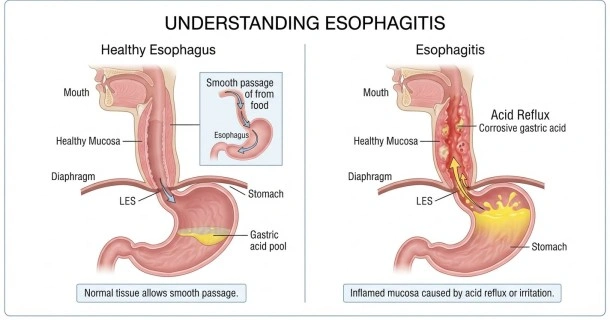
Learn what esophagitis is, including how esophagus inflammation develops, its primary types (like reflux and corrosive), and the risks of leaving it untreated.
Esophagitis: Definition, Types, and Complications
The esophagus is the muscular tube that connects your mouth to your stomach, responsible for safely moving food and liquids downward while preventing the backflow of gastric contents. When the inner lining of this tube—known as the esophageal mucosa—becomes inflamed or irritated, the condition is called esophagitis.
Left untreated, chronic inflammation of the esophagus can lead to severe medical complications. These include painful or difficult swallowing (dysphagia), esophageal ulcers, permanent scarring (strictures), and Barrett’s esophagus, which is a known precursor to esophageal cancer.
How common is esophagitis?
Chronic acid reflux (GERD) is a common cause of esophagitis. Other types of esophagitis are relatively rare. Esophageal infections are uncommon, except in people who have compromised immune systems.
What are the different types of esophagitis?
Esophagitis is the inflammation or irritation of the lining of the esophagus, the muscular tube that delivers food from your mouth to your stomach. It is classified into several distinct types based on the underlying cause.
The primary types of esophagitis include:
1. Reflux Esophagitis
- Cause: The most common form, typically caused by Gastroesophageal Reflux Disease (GERD). It happens when the lower esophageal sphincter weakens, allowing harsh stomach acid and digestive fluids to repeatedly flow back up into the esophagus.
- Impact: The constant acid exposure burns and irritates the tissue, which can progress to erosive esophagitis (open sores or ulcers). Long-term untreated reflux can lead to a precancerous condition called Barrett's esophagus.
2. Eosinophilic Esophagitis (EoE)
- Cause: A chronic immune system and allergic response. It occurs when an abundance of eosinophils (a specific type of white blood cell) accumulates in the esophageal lining.
- Impact: Commonly triggered by food allergies (such as dairy, wheat, soy, or nuts) or environmental allergens (like pollen). It causes swelling, tissue scarring, and a tight throat, frequently causing food to get stuck while swallowing.
3. Drug-Induced Esophagitis (Pill Esophagitis)
- Cause: Direct irritation or chemical burns from oral medications. This happens if a pill lingers or gets stuck in the esophagus, often because it was swallowed without enough water or taken right before lying down.
- Impact: Common culprits include nonsteroidal anti-inflammatory drugs (NSAIDs like aspirin or ibuprofen), certain antibiotics (tetracycline, doxycycline), potassium chloride, and osteoporosis medications (bisphosphonates).
4. Infectious Esophagitis
- Cause: A biological infection caused by fungi, viruses, or bacteria. While rare in healthy individuals, it is highly prevalent in people with weakened immune systems (such as those undergoing chemotherapy or living with HIV/AIDS).
- Impact: The most frequent cause is Candida albicans (a fungal yeast infection). Viral causes include the Herpes Simplex Virus (HSV) and Cytomegalovirus (CMV).
Less Common Types
- Radiation Esophagitis: Caused by radiation therapy directed at the chest or neck area during cancer treatment, which damages the highly sensitive mucosal lining.
- Caustic (Corrosive) Esophagitis: Results from the accidental or intentional ingestion of corrosive chemicals, such as strong household cleaners, bleach, lye, or disc batteries.
- Systemic Illness Esophagitis: Triggered by broader autoimmune or skin conditions (such as pemphigus vulgaris or Crohn's disease) that cause inflammation across multiple organs.
Are you asking out of general curiosity, or are you experiencing specific symptoms (like painful swallowing or severe heartburn) that you would like to discuss?
Potential Complications of Untreated Esophagitis
If the lining of your food pipe remains inflamed over a long period, it can cause structural shifts and severe health risks:
- Esophageal Stricture: Chronic inflammation leads to scar tissue, which narrows the food pipe. This causes severe swallowing difficulties (dysphagia) and can result in food getting completely stuck, requiring emergency medical removal.
- Esophageal Ulcers: The acid or infection can wear away the lining, creating painful open sores that may bleed. Over time, this can lead to anemia, or in rare cases, a life-threatening tear (perforation) in the esophagus.
- Barrett’s Esophagus: In response to long-term acid damage, the cells lining the esophagus mutate to resemble intestinal tissue. While not cancer itself, Barrett's esophagus significantly increases the risk of developing esophageal cancer.
Frequently Asked Questions (FAQs)
What is the main cause of esophagitis?
The most common cause of esophagitis is Gastroesophageal Reflux Disease (GERD), where stomach acid frequently flows backward into the esophagus and irritates the mucosal lining.
Can esophagitis go away on its own?
Mild esophagitis caused by temporary diet choices or a specific medication might resolve if the trigger is removed. However, chronic esophagitis requires medical diagnosis and treatment to manage the root cause and prevent permanent tissue damage.
What happens if esophagitis is left untreated?
Untreated esophagitis can lead to severe complications, including deep tissue ulcers, painful swallowing, narrowing of the esophagus due to scar tissue (strictures), and Barrett’s esophagus, which increases the risk of esophageal cancer.