
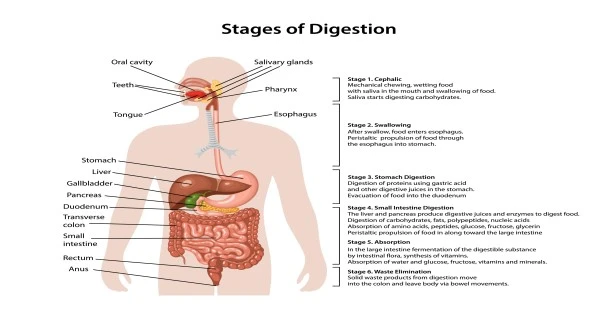
Discover how the human digestive system functions. Learn the stages of digestion, from the cephalic phase to nutrient absorption and waste elimination.
Human Digestive System: Function, Stages, and Process
The primary function of the human digestive system is to break down complex food molecules into smaller, absorbable nutrients. These nutrients enter the bloodstream to provide the body with energy, support cellular growth, and facilitate tissue repair.
The human digestive tract (or gastrointestinal tract) is a continuous, hollow muscular tube extending from the mouth to the anus, spanning approximately 9 meters (30 feet) in length in a healthy adult. The entire digestion process typically takes between 24 to 72 hours. However, this timeline varies significantly based on individual metabolic rates, the composition of the meal, and overall hydration levels.
The Four Major Stages of Digestion
The digestive system converts food into energy through a highly coordinated, sequential process divided into four fundamental stages:
- Ingestion: The act of taking food or liquid into the mouth, where the mechanical breakdown begins.
- Digestion: The multi-step breakdown of large food particles into microscopic molecules. This occurs through mechanical actions (chewing and churning) and chemical actions (digestive enzymes and stomach acid).
- Absorption: The physiological transport of digested nutrients, vitamins, minerals, and water across the intestinal lining into the bloodstream or lymphatic system.
- Elimination (Defecation): The final stage where the body compacts and expels undigested food residues, waste products, and dead bacteria through the anus.
Understanding the Digestion Process: Step-by-Step
1. The Cephalic Phase (Sight and Smell)
Many people assume digestion begins when food physically enters the mouth. However, the process actually triggers within the central nervous system before the first bite.
When you see, smell, or even think about an appetizing meal, your brain sends signals via the parasympathetic nervous system (specifically the vagus nerve) to activate the salivary glands and gastric lining. This initiates salivation and prompts the stomach to secrete anticipatory digestive juices.
2. The Oral Cavity (Mouth)
Once food is ingested, mechanical digestion begins through mastication (chewing). Teeth grind food down to increase its surface area.
- Simultaneously, saliva moistens the food to form a soft mass called a bolus.
- Saliva also introduces the enzyme salivary amylase, which initiates the chemical digestion of complex carbohydrates into simpler sugars. The tongue then pushes the bolus into the pharynx to initiate swallowing.
3. The Esophagus and Stomach
The bolus travels down the esophagus through peristalsis—a series of coordinated, wave-like muscular contractions. It passes through the lower esophageal sphincter to enter the stomach.
- In the stomach, food is vigorously churned and mixed with highly acidic gastric juices (composed of hydrochloric acid and the protein-digesting enzyme pepsin).
- This harsh environment breaks down proteins and turns the solid food mass into a semi-liquid mixture called chyme.
4. The Small Intestine (Absorption Hub)
Chyme enters the small intestine, where the vast majority of all chemical digestion and nutrient absorption occurs. Here, the digestive tract coordinates with accessory organs to complete the molecular breakdown:
- The Pancreas: Secretes pancreatic juice containing enzymes (amylase, lipase, and proteases) to break down carbohydrates, fats, and proteins.
- The Liver & Gallbladder: The liver produces bile, which is stored in the gallbladder and released into the small intestine to emulsify fats, making them easier for enzymes to process.
Once broken down, individual nutrients move across the specialized lining of the small intestine—heavily folded into finger-like projections called villi—directly into the bloodstream.
5. The Large Intestine (Final Processing)
What remains at the end of the small intestine is primarily water, electrolytes, and indigestible dietary fiber. The large intestine processes this remaining matter by reabsorbing water and essential salts, turning liquid waste into solid feces. Trillions of beneficial gut bacteria also ferment the remaining fiber, producing critical vitamins (such as Vitamin K and B vitamins) that the body absorbs.
Frequently Asked Questions (FAQ)
What is the main function of the digestive system?
The primary function of the digestive system is to turn food into energy and microscopic nutrients that the body needs to survive. It achieves this by mechanically and chemically breaking down food, absorbing those nutrients into the bloodstream, and excreting the remaining undigested waste.
Where does the digestion process actually start?
The chemical and physiological preparation for digestion begins in the brain during the cephalic phase. The mere sight, smell, or thought of food triggers the nervous system to stimulate salivation and prime the stomach for digestion before food ever reaches your mouth.
How long does it take for food to digest fully?
In a healthy adult, the complete journey of food through the entire gastrointestinal tract typically takes between 24 to 72 hours. The exact duration depends heavily on the size and macronutrient profile of the meal (fats and proteins take longer to process than carbohydrates), as well as individual lifestyle factors.
Why are digestive enzymes important?
Digestive enzymes are specialized proteins that act as biological catalysts. They accelerate chemical digestion by breaking down complex macromolecules (like long-chain carbohydrates, dense proteins, and large fat globules) into simple, basic units (like glucose, amino acids, and fatty acids) that are small enough to pass through the cell walls of the intestine.
What is the difference between mechanical and chemical digestion?
Mechanical digestion involves the physical breakdown of food into smaller pieces without altering its chemical structure (e.g., chewing in the mouth, churning in the stomach). Chemical digestion uses enzymes, acids, and bile to break the actual chemical bonds of food molecules, transforming them into entirely new, absorbable substances.