
Understand the different forms of gastritis, from acute flare-ups to chronic erosive and autoimmune atrophic types. Learn how H. pylori drives global prevalence.
Gastritis: Types, Classifications, and Prevalence
Gastritis is a broad medical term characteristically defined by the inflammation, swelling, or irritation of the protective mucosal lining of the stomach. The stomach lining is exceptionally resilient, built to withstand a highly acidic digestive environment. However, when specific triggers disrupt this protective barrier, inflammation can develop either suddenly or gradually over time.
Because gastritis can present differently based on its underlying origin and duration, medical professionals classify the condition into several distinct categories.
Acute vs. Chronic Gastritis
The primary way clinicians differentiate gastritis is by how quickly it develops and how long it persists:
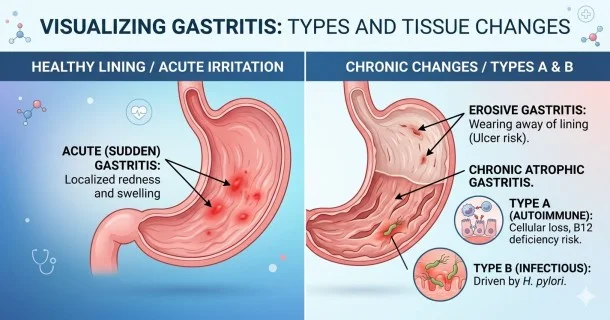
- Acute Gastritis: Involves sudden, severe inflammation of the stomach lining. It typically resolves quickly once the primary irritant or trigger is removed.
- Chronic Gastritis: Develops gradually and persists over a long period, sometimes lasting for months or even years. If left unmanaged, chronic inflammation can lead to structural alterations in the gastric tissue.
Specific Types and Classifications of Gastritis
To understand your condition completely, it helps to look at the exact type of tissue changes and causes involved:
1. Erosive vs. Non-Erosive Gastritis
- Erosive Gastritis: This form not only causes inflammation but also leads to the progressive wearing away (erosion) of the superficial stomach lining. It can result in small sores, shallow ulcers, or upper gastrointestinal bleeding.
- Non-Erosive Gastritis: Characterized primarily by cellular changes and inflammation within the stomach lining without causing physical erosion or open sores.
2. Chronic Atrophic Gastritis (Type A and Type B)
Atrophic gastritis occurs when long-standing chronic inflammation leads to the loss of gastric glandular cells, which are gradually replaced by intestinal-type epithelium. It is divided into two distinct entities:
- Type A (Autoimmune Atrophic Gastritis): A relatively rare, inherited autoimmune disorder where the body's immune system erroneously attacks the stomach’s parietal cells. This impairing process reduces the production of stomach acid and intrinsic factor, potentially leading to vitamin B12 malabsorption and pernicious anemia.
- Type B (Infectious Atrophic Gastritis): The most common form of atrophic gastritis, driven explicitly by a persistent, long-term infection with Helicobacter pylori (H. pylori) bacteria.
3. Reactive and Chemical Gastritis
- Alcoholic Gastritis: Severe irritation triggered by excessive or chronic alcohol intake, which directly degrades the stomach's protective mucous barrier.
- NSAID-Induced Gastritis: Chemical inflammation caused by the frequent use of nonsteroidal anti-inflammatory drugs (like ibuprofen or naproxen) which block the protective prostaglandins in the stomach.
Global Prevalence and Demographics
Gastritis is exceptionally common worldwide, largely driven by global infection rates of H. pylori.
- H. Pylori-Associated Chronic Gastritis: It is estimated that approximately 50% of the global population carries an H. pylori infection. As a result, chronic type B gastritis and multifocal atrophic gastritis show an exceptionally high prevalence, particularly across Asia and developing nations.
- Autoimmune Gastritis: Conversely, Type A autoimmune gastritis is significantly less common. Statistically, it is noted with a higher relative frequency among individuals of Northern European descent and African American populations.
Explore Comprehensive Gastritis Guides
To help pinpoint your specific situation, explore our detailed sub-sections:
- Gastritis Symptoms – Learn the distinct signs of acute vs. chronic flare-ups.
- Gastritis Causes & Triggers – Identify what might be irritating your stomach lining.
- Gastritis Diagnostic Tests – Discover how gastroenterologists confirm a diagnosis.
- Gastritis Treatment Options – Medical therapies and lifestyle changes for recovery.
Frequently Asked Questions (FAQ)
What is the main difference between Type A and Type B atrophic gastritis?
Type A atrophic gastritis is an autoimmune condition where the body attacks its own stomach cells, often leading to vitamin B12 deficiency. Type B is an infectious condition caused by Helicobacter pylori bacteria and is the more common form globally.
Can gastritis turn into something more serious?
If chronic gastritis (especially atrophic gastritis) is left untreated for years, the long-term cellular changes in the stomach lining can increase the risk of developing gastric polyps or, in rare instances, stomach cancer.
Is erosive gastritis always painful?
Not necessarily. While erosive gastritis can cause a gnawing or burning pain in the upper abdomen, some individuals may experience no pain at all until more severe signs develop, such as microscopic bleeding or dark, tarry stools.