
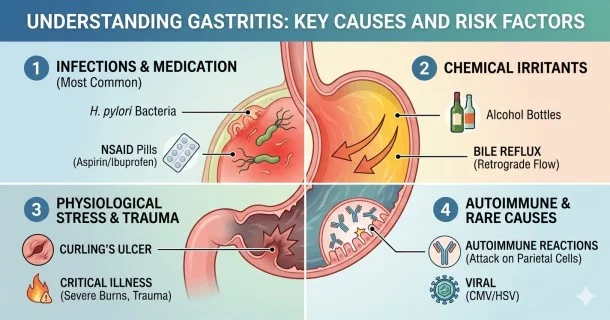
Discover the primary causes of stomach lining inflammation, from H. pylori infections and NSAID usage to rare triggers like autoimmune reactions and bile reflux.
Gastritis Causes: Understanding Triggers and Risk Factors
The stomach's mucosal lining acts as a durable shield, protecting the deeper muscle layers from corrosive gastric acids. Gastritis occurs when this protective barrier becomes compromised, weakened, or damaged, allowing digestive juices to inflame and irritate the stomach wall.
A wide variety of factors can disrupt this barrier, ranging from common bacterial infections and daily medications to underlying systemic medical conditions.
The Most Common Causes of Gastritis
The vast majority of clinical gastritis diagnoses stem from three primary triggers:
- Helicobacter pylori (H. pylori) Bacterial Infection: This is the leading cause of chronic gastritis globally. H. pylori bacteria colonize the protective mucus layer of the human stomach, secreting enzymes that neutralize localized acid but weaken the mucosal shield, triggering chronic inflammation.
- Frequent Use of NSAIDs: Regular or long-term use of Nonsteroidal Anti-inflammatory Drugs (including aspirin, ibuprofen, and naproxen) is a prominent cause of acute and chronic erosive gastritis. NSAIDs inhibit the body's production of prostaglandins—critical chemical compounds that help maintain and repair the stomach's protective lining.
- Excessive Alcohol Consumption: Chronic alcohol intake acts as a direct chemical irritant to the stomach lining. Alcohol degrades the mucosal barrier, leaving it highly vulnerable to damage from normal gastric acids and leading to erosive changes.
Less Common and Rare Gastritis Triggers
When common causes are ruled out, gastroenterologists look for alternative environmental, physical, or systemic triggers:
1. Autoimmune and Systemic Conditions
- Autoimmune Gastritis: An inherited disorder where the body’s immune system mistakenly produces antibodies that attack healthy parietal cells in the stomach lining, preventing normal acid and vitamin B12 absorption.
- Crohn’s Disease: While primarily affecting the intestines, this chronic inflammatory bowel disease can occasionally manifest as granulomatous inflammation in the stomach lining.
2. Physical Stress and Critical Illness (Stress-Induced Gastritis)
Severe physiological stress can cause acute mucosal damage. This is most frequently seen in critically ill patients hospitalized with:
- Major surgical procedures or severe physical trauma.
- Severe burns (known historically as Curling’s ulcers).
- Respiratory failure requiring mechanical ventilation.
- Severe organ dysfunctions, including advanced liver or kidney failure.
3. Additional Chemical and Infectious Irritants
- Bile Reflux: A malfunction of the pyloric valve (often following gastric surgery) that allows bile—a digestive fluid produced by the liver—to back up into the stomach, triggering chronic chemical irritation.
- Opportunistic Viral Infections: Viral pathogens such as cytomegalovirus (CMV) or herpes simplex virus (HSV) can infect the gastric mucosa, primarily in immunocompromised individuals, such as those with advanced HIV/AIDS.
- Chemical Ingestion and Substance Abuse: Ingestion of corrosive toxic agents or the abuse of illicit substances like cocaine can cause immediate, catastrophic damage to the mucosal membrane.
Frequently Asked Questions (FAQ)
How exactly do everyday pain relievers like ibuprofen cause gastritis?
NSAIDs block specific enzymes called COX-1 and COX-2. While this action effectively stops pain and swelling elsewhere in your body, it also halts the production of prostaglandins in your stomach. Without prostaglandins, your stomach lining loses its ability to produce protective mucus and bicarbonate, exposing the tissue to acid damage.
Can severe emotional anxiety or stress directly cause gastritis?
While everyday emotional stress and anxiety can worsen existing gastrointestinal symptoms (like bloating or acid reflux) by altering stomach motility, they do not cause true, physical gastritis. True stress-induced gastritis is caused exclusively by severe physiological trauma, such as major surgery, extensive body burns, or critical organ failure.
What is bile reflux gastritis, and why does it happen?
Bile reflux occurs when bile—a fluid meant to stay in the small intestine to break down fats—flows backward through the pyloric sphincter into the stomach cavity. Because bile is highly alkaline and contains caustic bile acids, it acts as a harsh chemical irritant that inflames the gastric mucosa over time.