
Learn what Gastroesophageal Reflux Disease (GERD) is, how the lower esophageal sphincter works, and why chronic acid reflux occurs. Explore symptoms, causes, and treatments.
What Is Gastroesophageal Reflux Disease (GERD)?
Gastroesophageal Reflux Disease (GERD) is a chronic digestive disorder that occurs when stomach acid frequently flows back into the tube connecting your mouth and stomach (esophagus). This backflow, known as acid reflux, can irritate and inflame the lining of your esophagus, leading to the classic burning sensation known as heartburn.
While many people experience occasional acid reflux, GERD is diagnosed when reflux occurs repeatedly over time (typically more than twice a week) or causes significant disruption to daily life.
How the Lower Esophageal Sphincter (LES) Functions
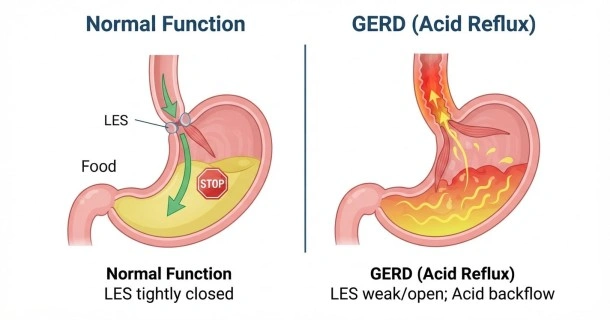
To understand GERD, it helps to understand how your body handles food. At the lower end of the esophagus, where it meets the stomach, there is a specialized ring of muscle called the lower esophageal sphincter (LES).
- Normal Function: Under normal conditions, the LES acts as a one-way valve. It relaxes and opens to allow food and liquids to pass into the stomach, then immediately clamps shut to prevent acidic stomach contents from escaping back upward.
- Dysfunction in GERD: In individuals with GERD, this sphincter muscle becomes weak or relaxes inappropriately. When the valve fails to close tightly, highly acidic gastric juices can seep back up into the delicate lining of the esophagus.
What Causes the Acid Reflux Sensation?
The stomach is biologically designed to handle highly concentrated hydrochloric acid, which is necessary for digesting food. The esophagus, however, lacks the same protective mucous lining.
When acid escapes past a weak or relaxed LES, it chemically irritates the esophageal tissue. This irritation signals pain receptors, resulting in the uncomfortable, burning chest pain known as heartburn.
Factors that increase pressure on the stomach or weaken the LES include:
- Increased intra-abdominal pressure (commonly due to pregnancy or obesity)
- Delayed stomach emptying (gastroparesis)
- Hiatal hernias (where the upper stomach pushes through the diaphragm)
- Certain dietary triggers, smoking, or medications that relax smooth muscle
Overview of GERD Management and Medications
For individuals experiencing frequent symptoms, medical management is often necessary to prevent damage to the esophagus.
Over-the-Counter and Prescription Options
Medical treatments focus primarily on reducing or neutralizing stomach acid to allow the esophageal lining to heal. These include antacids, H2 blockers, and Proton Pump Inhibitors (PPIs). While highly effective at suppressing symptoms and promoting healing, long-term or high-dose use of strong acid suppressants should be carefully monitored by a healthcare professional.
Important Safety and Monitoring Considerations
When used continuously for extended periods, acid-suppressing medications can alter the digestive environment. Potential long-term considerations include:
- Reduced absorption of certain nutrients, such as Vitamin B12, magnesium, and calcium.
- A slight shift in gut microflora, which can occasionally increase susceptibility to specific gastrointestinal infections like Clostridium difficile.
- Potential rebound acid secretion if the medication is stopped abruptly.
Note: Please make sure to double-check the physical label of any over-the-counter or prescription medication to confirm proper usage, dosages, and safety warnings.
Frequently Asked Questions (FAQs)
What is the difference between acid reflux and GERD?
Acid reflux is the physical backward flow of stomach contents into the esophagus, which can happen occasionally to anyone. GERD is the chronic, more severe form of this condition, diagnosed when acid reflux occurs frequently (typically more than twice a week) or causes troublesome complications.
Can GERD be cured completely without medication?
Mild cases of GERD can often be managed effectively through lifestyle modifications alone, such as losing weight, elevating the head of the bed, avoiding dietary triggers, and not lying down right after eating. However, moderate to severe cases frequently require medical management to protect the esophagus.
What happens if GERD is left untreated for a long time?
If chronic acid reflux is left untreated, the persistent inflammation can lead to complications. Over time, it can cause narrowing of the esophagus (esophageal stricture), open sores (esophageal ulcers), or a precancerous change in the tissue lining known as Barrett's esophagus.