
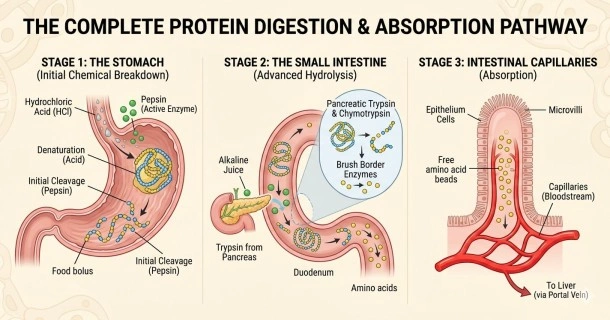
How is protein digested and absorbed? Follow the complete biological journey from stomach acid and pepsin to pancreatic trypsin and capillary absorption.
The Protein Digestion Process: How Amino Acids Are Broken Down and Absorbed
Protein digestion is a highly efficient physiological process that converts complex, tightly coiled dietary protein chains into simple, individual amino acids. Because proteins are large, complex polymers, the digestive tract must utilize a combination of mechanical disruption, strong gastric acids, and specialized enzymes called proteases (or proteinases) to hydrolyze the peptide bonds holding the molecule together.
Step-by-Step Breakdown of Protein Digestion
Unlike carbohydrates, which begin chemical breakdown in the mouth via saliva, protein digestion begins exclusively within the stomach chamber.
1. The Stomach: Chemical Denaturation and Initial Cleaving
When masticated food passes down the esophagus and enters the stomach, the presence of protein triggers a strong gastric response:
- Hydrochloric Acid (HCl): Parietal cells in the stomach secrete highly concentrated hydrochloric acid. This acid attacks the complex 3D structures of the protein chains, unfolding (denaturing) them to expose their peptide bonds.
- Pepsin Activation: The stomach lining secretes an inactive precursor enzyme called pepsinogen. When pepsinogen encounters the low, acidic pH created by the HCl, it cleaves itself into its active form: pepsin. Pepsin immediately begins snipping the long, denatured protein chains into smaller polypeptide fragments.
2. The Small Intestine: Advanced Hydrolysis
The acidic mixture, now called chyme, moves through the pyloric sphincter and into the duodenum (the first part of the small intestine).
- Pancreatic Proteases: The pancreas senses the incoming acidity and releases an alkaline juice containing powerful digestive enzymes, primarily trypsin and chymotrypsin.
- Enzymatic Hydrolysis: These enzymes break down the polypeptide fragments through a chemical process called hydrolysis. By inserting a water molecule between two connected amino acids, the enzyme breaks the peptide bond and frees the individual nutrients.
- Brush Border Finalization: Microscopic enzymes anchored directly onto the intestinal wall cells finish the job, breaking any remaining pairs or triplets down into completely free amino acids.
Intestinal Protein Absorption and Cellular Delivery
Once protein molecules are completely dismantled into single amino acids, they easily move through the mucosal cells lining the small intestine.
[Free Amino Acids] ──► [Intestinal Capillaries] ──► [Portal Vein Pathway] ──► [Systemic Circulation]
Unlike large fat packages that must travel through the lymphatic system, amino acids pass directly into tiny local blood vessels called capillaries. From these capillaries, they enter the portal vein system and travel directly to the liver. The liver then distributes the amino acids through the bloodstream (via plasma proteins and red blood cells) to the rest of the body’s tissues. Cells gather these free-floating amino acids to build new structural proteins, manufacture hormones, or replace damaged cellular elements.
Metabolic Waste: Nitrogenous vs. Non-Nitrogenous
Because amino acids contain a distinct nitrogen component, breaking them down for alternative uses creates specific waste byproducts that the body must filter:
- Nitrogenous Waste (80% Urea): When amino acids are metabolized, the liver strips away the nitrogen atom, producing highly toxic ammonia. The liver immediately converts this ammonia into a safe compound called urea. The kidneys then filter this urea out of the bloodstream, excreting it as urine along with traces of uric acid and creatinine.
- Non-Nitrogenous Waste: The remaining carbon skeleton of the amino acid is composed exclusively of carbon, hydrogen, and oxygen. When these pieces are burned for energy, they produce only clean byproducts: carbon dioxide and water.
What Happens During Protein Imbalances?
The body processes protein uniquely depending on your total daily dietary intake:
Chronic Overconsumption (Excess Intake)
If you consume more protein than your tissues require for structural maintenance, the body cannot store the excess amino acids as functional protein. Instead, the liver strips away the nitrogen molecules, converts the remaining carbon pieces into glucose or fatty acids, and stores them inside your fat tissues.
Chronic Deprivation (Insufficient Intake)
Because the human body lacks a dedicated, passive storage bank for protein, a severe diet deficit forces an emergency survival response. The body begins systematically breaking down its own skeletal muscle tissue to harvest the essential amino acids needed to keep the brain, heart, and vital internal organs functioning.
Frequently Asked Questions (FAQs)
Where does protein digestion begin?
Unlike carbohydrates, protein digestion begins in the stomach, not the mouth. The mouth handles the mechanical chewing to break food down physically, but the chemical disassembly starts when the food mixes with stomach acids and pepsin.
What is the role of pepsin in the stomach?
Pepsin is the primary protease enzyme in the stomach chamber. It is activated when inactive pepsinogen reacts with strong hydrochloric acid. Once active, pepsin snips long, complex protein chains into shorter, manageable polypeptide segments.
How does the pancreas help with protein digestion?
When protein fragments enter the small intestine, the pancreas secretes two powerful enzymes called trypsin and chymotrypsin. These enzymes perform hydrolysis, inserting a water molecule between the remaining amino acid chains to break them down into individual units for absorption.
What is urea and why does the body produce it?
Urea is a metabolic waste byproduct created when the liver processes excess amino acids. Breaking down amino acids releases toxic nitrogen compounds, which the liver quickly turns into safe urea. The urea is then carried through the blood to the kidneys, where it is excreted as urine.