
Understand the symptoms associated with Barrett's esophagus. Learn about chronic heartburn signs, silent reflux presentations, and critical warning indicators.
Barrett's Esophagus Symptoms: Clinical Signs and Silent Presentations
A critical medical fact regarding Barrett's esophagus symptoms is that the cellular transformation itself—known as intestinal metaplasia—does not possess nerve endings capable of generating distinct physical sensations. Consequently, Barrett's esophagus is frequently a clinically "silent" condition.
The symptoms experienced by patients are not caused by the altered tissue itself, but rather by the underlying, long-standing Gastroesophageal Reflux Disease (GERD) that initiated the damage. Furthermore, because the newly formed intestinal-type tissue is structurally more resistant to acid than the original esophageal lining, some patients report that their classic heartburn symptoms actually diminish or vanish entirely as the condition develops.
Associated Symptoms of Chronic Acid Reflux
For the substantial portion of patients who do manifest discomfort, the clinical presentation mirrors the classic signs of chronic GERD. These symptoms typically include:
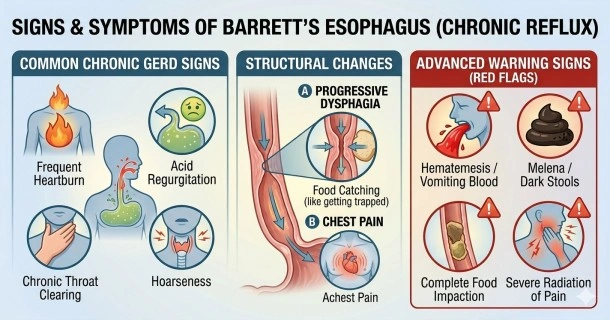
- Frequent, Long-Standing Heartburn: A burning discomfort or painful sensation located behind the breastbone that has persisted regularly for months or years.
- Dysphagia (Difficulty Swallowing): A progressive feeling that solid food or liquids are moving slowly, sticking, or catching in the lower chest area, which can indicate structural changes or narrowing.
- Acid Regurgitation: The involuntary backflow of sour, bitter gastric acid or partially digested food particles into the throat or mouth.
- Atypical Chest Pain: An aching or burning pain located beneath the breastbone that can mimic cardiac distress, often exacerbated when attempting to swallow.
- Unintended Weight Loss: A secondary clinical sign resulting from a patient intentionally reducing their food intake due to mechanical swallowing difficulties or post-meal discomfort.
Atypical or Extra-Esophageal Signs
In cases of "silent reflux" (laryngopharyngeal reflux), gastric fluids travel far enough up the food pipe to irritate the vocal cords and upper airways, producing less common clinical signs:
- Chronic Throat Clearing and Soreness: A constant need to clear the throat or a lingering raw sensation in the pharynx.
- Hoarseness: Distinct changes in voice quality, causing it to sound rough, raspy, or husky, particularly in the mornings.
- Persistent Dry Cough or Wheezing: Respiratory irritation triggered by microscopic droplets of acid entering the airways.
- Intractable Hiccups: Chronic diaphragmatic twitching stimulated by ongoing irritation of the vagus or phrenic nerves near the lower esophagus.
Advanced Warning Signs: When to Seek Immediate Evaluation
Because Barrett's esophagus is a premalignant condition, patients with chronic reflux must remain highly vigilant for red-flag symptoms. These critical warning indicators can signal severe complications, advanced strictures, or a progression toward esophageal adenocarcinoma:
- Hematemesis (Vomiting Blood): Rejecting fluid that is bright red or resembles dark, grainy coffee grounds, indicating active mucosal bleeding or deep ulceration.
- Melena (Tar-Like Stools): The passage of foul-smelling, sticky, jet-black stools, which indicates digested blood originating from the upper gastrointestinal tract.
- Complete Food Impaction: An emergency state where solid food becomes entirely trapped in the food pipe, rendering the patient unable to swallow even their own saliva.
- Severe Radiation of Pain: Squeezing chest pain that radiates outward to the neck, jaw, or arms, which requires immediate triage to rule out acute cardiac events.
Frequently Asked Questions (FAQs)
What are the first warning signs of Barrett's esophagus?
Barrett's esophagus itself has no direct warning signs. Instead, the first noticeable indicators are usually the symptoms of long-standing, severe acid reflux, such as frequent heartburn, chest pain after eating, regurgitation, or difficulty swallowing food.
Can you have Barrett's esophagus with absolutely no symptoms?
Yes. Many individuals with Barrett's esophagus experience no symptoms at all. This can happen either because they have "silent reflux" that doesn't trigger classic heartburn, or because the transformed tissue lining is less sensitive to acid, causing previous heartburn symptoms to quiet down.
Why does Barrett's esophagus cause difficulty swallowing (dysphagia)?
The difficulty swallowing is typically caused by chronic inflammation and tissue injury from acid reflux. Over time, this constant irritation can cause dense scar tissue to form, creating a physical narrowing (stricture) or reducing the muscular elasticity needed to pass food smoothly.