
Learn the core symptoms of gastroenteritis (stomach flu) in adults and children. Discover how to tell the difference between viral and bacterial signs and when to seek urgent care.
Gastroenteritis Symptoms: Early Signs & Warning Red Flags
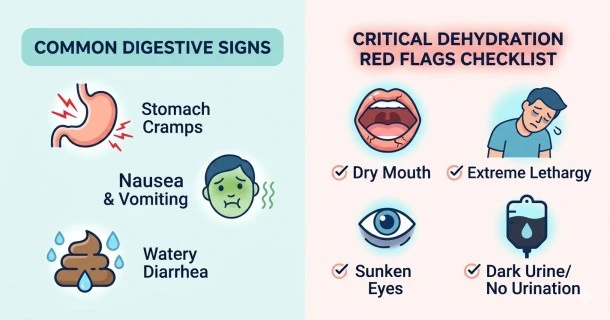
The primary symptoms of gastroenteritis (stomach flu) are watery diarrhea, nausea, vomiting, and abdominal cramping.Because the stomach and intestines become acutely inflamed, these symptoms usually appear suddenly—typically within 4 to 48 hours after exposure to a pathogen. While most mild cases resolve on their own within a few days, recognizing the progression of symptoms and understanding critical warning signs is essential for safe recovery.
Core Symptoms of Gastroenteritis
Most individuals experiencing a standard case of acute gastroenteritis will display a combination of the following common digestive and systemic signs:
- Watery Diarrhea: This is the most frequent symptom, often characterized by loose, voluminous, and non-bloody stools.
- Nausea and Vomiting: Vomiting can be frequent in the early stages; in severe cases, individuals may vomit clear fluids or bile even when the stomach is entirely empty.
- Abdominal Pain and Cramping: Pain is often diffuse across the stomach area, occasionally accompanied by abnormal flatulence or bloating.
- Loss of Appetite: A sudden aversion to food or poor feeding, particularly noticeable in infants and toddlers.
- Systemic Signs: Mild low-grade fever, general fatigue, headaches, and mild muscle aches or joint stiffness.
Viral vs. Bacterial Gastroenteritis Symptoms
Understanding whether a "stomach bug" is viral or bacterial can help determine the necessary medical response:
Viral Gastroenteritis Signs
- ** Stools:** Primarily clear, watery stools without mucus or blood.
- ** Companion Symptoms:** Frequently accompanied by classic flu-like systemic symptoms, such as mild muscle aches, low fever, and exhaustion.
- ** Timeline:** Symptoms typically appear quickly and resolve within 1 to 3 days.
Bacterial Gastroenteritis Signs (Food Poisoning)
- ** Stools:** May be severe and contain visible mucus or blood (a condition known as dysentery).
- ** Companion Symptoms:** Often causes much higher fevers, chills, and severe, localized abdominal pain or sharp cramping that can persist for several weeks.
- ** Common Pathogens:** Usually tied to foodborne bacteria like Salmonella, Campylobacter, Shigella, or pathogenic strains of E. coli.
Pediatric Checklist: Symptoms in Infants and Toddlers
Children are highly susceptible to severe complications from gastroenteritis. Parents should look closely for:
- Poor Feeding: Refusal to nurse, take a bottle, or drink fluids.
- Extreme Lethargy: Uncharacteristic sleepiness, difficulty waking up, or a lack of responsiveness.
- Crying Without Tears: A distinct indicator that the child's fluid levels are dangerously low.
- Fewer Wet Diapers: No wet diapers for a period stretching over 6 hours.
Dangerous Red Flags: When to See a Doctor
While most cases of gastroenteritis are self-limiting, complications like severe dehydration can be life-threatening. Seek immediate medical attention if you or someone in your care experiences any of the following emergency symptoms:
- Signs of Severe Dehydration: Dry mouth, extreme thirst, little to no urination, dark urine, sunken eyes, deep confusion, or fainting and severe weakness.
- Inability to Keep Fluids Down: Persistent vomiting that makes it impossible to retain oral rehydration solutions or water for more than 24 hours.
- High Fever: A persistent body temperature above 102°F (38.9°C).
- Bloody or Black Stools: Any sign of blood in the stool or vomit, indicating an invasive bacterial infection or mucosal injury.
Frequently Asked Questions (FAQs)
What are the very first signs of gastroenteritis?
The earliest signs usually involve a sudden wave of nausea, mild stomach cramping, a loss of appetite, followed closely by the onset of vomiting or watery diarrhea.
Can gastroenteritis cause vomiting yellow bile?
Yes. If frequent vomiting continues after the stomach has completely emptied its food contents, the body may expel yellow or greenish digestive fluids known as bile.
Why does gastroenteritis cause muscle aches and headache?
Systemic symptoms like muscle aches, headaches, and low-grade fevers are standard immune responses to viral infections (like Norovirus), further worsened by rapid fluid loss and early dehydration.
Does a stomach bug always cause a fever?
No. While viral and bacterial infections frequently cause a low to moderate fever, many individuals experience a complete bout of gastroenteritis with normal body temperatures.
How do I know if my diarrhea is viral or bacterial?
Viral diarrhea is almost always completely watery and clear. Bacterial diarrhea is typically more severe, causes higher fevers, and is much more likely to contain visible blood, pus, or mucus.