
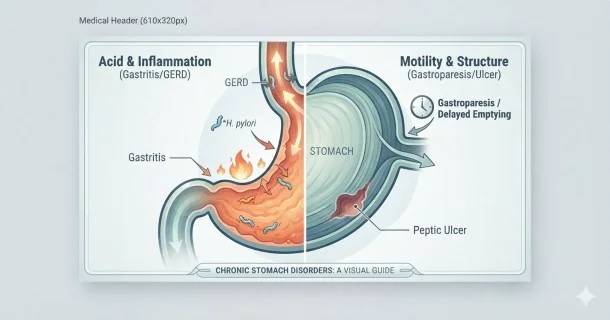
Explore common stomach conditions, from gastritis and peptic ulcers to motility disorders like gastroparesis. Learn symptoms, causes, and when to see a doctor.
Chronic Stomach Problems: Symptoms, Causes, and Common Disorders
The stomach is a vital J-shaped muscular organ located in the upper left abdomen, just beneath the rib cage. It acts as a central chamber in your alimentary canal, expanding to accommodate food and secreting powerful gastric juices (primarily hydrochloric acid with a highly acidic pH of around 1.5 to 3.5) to break down proteins and eliminate ingested pathogens.
When the delicate balance of this acidic environment or the stomach lining is disrupted, it can lead to a group of conditions medically categorized under gastropathy or gastritis. Understanding your symptoms is the first step toward finding relief and working effectively with a healthcare provider.
Common Symptoms of Stomach Disorders
While many stomach conditions share overlapping warning signs, paying close attention to your body can help doctors pinpoint the issue. Common symptoms include:
- Nausea and Vomiting: A frequent response to irritation, inflammation, or structural blockages.
- Bloating and Upper Abdominal Pain: Often felt as cramping, burning, or a painful fullness right under the ribs.
- Early Satiety: Feeling full quickly after eating only a small amount of food.
- Heartburn: A burning sensation in the chest caused by stomach acid traveling back up the esophagus.
Categorized Overview of Stomach Conditions
1. Acid-Related and Inflammatory Disorders
- Gastritis: Inflammation of the protective stomach lining, often triggered by chronic H. pylori bacterial infections, regular use of pain relievers (NSAIDs), or excessive alcohol consumption.
- Peptic Ulcer Disease (PUD): Painful sores that develop on the inner lining of the stomach (gastric ulcers) or the upper first part of the small intestine (duodenal ulcers), highly linked to Helicobacter pylori infection.
- Gastroesophageal Reflux Disease (GERD): A chronic digestive disease where stomach acid or bile flows back into the food pipe, irritating the lining.
- Zollinger-Ellison Syndrome (ZES): A rare condition in which one or more tumors form in your pancreas or the upper part of your small intestine, secreting large amounts of the hormone gastrin, which causes the stomach to produce far too much acid.
2. Gastric Motility and Functional Disorders
- Gastroparesis (Delayed Gastric Emptying): A condition affecting the normal movement of the muscles in the stomach, preventing it from emptying properly. It is highly common in individuals with long-standing diabetes.
- Rapid Gastric Emptying (Dumping Syndrome): A condition where food moves too quickly from your stomach into your duodenal portion of the small intestine, frequently occurring after gastric or esophageal surgery.
- Functional Dyspepsia: Persistent or recurrent symptoms of indigestion (such as upper abdominal pain or early fullness) that have no structural or identifiable organic cause.
- Cyclic Vomiting Syndrome (CVS): A disorder characterized by recurrent, sudden episodes of severe nausea and vomiting with no apparent cause.
3. Structural, Vascular, and Rare Conditions
- Pyloric Stenosis: An uncommon condition in adults where the pylorus (the opening from the stomach into the small intestine) narrows, blocking food from entering the small intestine.
- Stomach Polyps (Gastric Polyps): Abnormal masses of cells that form on the lining inside the stomach, which are usually harmless but can occasionally become cancerous.
- Gastric Varices: Enlarged, dilated veins in the stomach lining that can lead to life-threatening upper digestive tract bleeding if they rupture.
- Bezoars: A solid mass of indigestible material (such as hair, vegetable fiber, or medications) that accumulates in your stomach and causes a blockage.
- Ménétrier's Disease: A rare, acquired premalignant disorder of the stomach characterized by massive overgrowth of the mucous cells in the stomach lining, leading to large gastric folds and protein loss.
- Stomach Cancer (Gastric Cancer): An abnormal growth of cells that begins in the stomach lining, requiring early detection for optimal treatment outcomes.
Frequently Asked Questions (FAQ)
What is the difference between gastritis and a stomach ulcer?
Gastritis is a general inflammation of the entire stomach lining, whereas a stomach ulcer (peptic ulcer) is a distinct, localized sore or break that forms in that lining, often penetrating deeper into the tissue layers.
What causes delayed gastric emptying (gastroparesis)?
Gastroparesis is typically caused by damage to the vagus nerve, which controls the stomach muscles. This damage most frequently stems from chronic medical conditions like diabetes, neurological disorders, or complications resulting from surgical procedures.
When should I see a doctor for upper abdominal pain?
You should see a doctor promptly if your upper abdominal pain is persistent, worsens after eating, or is accompanied by "red flag" symptoms such as unexplained weight loss, persistent vomiting, difficulty swallowing, or black, tarry stools.