
Learn the 4 main chemical types of carbohydrates, the difference between simple and complex carbs, and why your body prefers glucose for energy.
Understanding Carbohydrates: Structure, Types, and Biological Roles
Carbohydrates are organic compounds composed exclusively of carbon (C), hydrogen (H), and oxygen (O) atoms. Historically, they earned the name "carbohydrates" because their structural chemical formulation features a hydrogen-to-oxygen ratio of 2:1, mirroring the composition of a water molecule (\(H_{2}O\)), which led early chemists to view them as "hydrates of carbon."
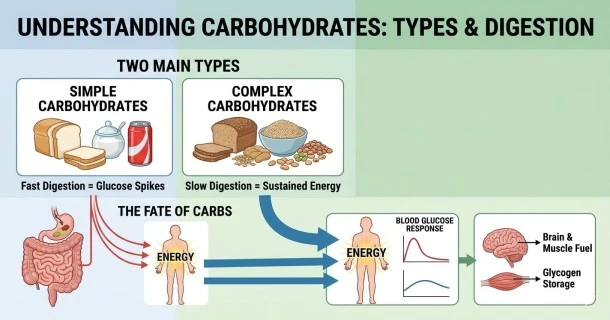
In human nutrition, carbohydrates serve as the body’s primary and most efficient source of metabolic fuel. During the process of digestion, complex carbohydrates are progressively broken down into simple monosaccharides, primarily glucose, which cells oxidize to generate adenosine triphosphate (ATP), the universal energy currency of life.
The Four Types of Carbohydrates: Classification
Carbohydrates are categorized into four distinct chemical groups based on the length, structure, and complexity of their molecular saccharide chains:
| Carbohydrate Category | Structural Complexity | Common Examples | Nutritional Role |
| Monosaccharides | Simplest form; single sugar units that cannot be hydrolyzed further. | Glucose, Fructose, Galactose | Immediate cellular absorption and rapid energy utilization. |
| Disaccharides | Formed by two linked monosaccharide units. | Sucrose (table sugar), Lactose (milk sugar), Maltose | Quickly cleaved by digestive enzymes into simple sugars. |
| Oligosaccharides | Intermediate chains containing 3 to 10 sugar units. | Raffinose, Stachyose | Support healthy gut microbiota fermentation. |
| Polysaccharides | Highly complex, long-chain structures containing hundreds of sugar units. | Starch, Cellulose (fiber), Glycogen | Steady, long-term energy storage and mechanical digestive support. |
Why Does the Body Need Carbohydrates?
Carbohydrates are biologically vital because they provide the preferred cellular fuel source for the human body, particularly for the central nervous system and red blood cells.
- The Primary Fuel Source: While the liver and muscles can convert fats and proteins into glucose via gluconeogenesis, these alternative pathways require more metabolic energy and are primarily utilized during prolonged fasting, starvation, or extreme carbohydrate restriction.
- Energy Storage: When you consume carbohydrates, the body extracts glucose for immediate systemic use. Any excess glucose not needed right away is converted and stored in the liver and skeletal muscle tissues as glycogen for future metabolic demands.
Complex vs. Simple Carbs: Quality Matters
From a health perspective, the physiological impact of a carbohydrate is determined by its molecular complexity and fiber content.
                    ┌── Simple Carbs (Refined, fast digesting, causes glucose spikes)
Carbohydrate Quality┤                    └── Complex Carbs (Unprocessed, fiber-rich, provides sustained energy)
Complex Carbohydrates (The Health-Promoting Choice)
Unprocessed complex carbohydrates—found in whole grains, vegetables, fruits, and legumes—are bound within a matrix of dietary fiber. Because breaking down long polysaccharide chains into basic glucose takes time, these foods digest slowly. This gradual absorption provides a steady release of energy and prevents sudden, sharp shifts in systemic blood glucose metrics.
Simple and Refined Carbohydrates (The Processed Choice)
Refined carbohydrates undergo industrial processing that strips away the grain's nutrient-dense parts, removing essential fiber, vitamins, and minerals. Common examples include white bread, pastries, sugary beverages, and processed snacks.
Because these items lack fiber, the digestive tract processes them rapidly. This rapid absorption triggers sharp blood-glucose spikes, which can increase systemic insulin demand and contribute to long-term cardiovascular risks, metabolic challenges, and type 2 diabetes.
Frequently Asked Questions (FAQs)
What are the four types of carbohydrates?
The four chemical classifications are monosaccharides (single sugars like glucose), disaccharides (two sugars like sucrose), oligosaccharides (short chains), and polysaccharides (long, complex chains like starch and fiber).
Why does the body prefer carbohydrates over fat and protein for energy?
Carbohydrates can be broken down much more rapidly and efficiently by your cells than fats or proteins. Glucose is the only fuel source that can be easily utilized by your brain, central nervous system, and red blood cells for optimal daily functioning.
What is the difference between simple and complex carbohydrates?
The difference lies in their chemical structure and how fast they digest. Simple carbohydrates have short molecular chains, digest quickly, and cause rapid blood sugar spikes. Complex carbohydrates feature long chains and dietary fiber, leading to slower digestion and a steadier release of physical energy.
What are refined carbohydrates and why are they considered unhealthy?
Refined carbohydrates are processed grains that have had their natural fiber, vitamins, and minerals stripped away (e.g., white flour and refined sugar). Because they lack fiber, they cause sudden spikes in blood sugar, leave you feeling hungry sooner, and can increase the risk of metabolic and heart health issues over time.