
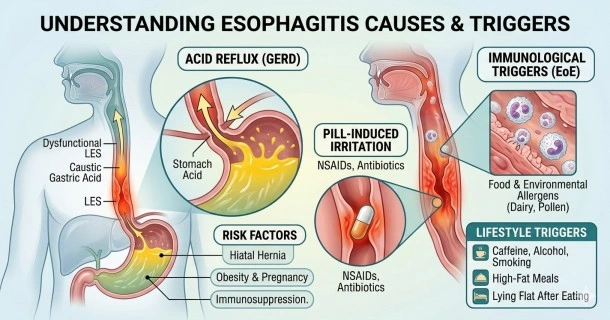
Discover what causes esophagitis, including the primary triggers of esophagus inflammation, medication risks, immune responses, and lifestyle factors.
Esophagitis Causes, Risk Factors, and Biological Triggers
Esophagitis is not a single disease entity, but rather a clinical manifestation of tissue injury along the esophageal mucosa. Understanding the specific causes of esophagitis is essential, as the root trigger directly determines the required treatment pathway. Esophageal irritation can stem from biochemical washing, mechanical friction, chemical contact, or immunological reactions.
Primary Causes of Esophagitis
Clinical cases are divided into distinct etiologies based on the exact mechanism causing the inflammation:
Chronic Acid Reflux (Gastroesophageal Reflux Disease)
The absolute most common cause of reflux esophagitis is a dysfunctional Lower Esophageal Sphincter (LES). The LES acts as a one-way muscular valve. When it weakens or relaxes inappropriately, corrosive gastric acid, pepsin, and bile flow backward into the esophagus. The delicate esophageal lining is not anatomically built to withstand a highly acidic environment, resulting in chemical burns and chronic inflammation over time.
Immunological Responses (Eosinophilic Esophagitis)
Eosinophilic esophagitis (EoE) is an autoimmune and allergic condition. When an individual encounters specific eosinophilic esophagitis triggers, the body overproduces white blood cells called eosinophils. These cells accumulate in the tissue lining of the esophagus, causing localized swelling, stiffness, and structural rings.
- Common Antigens: Dietary proteins (such as dairy, wheat, soy, eggs, tree nuts, and shellfish) and airborne environmental allergens (like pollen or dust mites).
Direct Medication Irritation (Pill-Induced Esophagitis)
Certain oral medications can cause focal chemical burns if they become physically stuck or linger too long in the esophagus during transit.
- Common Offending Agents: Nonsteroidal anti-inflammatory drugs (NSAIDs like aspirin and ibuprofen), tetracycline or doxycycline antibiotics, potassium chloride supplements, and bisphosphonates (osteoporosis medications).
Biological Pathogens (Infectious Esophagitis)
Infectious forms are caused by a rapid overgrowth of fungi, viruses, or bacteria along the mucosa. While exceptionally rare in patients with a robust immune system, it is common in individuals with compromised immunity (e.g., uncontrolled HIV/AIDS, active chemotherapy, or systemic immunosuppressive therapy).
- Pathogens: Candida albicans (fungal yeast), Herpes Simplex Virus Type 1 (HSV-1), and Cytomegalovirus (CMV).
Caustic and Thermal Ingestion
Accidental or intentional ingestion of strong alkaline or acidic household products (like lye, oven cleaners, or disc batteries) causes rapid, devastating tissue destruction. Similarly, regular consumption of exceptionally hot liquids can induce cumulative thermal trauma.
Clinical Risk Factors
Certain systemic factors, pre-existing medical conditions, and physical anomalies significantly elevate your susceptibility to esophagus irritation:
- Hiatal Hernia: A mechanical condition where the upper portion of the stomach protrudes upward through the diaphragm. This anatomical shift disrupts the normal closing mechanics of the LES, heavily predisposing patients to acid reflux.
- Pregnancy and Obesity: Increased intra-abdominal mass puts immense physical pressure upward against the stomach, forcing gastric acid past the lower esophageal valve.
- Immunosuppression: A weakened immune defense prevents the body from fighting off mild fungal spores or latent viruses, paving the way for opportunistic infectious esophagitis.
- Scleroderma: A systemic connective tissue disorder that weakens the smooth muscle architecture of the lower esophagus, impairing its ability to clear acid.
Lifestyle and Dietary Triggers
While dietary choices rarely act as the standalone primary cause, certain foods and behaviors act as immediate triggers for esophagus inflammation by either relaxing the LES or directly irritating the mucosal tissue:
- LES-Relaxing Subtances: High-fat meals, peppermint, chocolate, caffeine, and alcohol systematically lower the resting pressure of the lower esophageal valve.
- Direct Tissue Irritants: Highly acidic foods (citrus fruits, tomatoes) and pungent spices can cause localized pain when they pass over an already vulnerable or compromised mucosal surface.
- Tobacco Use: Nicotine chemically relaxes the lower esophageal sphincter while simultaneously reducing the production of saliva, which is needed to neutralize trace acids.
- Post-Meal Habits: Lying down flat immediately after eating removes the clearing asset of gravity, allowing fresh stomach contents to pool inside the lower food pipe.
Frequently Asked Questions (FAQs)
What triggers an esophagitis flare-up?
An esophagitis flare-up is most commonly triggered by lifestyle factors that increase acid reflux, such as eating high-fat or highly acidic meals, consuming alcohol or caffeine, smoking, or lying down flat too soon after eating.
Can stress cause esophagus inflammation?
Stress does not directly cause structural esophagitis. However, chronic psychological stress can increase the stomach's production of gastric acid and heighten physical pain sensitivity (visceral hyperalgesia), making the underlying symptoms of esophagus inflammation feel significantly more intense.
Why do some pills cause pill-induced esophagitis?
Certain medications, like NSAIDs or specific antibiotics, are highly acidic or caustic. If a pill gets stuck in the folds of the esophagus—typically due to swallowing it dry or lying down immediately afterward—it dissolves directly against the lining, creating a localized chemical burn.