
Learn how the esophagus uses peristalsis and sphincters to move food to the stomach safely, prevent acid reflux, and assist your digestive health.
The Esophagus: Anatomy, Function, and Common Motility Issues
The esophagus (also spelled oesophagus) is a vital, muscular tube that connects your throat (pharynx) to your stomach. Measuring approximately 25 to 30 centimeters (10 to 12 inches) long in adults, this organ serves as the primary conduit for food and liquids during the digestive process.
While it does not actively digest food, the esophagus relies on a complex coordination of muscles and sphincters to safely transport what you eat while protecting your airway and throat.
How the Esophagus Works in the Digestive System
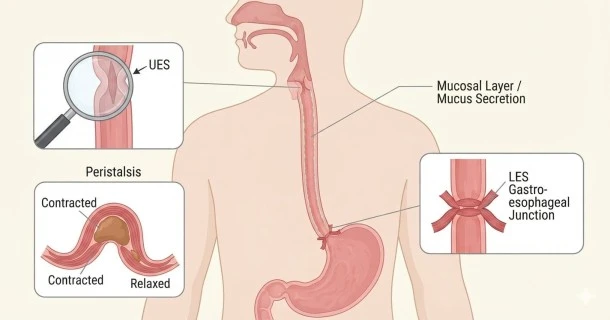
When you swallow, your food travels through the esophagus to the stomach in a matter of 7 to 10 seconds. This process relies on three major anatomical components:
1. The Upper Esophageal Sphincter (UES)
The UES is a bundle of muscles located at the very top of the esophagus. It acts as a continuous barrier that opens immediately during swallowing to allow a bolus (chewed food) to pass. The UES serves two crucial functions:
- It prevents food or liquid from backing up into the pharynx (throat).
- It diverts air into the trachea (windpipe) rather than the stomach during normal breathing.
2. Peristalsis and Mucosal Lubrication
Once food passes the UES, it is actively pushed downward by peristalsis—a series of coordinated, wave-like muscular contractions. Because peristalsis is a powerful mechanical force, liquids and solids can successfully reach your stomach even if you are swallowing while lying down or upright against gravity.
To assist this movement, small exocrine glands in the sub-mucosal layer of the esophagus continuously secrete mucus. This mucus acts as a natural lubricant, allowing the food bolus to slide smoothly down the tube.
3. The Lower Esophageal Sphincter (LES)
Located at the gastro-esophageal junction (where the esophagus meets the stomach), the LES acts as the body's primary defense against acid reflux. These involuntary muscles relax briefly to let food enter the stomach and then tightly constrict to prevent highly acidic gastric juices from creeping back up.
Does the Esophagus Digest Food?
No, the esophagus does not perform any chemical or mechanical digestion. However, salivary enzymes (like amylase) mixed into the food in your mouth continue to break down carbohydrates as the bolus travels downward. Once the food drops into the stomach, the highly acidic environment deactivates these salivary enzymes and initiates the next stage of digestion.
Frequently Asked Questions (FAQ)
What is the primary function of the esophagus?
The primary function of the esophagus is to transport food, liquids, and saliva from the mouth to the stomach via coordinated muscle contractions called peristalsis. It also prevents the backward flow of gastric contents and protects the airway.
Why do I feel a burning sensation in my esophagus?
A burning sensation in the chest or throat is typically caused by acid reflux or Gastroesophageal Reflux Disease (GERD). This happens when the lower esophageal sphincter (LES) fails to close tightly, allowing harsh stomach acid to escape upward and irritate the delicate esophageal lining.
Can food travel down the esophagus without gravity?
Yes. Thanks to peristalsis—the involuntary, wave-like muscular contractions of the esophageal wall—food and liquids are actively pushed toward the stomach. This allows you to swallow successfully even when lying down flat.
What causes swallowing difficulties (dysphagia)?
Swallowing difficulties can stem from mechanical obstructions (like strictures or inflammation from chronic acid exposure) or motility disorders (like achalasia, where the muscles fail to contract properly). If you frequently struggle to swallow or feel food getting stuck, it is critical to consult a healthcare professional.