
Manage Barrett's esophagus effectively with a target diet. Discover safe foods, dietary triggers to avoid, and critical lifestyle modifications to control acid reflux.
Barrett's Esophagus Diet: Nutritional and Lifestyle Management
While dietary changes cannot reverse the cellular transformation of intestinal metaplasia once it has occurred, a structured Barrett's esophagus diet is clinically vital. Its primary purpose is to suppress the underlying driver of the condition: chronic gastroesophageal reflux. By managing what you eat and how you live, you can limit the upward flow of caustic stomach acids and pepsin, helping to protect the remaining healthy tissue and prevent progression to advanced cellular changes.
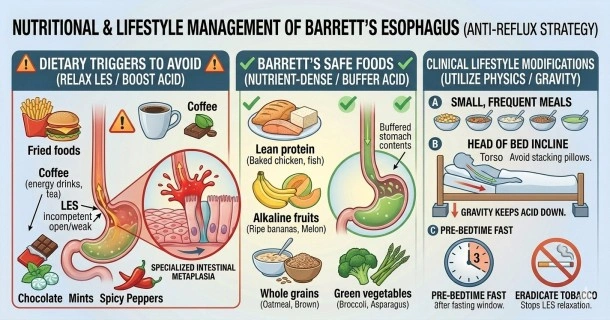
Foods to Avoid with Barrett's Esophagus (Dietary Triggers)
Managing this condition requires minimizing consumables that either weaken the lower esophageal valve or trigger excessive gastric acid production.
Lower Esophageal Sphincter (LES) Relaxants
Certain foods contain biochemical compounds that cause the smooth muscle of the LES to relax, paving the way for acid to pool in the lower food pipe:
- High-Fat Meals and Fried Foods: Fatty cuts of meat, fast food, and heavy oils delay stomach emptying, keeping the stomach full and under pressure for extended periods.
- Caffeine and Chocolate: Coffee, energy drinks, green or black teas, and chocolate contain methylxanthines, which systematically reduce the resting pressure of the LES.
- All Forms of Mint: Peppermint and spearmint essential oils relax gastrointestinal smooth muscle, making it easier for acid to wash upward.
Direct Mucosal and Acid Triggers
These items can cause immediate chemical irritation to a vulnerable lining or prompt the stomach to secrete large amounts of corrosive juices:
- Highly Acidic Fruits and Juices: Citrus fruits (oranges, grapefruits, lemons) and tomato-based products (sauces, juices) introduce external acids into the tract.
- Carbonated Beverages: Sodas and sparkling waters expand the stomach with gas, forcing the LES to open to release pressure.
- Pungent Spices: Black pepper, chili powder, and cayenne can cause a localized burning sensation on already sensitive tissue surfaces.
- Alcoholic Drinks: Alcohol acts as a direct tissue toxin (cytotoxin) that weakens the mucosal barrier of the esophagus.
Barrett's Esophagus Safe Foods (Nutritional Support)
A supportive menu focuses on high-fiber, low-acid, and nutrient-dense options that help buffer stomach acid and support overall digestive health:
- Lean and Easily Digestible Proteins: Skinless poultry, baked fish, tofu, and eggs provide essential nutrients without the high fat content that slows down digestion.
- Alkaline and Non-Citrus Foods: Ripe bananas, melons (cantaloupe, honeydew), oatmeal, brown rice, and whole grains help absorb excess stomach acid.
- Green and Cruciferous Vegetables: Broccoli, cauliflower, asparagus, green beans, and leafy greens are highly alkaline and generally exceptionally well-tolerated.
- Healthy Fats in Moderation: Small amounts of olive oil or avocados supply essential fatty acids without overwhelming stomach capacity.
Clinical Lifestyle Changes and Home Remedies
Behavioral adaptations provide continuous mechanical relief to the lower esophageal valve, utilizing physics and gravity to stop reflux:
- Implement Small, Frequent Meals: Divide your daily nutrition into five or six small sittings rather than three heavy meals to prevent stomach overdistension.
- Establish a Pre-Bedtime Fasting Window: Finish your last meal or snack at least three hours before lying down flat to give your stomach ample time to empty.
- Avoid Post-Meal Slouching and Bending: Remain fully upright for at least 45 to 60 minutes after eating. Avoid bending over at the waist or engaging in heavy physical straining post-meals.
- Mechanically Elevate the Head of the Bed: Raise the head of your bedposts by 6 to 8 inches using solid wood/metal blocks, or use a firm mattress wedge pillow. Note: Stacking standard pillows under your head alone bends the neck and compresses the stomach, which actively forces acid upward.
- Reduce Abdominal Pressure: Wear loose, comfortable clothing that does not constrict the waist, and work toward a healthy weight to eliminate excess upward pressure on the LES.
- Eradicate Tobacco Use: Quit smoking completely, as nicotine relaxes the lower esophageal sphincter and suppresses the production of acid-neutralizing saliva.
Frequently Asked Questions (FAQs)
Can a specific diet cure or reverse Barrett's esophagus?
No diet can reverse or cure the cellular changes of Barrett's esophagus once intestinal metaplasia has formed. However, a strict anti-reflux diet is crucial because it stops ongoing acid damage, which helps prevent the transformed cells from mutating into a more advanced or cancerous state.
Is whole milk safe to drink for Barrett's esophagus?
While the thick texture of cold whole milk might temporarily soothe a burning throat, its high fat content triggers the stomach to secrete more digestive acid and relaxes the lower esophageal sphincter. It is highly recommended to switch to skim milk, low-fat options, or non-dairy alternatives like almond or oat milk.
Why is elevating the head of the bed better than using extra pillows?
Propions yourself up with standard pillows only bends your neck and upper back, creating a physical fold that increases pressure on your abdomen and pushes acid up. Elevating the actual frame of the bed or using a structured wedge pillow keeps your entire torso at a continuous incline, allowing gravity to naturally keep stomach acid where it belongs.