
Get a medically reviewed introduction to giardiasis. Learn what the Giardia parasite is, how it targets the small intestine, and foundational facts about this common intestinal disease.
Introduction to Giardiasis
Giardiasis is a global intestinal infection caused by the microscopic, flagellated protozoan parasite known as Giardia duodenalis (also historically referred to as Giardia lamblia or Giardia intestinalis). As one of the most prevalent waterborne parasitic diseases worldwide, it primarily impacts the small intestine, disrupting normal digestive processes.
Unlike many other waterborne pathogens, the Giardia parasite possesses a hardy outer shell that allows it to survive in harsh external environments for months and renders it highly resistant to standard chlorine disinfection protocols.
The Two Stages of the Giardia Lifecycle
To understand how giardiasis develops, it helps to examine the parasite's distinct dual-stage lifecycle:
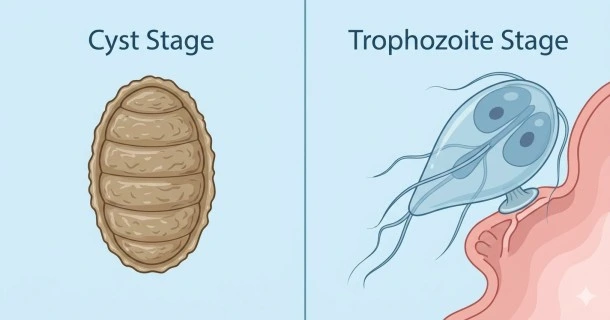
- The Cyst Stage (Infectious Phase): In this dormant form, the parasite is enclosed in a protective shell. Cysts are shed in large numbers through the feces of an infected host. They are instantly infectious upon ingestion and can easily survive in cold water or soil.
- The Trophozoite Stage (Active Phase): Once a person accidentally swallows the cysts, the acidic environment of the stomach triggers a process called excystation. The active, motile forms—called trophozoites—emerge into the small intestine. They use a specialized ventral sucking disk to anchor themselves directly to the lining of the intestinal wall, where they feed, multiply, and cause localized inflammation.
How It Affects the Small Intestine
The presence of multiplying trophozoites creates a physical barrier along the mucosal lining of the small intestine. This lining is normally covered in tiny, finger-like projections called villi, which absorb nutrients from food.
When Giardia populates these areas, it damages the villi—causing them to flatten—and disrupts the secretion of crucial digestive enzymes. This direct interference with the small bowel's surface area prevents the proper absorption of fats, carbohydrates, and essential vitamins, leading directly to the gastrointestinal disturbances associated with the condition.
Epidemiology and Public Health
Anyone can contract giardiasis, but it is particularly common in areas with inadequate water treatment infrastructure or poor sanitation systems. It frequently affects outdoor enthusiasts who drink from natural water sources, international travelers, and individuals in close-contact environments.
While many cases resolve safely with medical management, public health organizations emphasize individual awareness of water safety and strict hand hygiene to curb its spread globally.
Navigating Our Giardiasis Guide
To help you find the exact information you need, we have broken down our comprehensive medical overview into dedicated sections:
- To learn how the parasite is transmitted, see our guide on Giardiasis Causes.
- To read about malabsorption signs and physical presentations, visit Giardiasis Symptoms.
- To discover who is most vulnerable, explore Giardiasis Risk Factors.
- To identify environmental vulnerabilities, read about Giardiasis Triggers.
Frequently Asked Questions (FAQs)
What exactly is giardiasis?
Giardiasis is a widespread parasitic infection of the small intestine caused by a microscopic protozoan named Giardia duodenalis. It is a leading cause of waterborne diarrheal illness globally.
What part of the digestive tract does Giardia affect?
The parasite specifically targets and colonizes the lining of the small intestine. It attaches to the intestinal walls using a sucking disk, which damages the tissue and directly interferes with how your body absorbs nutrients.
Why is the Giardia parasite so hard to eliminate from the environment?
Giardia survives outside a host by forming a hardy, protective shell called a cyst. This cyst shield protects the parasite from extreme temperatures and makes it highly resistant to standard chemical disinfectants like chlorine.
Can you have giardiasis without realizing it?
Yes. Studies show that up to half of individuals infected with the Giardia parasite do not develop any noticeable symptoms. However, even asymptomatic individuals still shed infectious cysts in their feces and can inadvertently pass the infection to others.