
What does SIBO feel like? Learn to recognize the clinical symptoms of Small Intestinal Bacterial Overgrowth, including severe bloating, altered motility, and nutrient malabsorption signs.
Clinical Signs and Symptoms of Small Intestinal Bacterial Overgrowth (SIBO)
Small Intestinal Bacterial Overgrowth (SIBO) symptoms manifest primarily as severe gastrointestinal distress caused by the premature fermentation of dietary carbohydrates in the small bowel. When colonic bacteria move upward into the small intestine, they feast on passing nutrients. This microbial fermentation produces high volumes of gas, triggers localized mucosal inflammation, and interferes with normal nutrient absorption, leading to a distinct cluster of clinical indicators.
Primary Gastrointestinal Symptoms
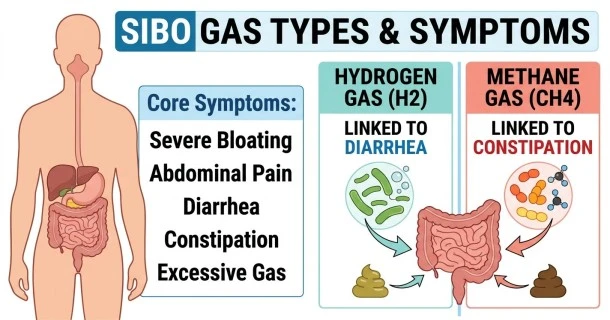
The local accumulation of fermentable gasses alters the volume and pressure within the small bowel loops. According to clinical guidance from the American College of Gastroenterology, patients typically experience the following baseline digestive issues:
- Abdominal Bloating and Distension: The abdomen physically swells and feels uncomfortably tight. This symptom typically worsens as the day goes on or directly following meals containing complex fibers.
- Altered Bowel Motility: Frequent bouts of watery diarrhea, severe constipation, or unpredictable cycling between both states.
- Excessive Flatulence and Belching: The persistent escape of trapped gas generated by expanding bacterial colonies.
- Abdominal Cramping and Pain: Diffuse, uncomfortable pressure across the midsection caused by overstretched intestinal walls.
- Early Satiety: A feeling of intense fullness shortly after starting a meal, often accompanied by mild nausea.
Gaseous Profiling: Hydrogen vs. Methane Symptoms
The specific type of microbe overpopulating the gut dictates the precise nature of the gastrointestinal symptoms. According to diagnostic standards tracked by the Mayo Clinic SIBO Reference Guide, the overgrowth usually presents in three distinct ways:
1. Hydrogen-Dominant SIBO
- Primary Symptom: Diarrhea-predominant stools.
- Mechanism: Rapid breakdown of carbohydrates by classic bacteria yields large quantities of hydrogen gas, which accelerates intestinal transit times.
2. Methane-Dominant Overgrowth (Intestinal Methanogen Overgrowth - IMO)
- Primary Symptom: Stubborn, chronic constipation.
- Mechanism: Specialized ancient microbes called archaea consume hydrogen to produce methane gas. As detailed by the AGA GI Patient Center IMO Guide, methane directly paralyzes smooth muscles, stalling transit times and hardening stool.
3. Hydrogen Sulfide SIBO
- Primary Symptom: Hypersensitive abdominal pain accompanied by foul-smelling gas.
- Mechanism: Sulfate-reducing bacteria produce hydrogen sulfide gas, which carries a distinct "rotten egg" odor and irritates nerve endings in the intestinal lining.
Severe and Advanced Manifestations (Malabsorption)
When an overgrowth remains active for a prolonged period, the expanding bacteria physically damage the delicate microvilli responsible for capturing nutrients. This structural decay leads to serious systemic deficiencies:
- Vitamin B12 Malabsorption: Bacteria consume B12 before the body can process it, which can cause macrocytic anemia, chronic weakness, or tingling in the extremities.
- Steatorrhea (Fatty Stools): Bacteria deconjugate bile acids, destroying the body's ability to digest fats. This results in loose, floating, foul-smelling stools that leave an oily residue.
- Fat-Soluble Nutrient Deficiencies: Depleted absorption levels of vitamins A, D, E, and K, which can gradually lead to accelerated bone thinning (osteoporosis).
- Unexplained Weight Loss: Gradual drop in body mass due to continuous caloric malabsorption.
Systemic and Extra-Intestinal Signs
The inflammation generated inside the small bowel does not always stay contained within the digestive tract. Increased intestinal permeability allows byproducts to enter the bloodstream, sparking systemic issues:
- Chronic Fatigue: Persistent exhaustion linked to metabolic strain and low nutrient levels.
- Cognitive "Brain Fog": Disorientation and difficulty concentrating caused by systemic inflammation.
- Dermatological Flare-ups: Strong correlations with inflammatory skin issues, particularly rosacea and acne-like rashes.
Frequently Asked Questions
How soon after eating do SIBO symptoms typically start?
Symptoms like bloating, upper abdominal pressure, and gas generally start within 30 to 90 minutes after eating. This timeline reflects the time it takes for food to empty from the stomach and hit the bacterial colonies waiting in the small intestine.
Can SIBO symptoms mimic other digestive disorders?
Yes. SIBO symptoms overlap heavily with Irritable Bowel Syndrome (IBS), Celiac disease, and Leaky Gut syndrome. Because the symptoms are so similar, clinicians rely on objective breath testing rather than physical complaints alone to confirm a diagnosis.
Does SIBO cause visible changes to the stomach?
It can cause noticeable visible distension. The expanding gases can stretch the abdominal walls, causing a flat stomach to look noticeably round or distended by the end of the evening.
Can SIBO cause joints to ache or feel stiff?
Yes. The structural damage to the gut lining allows bacterial particles to slip into circulation, which can trigger a systemic immune response. This systemic inflammation frequently manifests as migrating joint discomfort or muscle aches.