
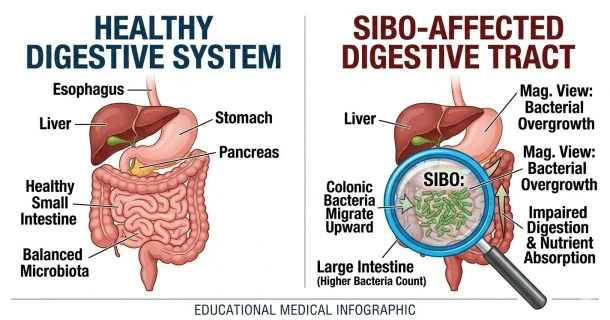
Explore this clinical introduction to Small Intestinal Bacterial Overgrowth (SIBO). Learn how colonic bacteria shift into the small bowel and alter digestion.
Introduction to Small Intestinal Bacterial Overgrowth (SIBO)
Small Intestinal Bacterial Overgrowth (SIBO) is a clinically recognized gastrointestinal disorder defined by an abnormal, excessive accumulation of bacteria within the small bowel. While the human colon (large intestine) is naturally home to billions of microbes, the proximal small intestine is designed to maintain a relatively sparse bacterial environment—typically not exceeding 1,000 organisms per millilitre. [1]
When the body's natural defense mechanisms break down, bacteria migrate upward from the colon or multiply rapidly in place. This shifts the delicate balance of your microbiome, transforming a crucial site of nutrient absorption into a space of premature fermentation.
Normal Gut Balance:
[ Stomach & Small Intestine ] ---> Low bacterial population (<1,000 org/mL)
[ Colon / Large Intestine ] ---> High, dense bacterial population
SIBO Imbalance:
[ Small Intestine ] <--- Colonic bacteria migrate upward & overpopulate
Understanding the Pathology: What Happens in the Small Bowel?
In a healthy digestive tract, the small intestine acts as the primary hub for breaking down food and absorbing vitamins and minerals. It keeps its bacterial levels low using two critical defense systems:
- Gastric Acid clearance: Stomach acid acts as a chemical barrier, neutralizing ingested bacteria before they move further down the tract.
- The Migrating Motor Complex (MMC): A cyclical, electrical wave of movement that physically sweeps residual food and bacteria forward into the colon between meals.
If these protective mechanisms stutter or fail, colonic bacteria (such as Bacteroides or Escherichia coli) anchor themselves in the small bowel. Once established, these organisms begin consuming the carbohydrates, proteins, and vitamins meant for your body.
This premature consumption creates two primary issues: it generates rapid gas byproducts (like hydrogen and methane) and impairs your body's ability to absorb vital fat-soluble nutrients and Vitamin B12.
Navigating Your Gut Health Journey
Because SIBO is a multi-faceted condition, understanding its full layout is the first step toward finding permanent relief. Explore our dedicated resources to learn more about how this condition impacts the body:
- Recognising SIBO Symptoms
Discover how early bacterial fermentation triggers severe abdominal bloating, altered bowel patterns, and systemic issues like nutrient malabsorption. - The Underlying Causes of SIBO
Examine the physiological breakdowns—such as structural alterations, low stomach acid, and intestinal dysmotility—that allow bacteria to thrive. - Identifying SIBO Triggers & Dietary Factors
Learn how specific short-chain carbohydrates (FODMAPs) feed the overgrowth and how acute events like bouts of food poisoning can kickstart the condition. - Are You at Risk? SIBO Risk Factors
Review the medical history markers, including prior abdominal surgeries, aging, and chronic conditions like Diabetes or Celiac disease, that increase your susceptibility.
Frequently Asked Questions
What exactly is the difference between SIBO and a normal gut microbiome?
The primary difference comes down to location and population density. A healthy gut keeps the vast majority of its microbes sealed within the large intestine. In SIBO, colonic bacteria migrate backward into the small intestine, where they rapidly multiply and interfere with standard enzyme breakdown and nutrient absorption.
How do clinicians formally identify an overgrowth?
Gastroenterologists most frequently diagnose the condition using a non-invasive Hydrogen and Methane Breath Test. After a patient drinks a specific sugar solution (like lactulose or glucose), breath samples are collected at set intervals to measure the exact gasses produced when the bacteria ferment that sugar.
Is SIBO considered a standalone disease?
No. In the medical community, SIBO is almost universally viewed as a secondary manifestation of an distinct underlying issue. It indicates that something else in the digestive system—such as anatomical changes from surgery or a slowdown in gut motility—has compromised the body's natural sweeping mechanism.