
Explore the root causes of infectious enteritis. Learn about foodborne pathways, the fecal-oral route, and the specific viruses, bacteria, and parasites responsible.
What Causes Infectious Enteritis? Transmission Pathways & Pathogens
Infectious enteritis is caused by the ingestion of pathogenic viruses, bacteria, or parasites that successfully bypass stomach defenses to colonize and inflame the small intestine [PMC7126705]. Understanding the root causes and specific transmission routes of these microscopic invaders is the single most effective way to prevent localized outbreaks and manage foodborne risks.
The Main Transmission Pathways of Small Intestine Infection
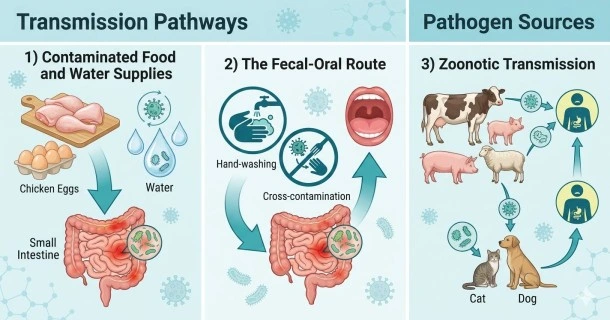
Pathogens do not spontaneously appear in the gut; they are introduced through external vectors. Medically, the transmission of infectious enteritis occurs through three primary environmental routes:
1. Contaminated Food and Water Supplies (Foodborne Illness)
The most common root cause of bacterial and parasitic enteritis is eating or drinking materials contaminated with microscopic amounts of infected fecal matter.
- Undercooked Poultry and Eggs: A frequent source of Salmonella and Campylobacter.
- Unpasteurized Dairy: Raw milk can harbor resilient strains of Listeria or Escherichia coli.
- Contaminated Water Filtration: Recreational water, such as lakes, pools, or municipal systems with filtration failures, often spreads hardy parasites like Cryptosporidium and Giardia.
2. The Fecal-Oral Route
This direct person-to-person transmission occurs when an infected individual fails to practice rigorous hand hygiene after utilizing the restroom or changing a diaper. Residual microscopic pathogens are subsequently transferred to common surfaces, doorknobs, or food preparation areas where a healthy individual picks them up.
3. Zoonotic (Animal-to-Human) Transmission
Direct contact with infected livestock, household pets, or agricultural environments can transfer pathogenic bacteria directly to humans. Handling reptiles, birds, or farm animals without immediate sanitization is a well-documented cause of acute intestinal inflammation.
The 3 Categories of Enteritis Pathogens
To properly manage the infection, clinicians must identify the specific biological agent causing the small bowel inflammation. The causes are grouped into three distinct categories:
┌──> Viral: Norovirus, Rotavirus (Rapid spread, seasonal spikes)
│
[Infectious Enteritis] ───┼──> Bacterial: Salmonella, E. coli, Campylobacter (Toxin-driven)
│
└──> Parasitic: Giardia, Cryptosporidium (Waterborne, lingering)
1. Viral Enteritis Pathogens
Viruses are the leading cause of sudden, explosive outbreaks in community settings like schools, cruise ships, and households.
- Norovirus: Highly infectious and incredibly resilient, it spreads easily across all age groups through surfaces and close contact.
- Rotavirus: Historically the leading cause of severe, dehydrating diarrhea in infants and young children worldwide before widespread vaccination.
2. Bacterial Enteritis Pathogens
Bacterial causes typically trigger more intense localized tissue damage and fluid loss in the small intestine due to the production of dangerous enterotoxins [PMC7126705].
- Campylobacter jejuni: Often linked to raw poultry; it is one of the most widespread bacterial causes of enteritis globally.
- Salmonella enterica: Transmitted via contaminated eggs, poultry, or handling of reptiles.
- Escherichia coli (E. coli): Strains like Shiga toxin-producing E. coli (STEC) cause severe mucosal damage.
3. Parasitic Enteritis Pathogens
Parasites form protective outer shells (cysts) that allow them to survive harsh environments outside the host body for long periods, making them difficult to clear with standard water chlorination.
- Giardia duodenalis: Adheres tightly to the lining of the small bowel, causing malabsorption of fats and long-term bloating.
- Cryptosporidium: A major cause of waterborne outbreaks due to its high tolerance to chlorine.
Frequently Asked Questions (Infectious Enteritis Causes FAQ)
Can a stomach bug cause enteritis?
Yes. What people commonly call a "stomach bug" or "stomach flu" is often viral gastroenteritis. When the primary infection moves past the stomach and heavily inflames the small intestine, it is clinically classified as infectious enteritis.
What is the most common cause of bacterial enteritis?
Globally, Campylobacter and Salmonella are the two most frequently isolated bacterial causes of enteritis. Most cases stem from cross-contamination in the kitchen, consuming undercooked poultry, or eating raw foods that came into contact with contaminated animal waste.
Can you get enteritis from a public swimming pool?
Yes. Parasites like Cryptosporidium have a tough outer shell that makes them highly resistant to standard pool chlorine levels. If an infected person accidentally contaminates the pool water, anyone who accidentally swallows that water can contract parasitic enteritis.
Why do some bacteria cause more severe enteritis than others?
The severity depends on whether the bacteria produce toxins or directly invade the tissue. Strains that produce enterotoxins force cells to dump massive amounts of water into the gut, while invasive strains directly burrow into and damage the delicate lining of the small bowel, causing blood to appear in the stool [PMC7126705].