
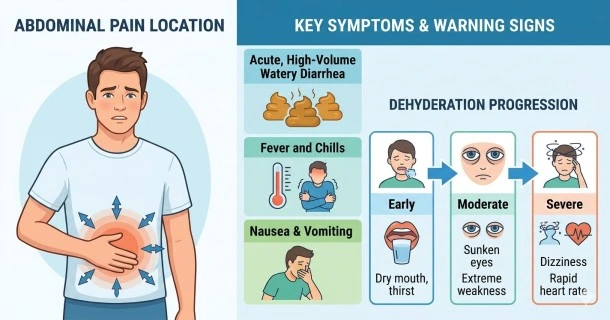
Discover the primary symptoms of infectious enteritis, from watery diarrhea to central abdominal cramps. Learn how to identify clinical red flags for dehydration.
Infectious Enteritis Symptoms: Signs, Stages, and Clinical Red Flags
The primary symptoms of infectious enteritis are acute watery diarrhea, severe abdominal cramping, and rapid fluid loss resulting from inflammation in the small intestine. Because an enterprise-level infection targets the small bowel, symptoms differ slightly from generalized stomach bugs by causing profound disruptions to nutrient absorption and systemic hydration.
Recognizing the exact clinical staging of these symptoms is essential for tracking the severity of the infection and preventing dangerous, fast-acting complications.
The Primary Symptoms of Small Intestine Infection
When viruses, bacteria, or parasites invade the small bowel mucosa, they spark an immediate localized immune response. Patients typically experience a cluster of classic gastrointestinal symptoms:
- Acute, High-Volume Diarhea: Stools are characteristically loose, watery, and frequent. If the pathogen is an invasive bacterial strain (like Salmonella or Campylobacter), it can damage the mucosal lining, leading to dysentery or noticeable streaks of blood and mucus.
- Periumbilical Abdominal Pain: Irritation of the small bowel triggers painful smooth muscle spasms. This pain is typically felt in the center of the abdomen around the belly button and can feel like waves of sharp, severe cramping directly preceding a bowel movement.
- Nausea and Systemic Vomiting: While vomiting is highly characteristic of upper digestive tract involvement, the systemic immune distress from enteritis frequently triggers bouts of nausea, making it exceptionally difficult to retain oral hydration.
- Low-Grade or Spiking Fever: As immune cells fight the microbial invasion, they release pyrogens that elevate core body temperature, often accompanied by system-wide chills, muscle aches, and fatigue.
Symptom Severity Breakdown: Mild vs. Severe
Evaluating the intensity of your presentation dictates whether home hydration management is sufficient or if immediate clinical intervention is required, as outlined by established emergency protocols at the Mayo Clinic.
| Symptom Category | Mild to Moderate Presentation | Severe Red Flags (Seek Immediate Care) |
|---|---|---|
| Diarrhea Frequency | 3 to 5 loose stools per day | Continuous, uncontrolled, or explicitly bloody stools |
| Fluid Retention | Able to keep small sips of water down | Complete inability to retain oral liquids for 24+ hours |
| Core Temperature | Low-grade fever under 101°F (38.3°C) | High fever spiking above 104°F (40°C) |
| Systemic Pain | Intermittent cramping relieved by bowel movements | Severe, unremitting abdominal pain or a rigid, distended stomach |
The Hidden Danger: Advanced Dehydration Symptoms
Because the small intestine is responsible for absorbing over 80% of your daily fluid volume, infectious enteritis can induce severe dehydration remarkably fast. According to clinical references on Cleveland Clinic, patients must watch for these progressive warning signs of dehydration:
[Early Dehydration] ──> Excessive thirst, dry mouth, and darker yellow urine
│
[Moderate Dehydration] ──> Extreme weakness, dizziness upon standing, and sunken eyes
│
[Severe Complications] ──> Little to no urine output, rapid heart rate, and altered mental status
If left unmanaged, severe dehydration triggers electrolyte shifts that can impair renal function and cause hypovolemic shock.
Frequently Asked Questions (Infectious Enteritis Symptoms FAQ)
How quickly do symptoms of infectious enteritis start after exposure?
The incubation period depends entirely on the underlying pathogen. Viral enteritis symptoms typically manifest rapidly within 12 to 48 hours of exposure. Bacterial infections from contaminated food items generally appear within 1 to 3 days, whereas parasitic enteritis (like Giardia) takes 1 to 2 weeks to produce symptoms.
Why does enteritis cause such severe abdominal cramping?
The severe cramping is caused by the small intestine's response to intense hypermotility and localized swelling. As the intestinal lining becomes inflamed by toxins or cellular invasion, the smooth muscles of the intestinal wall contract rapidly and forcefully to flush the pathogens out, creating sharp waves of pain.
Can enteritis cause symptoms outside of the digestive system?
Yes. Systemic immune activation can cause significant extraintestinal symptoms. These commonly include a spiking fever, systemic muscle aches, extreme fatigue, headaches, and joint pain, as the body redirects its metabolic energy toward fighting off the active infection.
When should I see a doctor for enteritis symptoms?
You should contact a healthcare professional or go to an urgent care clinic if you show signs of severe dehydration, cannot keep fluids down for over 24 hours, pass bloody stools, experience severe, localized stomach pain, or if your primary symptoms do not begin to improve after five days.