
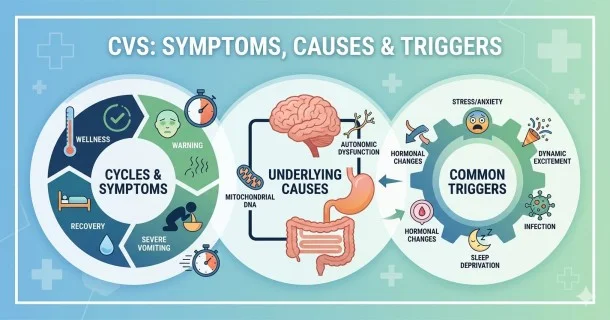
What are the warning signs of a CVS flare-up? Explore the symptoms of Cyclic Vomiting Syndrome across all 4 phases, genetic causes, and common triggers.
Cyclic Vomiting Syndrome Symptoms, Causes, and Clinical Triggers
Differentiating Cyclic Vomiting Syndrome (CVS) symptoms from other acute gastrointestinal issues can be clinically challenging. Because common conditions like food poisoning, standard gastroenteritis, and cyclical mechanical obstructions share the primary features of severe nausea and vomiting, identifying the specific temporal pattern of CVS is essential for an accurate evaluation.
The defining clinical hallmark of CVS is its strict stereotypic nature—episodes tend to occur at similar intervals, last for a predictable duration, and feature identical symptom presentations, always punctuated by intervals of complete wellness.
Detailed Symptoms Across the Four CVS Phases
Cyclic Vomiting Syndrome does not present as a static illness. Instead, symptoms fluctuate predictably across four distinct clinical phases.
1. The Interictal (Symptom-Free) Phase
During this baseline period, which can span weeks or months, patients experience an entire absence of gastrointestinal symptoms. They can eat normally, maintain their routine, and show no outward signs of gastric distress.
2. The Prodrome Phase (The Warning Window)
The prodrome signals that an emetic episode is imminent, lasting anywhere from a few minutes to several hours. Recognizing these early signs is critical, as immediate intervention with prescription rescue treatments can often abort the progression.
- Intense, unremitting nausea that does not respond to standard over-the-counter antiemetics.
- Extreme cutaneous pallor (an unhealthy, distinct paleness of the skin).
- Profuse sweating (diaphoresis) and increased salivation.
- Sensory hyper-reactivity, including an acute sensitivity to light (photophobia), sound (phonophobia), and strong odors.
- Lethargy, mild abdominal discomfort, or deep muscle aches.
Note: A small percentage of patients do not experience a prodromal window and wake up directly in the acute vomiting phase.
3. The Acute Emetic Phase
This is the peak of the flare-up, typically lasting from a few hours to several consecutive days. The patient is often entirely incapacitated and exhibits the following severe clinical signs:
- Persistent vomiting and violent retching (dry-heaving), occurring up to 6 to 12 times per hour at its peak.
- Inability to retain oral intake, including fluids, food, or oral medications.
- Projected fluid composition: Ejecting gastric juices, bitter yellow-green bile, and occasionally blood (hematemesis) caused by small tears in the esophageal lining (Mallory-Weiss tears) from forceful retching.
- Profound exhaustion, drowsiness, and social withdrawal, with patients often curling into a fetal position in a dark, quiet room.
- Autonomic signs, such as low-grade fever, rapid heart rate (tachycardia), or elevated blood pressure.
4. The Recovery Phase
The recovery phase begins when the intense vomiting and retching permanently subside.
- Return of natural skin tone and gradual resolution of nausea.
- Return of appetite and the ability to slowly tolerate clear liquids and bland foods.
- Profound physical exhaustion and muscle soreness, with patients typically requiring prolonged periods of deep sleep to recover from the physical trauma of the emetic phase.
What Causes Cyclic Vomiting Syndrome?
The precise root cause of CVS is still being uncovered by neurogastroenterology researchers. However, current medical consensus indicates that it is a functional brain-gut disorder heavily influenced by specific systemic anomalies.
1. The Mitochondrial Dysfunction Link
Medical research has identified a strong correlation between CVS and specific variations or rearrangements within mitochondrial DNA (mtDNA). Mitochondria are the energy-producing powerhouses of human cells. When mitochondrial function is impaired, cells in the autonomic nervous system and gastrointestinal tract struggle to manage metabolic stress, potentially lowering the threshold for an emetic trigger.
2. The Migraine Variance (Neuro-Autonomic Link)
There is a profound pathophysiological connection between CVS and migraine headaches. CVS is widely considered a "migraine variant." This link is supported by several clinical observations:
- A high percentage of children with CVS have a direct family history of migraines.
- The episodic, stereotypic, and sensory-sensitive nature of CVS attacks mirrors standard neurological migraines.
- Standard anti-migraine therapies (such as triptans or amitriptyline) are highly effective at preventing or aborting cyclic vomiting episodes.
3. Autonomic and Psychological Dysfunction
The autonomic nervous system regulates involuntary bodily functions, including digestion and heart rate. In CVS patients, this system is often hyper-reactive. Psychological factors play a major complicating role:
- Anxiety and Panic Disorders: Clinical data shows that a vast majority of adult CVS patients struggle with underlying anxiety.
- The Sympathetic Cascade: Panic attacks or intense acute anxiety can trigger the sympathetic nervous system, flooding the body with stress hormones that directly initiate a cyclic vomiting flare-up.
Documented Cyclic Vomiting Syndrome Triggers
While the underlying causes are genetic and neurological, individual episodes are almost always set off by specific external or internal catalysts. Mapping and avoiding these risk factors is a vital part of long-term management.
- Infections: Common viral illnesses, such as a cold, flu, sinusitis, or upper respiratory tract infections.
- Psychological Stressors: Both negative emotional distress (anxiety, panic, academic pressure) and positive emotional excitement (holidays, birthdays, vacations).
- Dietary Patterns: Overeating, fasting or skipping meals for long periods, or consuming foods containing known triggers like chocolate, aged cheeses, or monosodium glutamate (MSG).
- Sleep Disturbances: Severe sleep deprivation or erratic sleep schedules.
- Physical Exertion: Exhausting physical exercise or prolonged exhaustion.
- Environmental Factors: Extreme hot weather or sudden atmospheric pressure shifts.
- Hormonal Fluctuations: The drop in hormone levels during the menstrual cycle (often referred to as "catamenial CVS").
Compulsive Hot Bathing Behavior in CVS
A fascinating and highly distinct behavioral symptom observed in many CVS patients is the compulsion to take prolonged hot showers or baths during the early or acute phases of an attack. The application of high-temperature water to the abdomen and back frequently provides temporary relief from the intense nausea and abdominal cramping.
Clinical Note: This specific symptom must be evaluated carefully by a physician to differentiate CVS from Cannabinoid Hyperemesis Syndrome (CHS), a separate condition caused by chronic cannabis use that features identical emetic cycles and hot-bathing behaviors.
FAQ
Can stress or excitement actually cause a cyclic vomiting episode?
Yes. In individuals diagnosed with Cyclic Vomiting Syndrome, the brain-gut axis is highly sensitive to neurochemical shifts. Intense emotional stress—such as panic, anxiety, or trauma—as well as positive excitement—like birthdays, vacations, or holidays—can trigger a surge of autonomic hormones that directly initiate the acute emetic phase.
Why does cyclic vomiting cause an increased sensitivity to light and sound?
Because CVS shares a foundational neurological pathway with migraine headaches. During an attack, the central nervous system experiences a state of sensory hyperexcitability. This causes standard environmental stimuli, such as bright lights (photophobia) or loud sounds (phonophobia), to become painfully intense and worsen the underlying nausea.
Are there any specific blood tests that can pinpoint the cause of CVS?
No, there are no specific blood tests or imaging scans that can directly diagnose or find the cause of CVS. Laboratory evaluations are typically ordered to rule out alternative conditions, check for specific mitochondrial gene variations, or monitor the severe dehydration and electrolyte imbalances that happen during the acute emetic phase.