
Learn to identify common gastritis symptoms like burning upper abdominal pain and bloating, plus critical red-flag signs of erosive gastric bleeding.
Gastritis Symptoms: Signs of Acute, Chronic, and Erosive Inflammation
While many individuals with mild stomach lining irritation experience no noticeable signs, millions of people worldwide struggle with the uncomfortable effects of gastric inflammation. Gastritis symptoms can range from a mild, temporary disruption to severe, painful flare-ups depending on whether the condition is acute, chronic, or has progressed to affect deeper layers of tissue.
Recognizing how these symptoms present can help you differentiate between common indigestion and structural issues that require medical evaluation.
Common Signs of Mild to Moderate Gastritis
When the stomach lining becomes inflamed, it struggles to process food efficiently and secrete normal levels of digestive juices. This disruption typically triggers a predictable cluster of upper gastrointestinal symptoms:
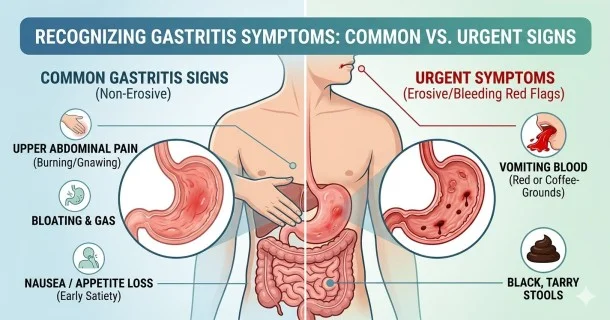
- Upper Abdominal Pain: This is often described as a dull, vague, aching, or gnawing ache, but it can also manifest as a distinct burning pain in the upper stomach after eating.
- Early Satiety and Loss of Appetite: A sudden drop in appetite, or experiencing a strong sensation of painful fullness even after eating just a few bites of a meal.
- Persistent Bloating and Belching: Excess gas accumulation and frequent burping due to altered gastric motility and slowed digestion.
- Nausea and Intermittent Vomiting: A frequent sensation of stomach upset that may or may not result in vomiting up clear, yellow, or greenish fluids.
- Unexplained Weight Loss: Chronic discomfort can cause individuals to consistently skip meals, leading over time to unintentional weight reduction.
Severe Symptoms: Signs of Erosive Gastritis and Bleeding
If localized inflammation is left unmanaged or is exacerbated by heavy NSAID use or severe infections, it can progress into erosive gastritis. This means the superficial lining is starting to wear away, exposing blood vessels.
Internal gastric bleeding is a medical emergency. You should seek immediate clinical evaluation if you experience any of the following severe signs:
- Hematemesis (Vomiting Blood): Seeing bright red blood in your vomit, or throwing up dark, granular material that closely resembles coffee grounds. This occurs when stomach acid has partially digested the blood.
- Melena (Black, Tarry Stools): Passing stools that are sticky, abnormally dark, or completely black. This characteristic appearance is caused by blood passing through the chemical environment of the gastrointestinal tract.
Frequently Asked Questions (FAQ)
What does gastritis pain feel like compared to standard indigestion?
Standard indigestion (dyspepsia) usually causes temporary discomfort, gas, or mild heartburn immediately following an overindulgent meal. Gastritis pain is typically felt as a persistent, localized gnawing or burning sensation in the upper center of the abdomen that can be aggravated—or sometimes temporarily relieved—by eating.
Can you have chronic gastritis without showing any physical symptoms?
Yes. Many individuals with chronic non-erosive gastritis, particularly mild cases triggered by a slow-moving H. pylori bacterial infection, display absolutely no outward symptoms for years while low-grade cellular inflammation is occurring.
Why does stomach bleeding cause vomit to look like coffee grounds?
When blood accumulates within the stomach cavity, it interacts with highly acidic gastric fluids. The hydrochloric acid breaks down the hemoglobin in the blood, turning it dark brown or black and causing it to clump into a grainy texture that closely resembles coffee grounds.