
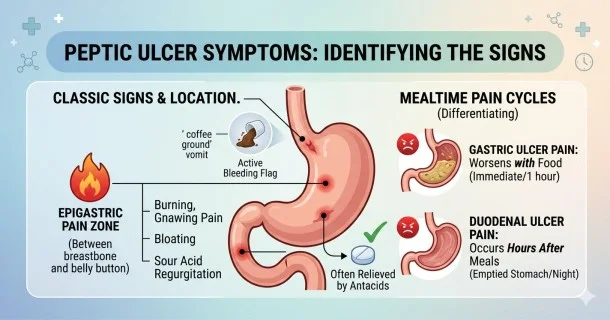
Learn to identify peptic ulcer symptoms, from burning epigastric pain to the distinct food-pain cycles of gastric vs. duodenal ulcers and bleeding signs.
Peptic Ulcer Symptoms: Signs of Gastric, Duodenal, and Bleeding Ulcers
In their earliest stages, peptic ulcers are frequently asymptomatic, causing no noticeable physical discomfort. However, as the mucosal break deepens or triggers localized inflammation, a distinct pattern of upper gastrointestinal symptoms typically emerges.
Recognizing these clinical signs—and understanding how they correlate with your meal patterns—is essential for identifying whether a sore is located in the stomach or the small intestine.
Classic Signs of Peptic Ulcer Disease
The presentation of a typical peptic ulcer revolves around localized nerve irritation caused by acidic gastric juices coming into direct contact with the open sore. Common signs include:
- Epigastric Pain: Characterized by a burning, gnawing, or aching sensation located in the upper-middle abdomen, specifically between the breastbone and the belly button.
- Radiation of Pain: The abdominal discomfort can occasionally radiate through to the mid-back, lasting anywhere from a few minutes to several hours.
- Bloating and Early Fullness: A persistent sensation of abdominal pressure, abdominal distension, or feeling uncomfortable full after eating normal portions.
- Acid Regurgitation: A frequent sensation of sour or bitter stomach acid rushing up into the throat or back of the mouth, often accompanied by mild nausea.
- Unintentional Weight Loss: Chronic discomfort can cause a subtle, progressive loss of appetite, leading individuals to consume less food over time.
Differentiating Ulcer Pain by Mealtime Cycles
The relationship between your pain and your meal schedule is one of the most reliable clinical clues used to distinguish between different types of peptic ulcers:
Esophageal and Gastric Ulcers
- Pain Aggravation: Discomfort typically occurs shortly or immediately after a meal.
- Mechanism: The physical introduction of food and the immediate surge of digestive acid directly irritate the sore on the stomach or esophageal wall.
Duodenal Ulcers
- Pain Delay: Burning pain typically arises 2 to 3 hours after a meal when the stomach has emptied.
- Nocturnal Awakening: Frequently wakes individuals up in the middle of the night when natural gastric acid secretion peaks without food to buffer it.
- Food Relief: The pain is often temporarily relieved by eating a small amount of food or taking an over-the-counter antacid, which neutralizes the acid before it reaches the small intestine.
Urgent Symptoms: Signs of Bleeding Ulcers and Anemia
If a peptic ulcer erodes deep enough into the mucosal wall to sever an underlying blood vessel, it can lead to acute or chronic upper gastrointestinal bleeding.
Signs of Active Gastric Bleeding
- Hematemesis: Vomiting up bright red, active blood or dark, granular material that resembles coffee grounds due to acid digestion.
- Melena: Passing dark, black, tarry, and sticky stools that carry a distinctly foul odor caused by degraded blood cells.
Signs of Chronic Ulcer Anemia
Slow, microscopic ulcer bleeding over weeks or months can gradually deplete your body’s iron stores, leading to iron-deficiency anemia. Watch for these secondary signs:
- Persistent fatigue and an ongoing lack of physical energy.
- Generalized muscle weakness and lightheadedness.
- A noticeably rapid or fluttering heartbeat (tachycardia).
- Skin, gums, or nail beds turning abnormally pale.
Frequently Asked Questions (FAQ)
Why does duodenal ulcer pain improve after eating, while gastric ulcer pain worsens?
When you eat, food acts as a temporary natural buffer that absorbs and neutralizes acid inside the stomach cavity, preventing it from immediately passing into the duodenum and soothing a duodenal ulcer. Conversely, for a gastric ulcer, the physical presence of food triggers a heavy release of fresh digestive acid and stretches the stomach wall, directly irritating the sore.
Why do peptic ulcer symptoms seem to come and go over several weeks?
Peptic ulcers naturally go through cyclical periods of partial temporary healing and recurrence. The protective lining may briefly attempt to repair itself, causing your symptoms to temporarily wane for a few days or weeks, before an abundance of stomach acid or an active H. pylori infection breaks the tissue down again.
When does upper abdominal pain from an ulcer become a medical emergency?
Upper abdominal pain requires immediate emergency medical evaluation if it becomes suddenly severe, sharp, and constant (which can signal a perforation of the stomach wall), or if it is accompanied by red-flag signs of internal bleeding, such as vomiting blood, fainting, or passing black, tarry stools.