
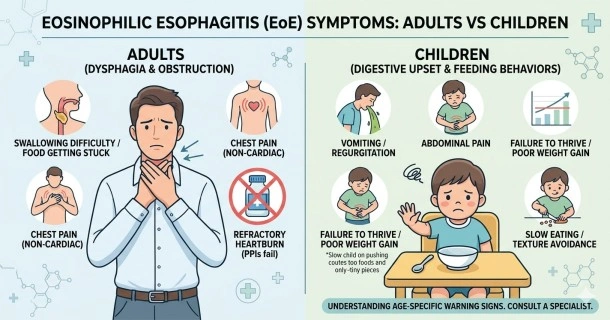
Learn to identify Eosinophilic Esophagitis (EoE) symptoms. Discover how signs vary from dysphagia and food impaction in adults to feeding issues in children.
Understanding Eosinophilic Esophagitis (EoE) Symptoms
Eosinophilic Esophagitis (EoE) is a chronic, immune-mediated condition characterized by an abnormal buildup of inflammatory white blood cells called eosinophils in the lining of the food pipe (esophagus). This allergic inflammation alters the tissue structure, causing the esophagus to stiffen, narrow, or spasm.
Because EoE presents differently across age groups, identifying the exact signs can be challenging. Recognizing these age-specific triggers is crucial for timely diagnosis and preventing long-term esophageal scarring.
EoE Symptoms in Children vs. Adults
The clinical presentation of Eosinophilic Esophagitis evolves significantly over a person's lifespan. While younger populations frequently display non-specific digestive upset, adolescents and adults typically manifest mechanical obstruction indicators.
| Patient Age Group | Primary Symptoms & Warning Signs | Common Behavioral Adaptations |
| Infants & Toddlers | • Feeding refusal or slow eating • Frequent vomiting or regurgitation • Failure to thrive (poor weight gain) | • Arching the back during feeds • Irritability during mealtime • Preference for liquids over solids |
| School-Age Children | • Recurring abdominal pain • Nausea and early satiety • Mild swallowing difficulties | • Cutting food into minuscule pieces • Chewing extensively before swallowing • Avoiding dense textures |
| Teens & Adults | • Dysphagia (difficulty swallowing) • Food impaction episodes • Centrally-located chest pain | • Drinking large amounts of fluids to wash down food • Being the last to finish a meal • Avoiding meat, bread, or dry foods |
Eosinophilic Esophagitis Symptoms in Adults
In mature individuals, the chronic accumulation of eosinophils alters tissue elasticity, leading to noticeable mechanical issues during swallowing. The most common eosinophilic esophagitis symptoms in adults include:
- Dysphagia: The cornerstone symptom of adult EoE is difficulty swallowing solid foods. Patients often describe a sensation of food moving slowly or getting delayed behind the breastbone.
- Food Impaction: A critical sign where dense, solid food physically wedges inside the esophagus. Food impaction signs require immediate emergency evaluation if the patient cannot swallow their own saliva.
- Refractory Heartburn (GERD-like Symptoms): Many adults endure persistent chest burning that fails to respond to maximum doses of acid suppressors like Proton Pump Inhibitors (PPIs).
- Non-Cardiac Chest Pain: Centrally located chest pain, particularly during or right after eating, which mimics heart issues but is entirely esophageal in origin.
Eosinophilic Esophagitis Symptoms in Children and Toddlers
Because babies and toddlers cannot vocalize what they feel, their symptoms show up as behavioral and digestive red flags. Parents should watch out for these key signs of eosinophilic esophagitis in toddlers and children:
- Feeding Problems: A complete disinterest in eating or active refusal of solid textures that require significant chewing.
- Failure to Thrive: Unexplained weight loss, lack of normal childhood growth, or falling behind on pediatric growth charts due to inadequate caloric intake.
- Recurrent Vomiting & Regurgitation: Spitting up undigested food shortly after consuming meals, frequently mistaken for simple pediatric acid reflux.
- Chronic Stomach Pain: School-aged children often complain of deep abdominal discomfort or nausea centered around their midsection.
Emergency Warning Signs
While EoE itself is a slow-progressing, chronic illness, severe tissue narrowing can precipitate dangerous complications. Seek emergency medical care immediately if you or your child experience:
- Food firmly lodged in the throat that will not pass after several minutes.
- Total inability to swallow liquids or clear your own saliva.
- Sudden choking, gasping for breath, or blue discoloration around the lips.
- Severe, sharp chest pain following a hard swallow.
Frequently Asked Questions (FAQ)
Can EoE symptoms come and go during different seasons?
Yes. Because EoE is closely linked to environmental allergies (like hay fever and pollen sensitivity), many individuals experience an escalation of swallowing issues during peak spring or autumn allergy seasons.
Why do PPI antacids fail to resolve EoE chest pain?
Traditional antacids and Proton Pump Inhibitors (PPIs) target stomach acid. Since EoE is driven by an allergic immune response (white blood cells) rather than pure acid regurgitation, acid-blocking medication alone rarely clears the tissue inflammation unless combined with allergen elimination protocols.
How do doctors confirm that symptoms are caused by EoE?
Symptoms alone cannot definitively diagnose EoE because they overlap with severe GERD. The gold standard diagnostic technique is an upper endoscopy paired with a tissue biopsy. A pathologist must confirm a count of 15 or more eosinophils per high-power field (hpf) in the esophageal tissue samples to verify the disease.