
Can foot or hand reflexology provide natural relief for acid reflux? Discover the evidence behind reflexology for GERD, key target zones, and lifestyle tips.
Reflexology for GERD: Can Mapping Foot and Hand Points Soothe Acid Reflux?
When lifestyle changes and standard medical treatments leave you searching for extra comfort, complementary therapies often come to mind. If you are struggling with chronic heartburn or indigestion, you might be wondering about reflexology for GERD as a non-invasive way to help manage your symptoms alongside traditional care.
Understanding Your Reflux Symptoms
Acid reflux happens when digestive juices travel backward up into the food pipe (esophagus). If you experience this frequently, your symptoms are highly consistent with Gastroesophageal Reflux Disease (GERD). However, because digestive issues share overlapping signs, it is important to understand that other conditions could be at play.
Differential Diagnoses to Consider
- Gastroesophageal Reflux Disease (GERD): A chronic condition where the lower esophageal sphincter (LES) relaxes inappropriately, allowing stomach acid to irritate the esophageal lining.
- Peptic Ulcer Disease: Sores that develop on the inner lining of your stomach or upper small intestine, often causing a burning pain that mimics severe heartburn.
- Functional Dyspepsia: Persistent or recurrent signs of indigestion—like early fullness, bloating, or upper abdominal burning—without an identifiable structural disease.
Management and Clinical Treatment Options
Effectively managing persistent reflux requires a holistic strategy tailored to reducing stomach pressure and protecting your esophagus.
- Complementary Practices (Reflexology): While clinical trials specifically mapping reflexology for GERD are limited, general clinical research suggests reflexology can significantly reduce systemic stress, lower anxiety, and improve overall sleep quality. Because stress directly exacerbates esophageal sensitivity and acid production, targeted relaxation plays a supportive role in symptom management.
- Daily Lifestyle Adjustments: Dietary changes form the bedrock of reflux management. Avoid known triggers such as heavy fats, chocolate, mint, and carbonated beverages. Additionally, avoid lying down for at least 3 hours after a meal, eat smaller portions, and keep the head of your bed elevated.
- Conventional Medical Treatments: Over-the-counter and prescription options provide targeted biochemical relief. Antacids work quickly to neutralize circulating acid. For stronger or chronic suppression, your healthcare provider may suggest H2 receptor antagonists (H2 blockers) or proton pump inhibitors (PPIs) to decrease the total volume of acid your stomach produces.
Key Reflexology Zones for Digestive Comfort
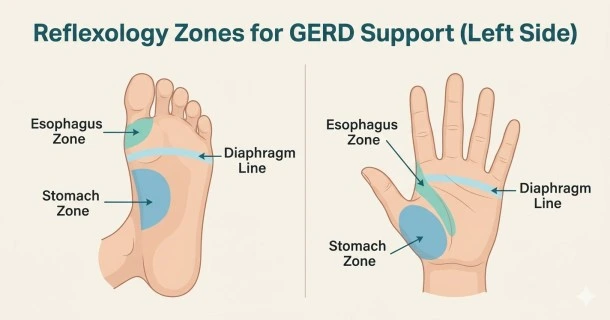
In a reflexology framework, specific zones on the left foot and hand correspond directly to the upper digestive tract. Practitioners target these areas to encourage full-body relaxation and balance gastrointestinal tension.
1. The Stomach Reflex Zone
- Location: Found on the sole of the left foot, just below the ball of the foot under the first and second toes. On the left hand, it is located on the palm, midway down the muscular pad below the thumb.
- Purpose: Reflexologists work this area to help ease localized stomach tension, calm cramping, and reduce upper abdominal fullness.
2. The Esophagus & Sphincter Zone
- Location: Positioned just above the stomach reflex area on the foot, moving up toward the base of the big toe.
- Purpose: Gently massaging this path aims to encourage relaxation around the lower esophageal sphincter, helping to soothe the burning sensation of traveling acid.
3. The Diaphragm Reflex Line
- Location: A horizontal band stretching across the width of both feet, right beneath the balls of the feet. On the hands, it runs along the crease just below your fingers.
- Purpose: Reflux can cause physical tension in the diaphragm muscle. Working this line promotes deep, unrestricted breathing, helping to relieve physical chest tightness.
How to Apply Self-Reflexology for Reflux Support
- Relax Your Body: Sit comfortably, prop up your left foot, and apply a small amount of lotion or oil to keep movements smooth.
- Use the "Thumb-Walking" Technique: Press your thumb firmly into the skin and bend it slightly at the joint, moving forward in a rhythmic, creeping motion across the target zone.
- Maintain Firm, Even Pressure: Keep the pressure deep enough to feel substantial, but back off if a spot feels bruised or sharply painful.
- Dedicate Time: Spend roughly 3 to 5 minutes working the digestive zones on your left foot or hand, practicing steady breathing throughout.
Frequently Asked Questions (FAQs)
Can foot reflexology stop acid reflux instantly?
Reflexology is primarily a relaxation tool and does not provide instant structural or chemical changes to block acid. While the deep relaxation it triggers can help lower stress-induced reflux symptoms, it should be used to support—not replace—your immediate medical treatments.
Why is the stomach reflex zone worked primarily on the left foot?
In anatomical reflexology maps, the organs are reflected on the sides of the body where they physically sit. Because the majority of your stomach is located on the left side of your upper abdomen, its primary reflex zone is mapped to the left foot and hand.
Are there risks to practicing reflexology for GERD?
Reflexology is widely considered a safe, non-invasive practice for most individuals. However, you should avoid deep physical pressure if you have active blood clots, severe varicose veins, foot fractures, or open skin infections. Always consult your primary care doctor before integrating alternative wellness practices into your routine.
Would you like me to generate an illustrative chart image specifically showing these foot and hand reflexology zones for your new webpage, along with optimized alt text?