
Review medically approved treatments for eosinophilic enteritis. Learn how specialists use elimination diets, corticosteroids, biologics, and surgery to resolve gut inflammation.
Eosinophilic Enteritis Treatment: Modern Management and Remission Strategies
Because eosinophilic enteritis is a chronic, relapsing condition, treatment focuses on eliminating active tissue inflammation, alleviating painful gastrointestinal symptoms, and preventing long-term structural changes like strictures or systemic malnutrition. There is no universal cure, so gastroenterologists deploy a combination of targeted dietary exclusions, pharmacological therapies, and clinical monitoring to keep the disease in deep remission.
Early medical intervention is highly recommended to protect the mucosal, muscular, and serosal layers of the small intestine from progressive cellular damage.
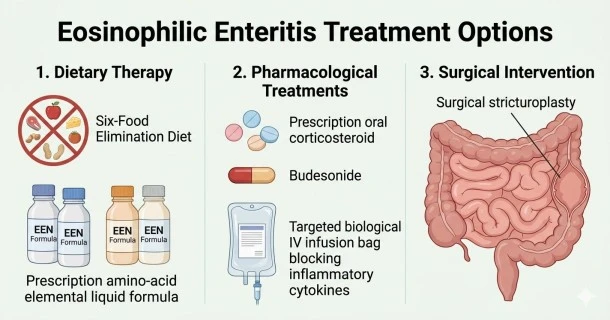
1. Targeted Dietary Interventions (First-Line Therapy)
Since dietary proteins are the primary antigens responsible for driving eosinophilic accumulation in the vast majority of patients, specialized nutritional strategies are highly effective first-line tools.
- The Six-Food Elimination Diet (SFED): This structured approach systematically removes the six most common allergic food groups from a patient's diet for 6 to 8 weeks: cow's milk, wheat, soy, eggs, tree nuts/peanuts, and fish/shellfish. If repeat endoscopies confirm the tissue has cleared, foods are systematically reintroduced one by one to isolate the precise trigger.
- Elemental Diets: For severe or highly reactive cases, patients avoid all solid food and consume an amino-acid-based elemental liquid formula. Because these specialized formulas contain no intact proteins, they do not provoke the Th2 immune cascade, allowing the small bowel lining to heal rapidly.
2. Pharmacological Treatments (Medications)
When dietary modifications are not fully successful, or during severe flares requiring immediate relief, specialists use targeted prescription medications to quiet the overactive immune system.
- Corticosteroids (Systemic and Topical): Short-term oral corticosteroids (such as Prednisone) act as potent anti-inflammatory agents to quickly resolve acute bowel swelling or severe flares. Budesonide, a topical corticosteroid with a high first-pass metabolism in the liver, is often used preferentially to deliver localized therapy to the intestines while minimizing systemic side effects.
- Leukotriene Receptor Antagonists: Medications like Montelukast are sometimes prescribed as maintenance therapies to block leukotrienes—inflammatory chemicals released by eosinophils—helping to prolong periods of symptom-free remission.
- Emerging Biologic Therapies: Advanced biological drugs targeting specific cytokines involved in the eosinophilic pathway are increasingly utilized for refractory cases. These include monoclonal antibodies that directly block Interleukin-5 (IL-5) or its receptor, halting the chemical signals that tell the bone marrow to produce and send eosinophils to the gut.
3. Surgical and Supportive Care
Surgery does not address the underlying immune dysregulation, but it becomes necessary to manage mechanical structural damage within the small intestine.
- Obstruction and Stricture Management: If long-standing muscularis layer inflammation leaves behind dense scar tissue that completely blocks the intestinal passage, a surgical resection or stricturoplasty may be performed to restore standard digestive function.
- Nutritional Replacements: Due to chronic small bowel malabsorption, patients frequently require intensive supplementation with fat-soluble vitamins (A, D, E, K), iron infusions to treat chronic anemia, and calcium support.
Frequently Asked Questions (FAQs)
Can eosinophilic enteritis be cured permanently?
No, there is currently no permanent cure for eosinophilic enteritis, but it can be managed effectively into long-term clinical and microscopic remission. Because it is a chronic condition, stopping your customized elimination diet or maintenance medications can cause eosinophils to slowly migrate back into the intestinal tissue, even if you feel fine initially.
How long does it take for treatments to resolve symptoms?
Most patients observe a significant reduction in active symptoms within 2 to 4 weeks of starting strict elemental diets or corticosteroid regimens. However, completely clearing the microscopic eosinophils from the deep tissue layers takes longer, which is why doctors typically wait 6 to 8 weeks before performing a follow-up check or biopsy.
Is a gluten-free diet enough to treat eosinophilic enteritis?
No, a gluten-free diet alone is rarely sufficient to treat eosinophilic enteritis. While wheat is a common trigger, this disease is driven by a multi-antigen allergic response, meaning most patients react to other protein groups as well (most notably cow's milk). Tailored testing and a guided elimination framework are required rather than simply cutting out gluten.