
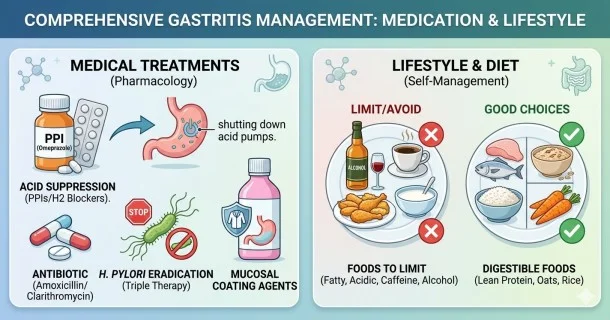
Discover how doctors treat gastritis. Learn about acid suppressors like PPIs, first-line triple therapy for H. pylori, and the best foods to avoid for recovery.
Gastritis Treatment: Medications, Triple Therapy, and Dietary Management
Managing stomach lining inflammation effectively requires a dual approach: eliminating the root physiological trigger and allowing the compromised gastric mucosa to heal. Because gastritis presents uniquely in every individual, clinical treatment plans are typically personalized based on whether the condition stems from an active bacterial infection, regular medication overuse, or chemical irritation.
Under the guidance of a healthcare professional, recovery combines targeted medical therapies with strategic dietary modifications.
1. Core Gastritis Medications for Acid Suppression
To allow the inflamed or eroded stomach lining to repair itself, doctors prescribe medications designed to neutralize or drastically reduce the secretion of corrosive stomach acid.
- Proton Pump Inhibitors (PPIs): The most potent acid-suppressing drugs available. PPIs work by directly shutting down the cellular pumps that produce stomach acid. Common examples include omeprazole, esomeprazole, lansoprazole, rabeprazole, and pantoprazole.
- H2 Blockers (Histamine-2 Receptor Antagonists): These medications reduce the volume of acid released into the digestive tract. Frequently used options include famotidine and cimetidine. (Note: Ranitidine has been clinically withdrawn from international markets due to safety concerns).
- Antacids: Over-the-counter liquid suspensions or chewable tablets containing calcium, magnesium, or aluminum salts. They provide rapid, short-term pain relief by instantly neutralizing existing stomach acid upon contact.
2. Pathogen Eradication and Mucosal Protection
When specific irritants or infections are identified, gastroenterologists deploy targeted pharmacological regimens:
- H. Pylori Eradication (Triple/Quadruple Therapy): If diagnostic tests confirm an H. pylori bacterial infection, standard first-line treatment consists of a rigorous combination therapy. This typically includes a PPI paired with two distinct broad-spectrum antibiotics (such as amoxicillin and clarithromycin) taken simultaneously for 10 to 14 days to prevent bacterial resistance.
- Cytoprotective Shielding Agents: Medications like sucralfate or misoprostol help coat and protect the delicate mucous tissues lining the stomach and duodenum.
- Bismuth Subsalicylate Compounds: Formulations like bismuth subsalicylate serve a dual purpose by physically coating the irritated gastric tissue layers and exerting mild antimicrobial properties that inhibit H. pylori bacterial activity.
3. Dietary Management and Flare-Up Prevention
While dietary adjustments do not cure gastritis on their own, eating a non-irritating diet prevents further damage and reduces painful symptoms during recovery.
Foods to Limit or Avoid
- High-Fat and Fried Foods: Deep-fried items and heavy fatty meats slow down digestion, increasing gastric pressure and prolonging acid exposure.
- Direct Mucosal Irritants: Avoid heavy caffeine, alcohol, highly acidic citrus fruits, tomatoes, and aggressive spices that inflame sensitive stomach tissues.
- Excessive Dairy Products: Limit whole milk and cheeses. While milk might temporarily soothe the stomach, its high calcium and protein content can stimulate rebound acid production a few hours later.
- Gas-Producing Vegetables: Reduce high-fiber foods like raw onions, cabbage, and broccoli if bloating or severe flatulence accompanies your flare-ups.
Optimal Eating Strategies
- Prioritize Easily Digestible Nutrients: Focus on low-fat proteins (poultry, fish), soothing complex carbohydrates (oatmeal, rice, potatoes), and non-citrus fruits.
- Maintain Regular Meal Schedules: Eat small, evenly spaced meals throughout the day. Avoid grazing constantly, as constant food intake forces the stomach to continuously secrete digestive acids.
Frequently Asked Questions (FAQ)
What is the first-line triple therapy for an H. pylori gastritis infection?
First-line triple therapy is a standard 10-to-14-day medication regimen used to eradicate H. pylori. It consists of a proton pump inhibitor (PPI) to lower stomach acid, combined with two strong antibiotics—most commonly amoxicillin and clarithromycin—to systematically destroy the bacterial colony.
Why was ranitidine removed from the list of gastritis medications?
Ranitidine (formerly sold under the brand name Zantac) was globally recalled and completely withdrawn from consumer markets by regulatory health agencies. Testing revealed that the drug could accumulate unacceptable levels of a compound called NDMA, a probable human carcinogen, over time or when exposed to heat. Famotidine is now the preferred H2 blocker.
Does drinking a glass of milk help heal a gastritis flare-up?
No. While drinking cold milk can provide a few minutes of soothing relief by temporarily neutralizing stomach acid, it is counterproductive for long-term healing. The proteins and calcium in milk stimulate the parietal cells in the stomach lining to produce a large surge of "rebound acid" shortly after consumption, which can worsen tissue inflammation.