
Learn how doctors test for gastritis. Explore the diagnostic process, from the gold-standard upper endoscopy and biopsy to non-invasive H. pylori breath tests.
Gastritis Diagnosis: Common Medical Tests and Procedures
Diagnosing gastritis begins with a thorough evaluation of your medical history and a physical examination by a healthcare professional. Because the symptoms of stomach lining inflammation frequently overlap with other digestive conditions like gastroesophageal reflux disease (GERD) or peptic ulcers, specific diagnostic tests are required to confirm inflammation and identify the underlying cause.
Depending on your specific symptoms, your gastroenterologist may recommend non-invasive screenings or direct structural evaluations.
1. Endoscopy and Diagnostic Biopsy
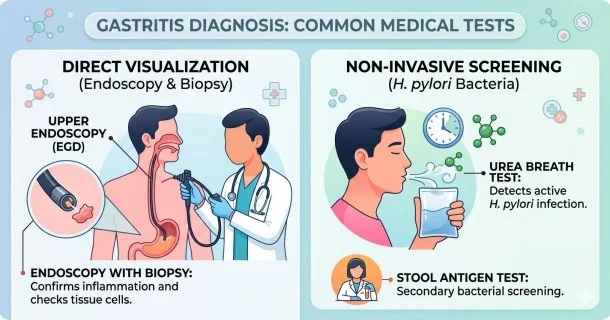
An upper endoscopy (also known as an esophagogastroduodenoscopy or EGD) is the definitive gold standard for confirming a gastritis diagnosis.
- Upper Endoscopy (EGD): A gastroenterologist inserts a thin, flexible tube equipped with a light and camera (endoscope) down your esophagus and into your stomach and duodenum. This allows the doctor to visually inspect the lining for swelling, redness, and small erosions.
- Gastric Biopsy: During the endoscopy, the doctor can pass tiny instruments through the tube to collect a small tissue sample (biopsy) from the stomach lining. A pathologist evaluates this tissue under a microscope to confirm the presence of inflammatory cells and rule out malignancies.
2. Non-Invasive Tests for H. pylori Bacteria
If your doctor suspects that a Helicobacter pylori bacterial infection is driving the inflammation, they will order highly specific, non-invasive tests:
- Urea Breath Test (UBT): You will drink a small glass of a harmless liquid containing tagged carbon molecules. If H. pylori is present, the bacteria break down the liquid and release a distinct gas that can be measured when you exhale into a collection bag.
- Stool Antigen Test: This laboratory test analyzes a stool sample to detect specific proteins (antigens) associated with H. pylori bacteria, confirming an active infection.
- H. pylori Serology (Blood Test): A blood test can identify antibodies your body has created against the bacteria. However, it is less preferred for checking current infections because antibodies can remain in the bloodstream long after the bacteria have been successfully treated.
3. Supportive Diagnostic and Lab Screenings
While these laboratory tests do not directly diagnose gastritis, they are essential for identifying complications, determining root causes, or ruling out other conditions:
- Complete Blood Count (CBC): A routine blood test used to check your red blood cell count. Low red blood cell levels indicate anemia, a common complication of chronic bleeding from erosive gastritis or vitamin B12 malabsorption from autoimmune atrophic gastritis.
- Fecal Occult Blood Test (FOBT): A lab screening that checks stool samples for microscopic traces of blood that are invisible to the naked eye, signaling active erosions or ulcers in the digestive tract.
- Upper GI Series (Barium Swallow): A series of X-rays taken after you swallow a chalky contrast liquid containing barium. This fluid coats your upper digestive tract, creating a detailed silhouette of your esophagus, stomach, and small intestine on the X-ray film to reveal structural abnormalities.
Frequently Asked Questions (FAQ)
Why is a stomach biopsy necessary during an upper endoscopy?
While an endoscopy allows a doctor to see visible inflammation or tissue erosion, a microscopic biopsy is the only definitive way to confirm gastritis. A biopsy determines if the inflammation is acute or chronic, identifies H. pylori bacteria directly, and rules out pre-cancerous cellular changes.
Can a standard blood test show if you have gastritis?
No, a standard blood test cannot directly diagnose gastritis. However, doctors use blood tests to look for systemic clues related to its causes and complications, such as checking for H. pylori antibodies, looking for signs of anemia, or assessing pancreatic and liver function to rule out other abdominal issues.
How do you prepare for an H. pylori urea breath test?
To ensure accurate results, you must avoid taking antibiotics or bismuth subsalicylate (Pepto-Bismol) for at least four weeks prior to the breath test. Additionally, proton pump inhibitors (PPIs) must typically be discontinued for two weeks beforehand, as these medications can suppress the bacteria and cause a false-negative result.