
Learn about pyloric stenosis, a condition causing narrowing of the stomach opening. Explore the differences between congenital infant cases and adult pyloric stenosis.
What is Pyloric Stenosis?
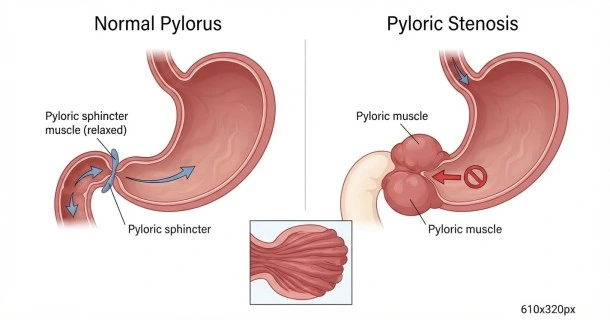
Pyloric stenosis is a gastrointestinal condition characterized by a severe narrowing of the pylorus—the muscular valve or opening that connects the lower part of the stomach to the first section of the small intestine (the duodenum).
When a person has pyloric stenosis, the pyloric sphincter muscle becomes unusually thick and enlarged. This muscular hypertrophy physically blocks food, liquids, and stomach contents from emptying normally into the small bowel, leading to forceful vomiting and severe digestive disruption.
Understanding Pyloric Stenosis Types
While this condition is most famously associated with newborns, it can manifest at two completely distinct stages of life:
1. Infant Hypertrophic Pyloric Stenosis (Congenital)
This is the most common form of the condition. Although it is widely considered a congenital condition, the physical obstruction typically develops over the first few weeks following birth rather than being fully present at delivery.
- The Timeline: It typically presents in babies between two to six weeks of age, though it can develop anytime up to six months.
- Demographics: It affects male infants far more frequently than females; boys have roughly four times the risk of developing the condition compared to girls.
2. Adult Pyloric Stenosis
Though rare compared to infant cases, pyloric stenosis can develop in adults. Unlike the infant form, which stems from developmental muscle hypertrophy, adult pyloric stenosis is almost always an acquired condition. It is primarily caused by physical narrowing or a stricture resulting from scar tissue built up near a chronic peptic ulcer or severe long-term inflammation.
Navigate Our Comprehensive Guides
Because this condition requires careful management, we have broken down its critical aspects into dedicated, deep-dive resources to help you find the exact answers you need:
- Recognize the Signs: Discover how to spot key symptoms, including projectile vomiting in infants, weight loss, and severe dehydration.
- Explore the Root Causes: Learn about the underlying mechanisms behind pyloric sphincter muscle thickening and adult scarring.
- Identify Risk Factors: Find out how genetics, sex, birth order, and environmental influences affect a baby's likelihood of development.
- Understand Potential Triggers: Examine external factors, such as specific early-life medication exposures, that may trigger the condition.
- Diagnosis & Next Steps: Learn how specialists diagnose the condition using abdominal ultrasounds and physical examinations.
- Treatment & Recovery Options: Read about the pyloromyotomy—a minimally invasive surgical procedure used to correct the blockage.
Frequently Asked Questions (FAQs)
What exactly is the pylorus and what does it do?
The pylorus is the lower section of the stomach that connects to the small intestine. It features a muscular ring called the pyloric sphincter, which acts as a gateway, relaxing and contracting to allow partially digested food to move out of the stomach at a controlled pace.
Why is pyloric stenosis more common in boys?
Medical research has consistently shown that male infants are four times more likely to develop hypertrophic pyloric stenosis than female infants. The exact genetic or hormonal reasons for this significant gender disparity remain under active scientific investigation.
Can an adult suddenly develop pyloric stenosis?
Yes, adults can develop pyloric stenosis, but it does not happen overnight. In adults, it is usually the result of long-standing gastrointestinal complications, such as a chronic peptic ulcer that heals and leaves behind a thick layer of rigid scar tissue that gradually closes off the stomach opening.
Is pyloric stenosis completely curable?
Yes, infant pyloric stenosis is highly treatable and entirely curable with a standard, straightforward surgical procedure called a pyloromyotomy. The surgeon makes a small incision in the overgrown pyloric muscle to relieve the pressure and open the passageway, allowing normal digestion to resume almost immediately.