
What is rapid gastric emptying? Learn the fundamentals of dumping syndrome, how early and late phases disrupt digestion, and what causes the stomach to empty too fast.
What Is Rapid Gastric Emptying (Dumping Syndrome)?
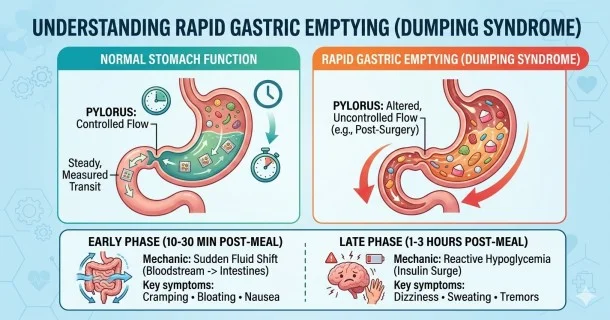
Rapid Gastric Emptying, clinically known as Dumping Syndrome, is a functional digestive disorder that occurs when the stomach empties its contents into the first part of the small intestine (the duodenum) at an unnaturally accelerated rate. This premature delivery of undigested food—particularly simple sugars and refined carbohydrates—disrupts the delicate osmotic and hormonal balance of the lower gastrointestinal tract.
When food enters the small intestine too quickly, it triggers a sudden shift of fluids out of the bloodstream and into the gut, alongside a rapid fluctuation in metabolic blood sugars. For most individuals, this condition arises as a consequence of anatomical alterations from surgery, though non-surgical or idiopathic cases can also occur. Managing rapid gastric emptying requires a clear understanding of its distinct physiological phases.
Early vs. Late Dumping Syndrome: The Two Main Phases
Clinicians divide rapid gastric emptying into two separate phases based on when symptoms occur after eating a meal. While some individuals experience only one phase, others suffer from both distinct windows of discomfort.
- Early Rapid Gastric Emptying: This phase occurs rapidly, typically within 10 to 30 minutes after eating. It is driven by a sudden osmotic shift where water is drawn from the blood vessels into the intestines to help break down the large, undigested food particles. This fluid shift causes rapid bowel stretching and a sudden drop in blood pressure.
- Late Rapid Gastric Emptying: This phase occurs 1 to 3 hours after a meal. It is driven by a metabolic overreaction. The small intestine absorbs a massive spike of sugars all at once, prompting the pancreas to release an excessive surge of insulin. This overproduction causes a sudden crash in blood sugar, a clinical state known as reactive hypoglycemia.
To learn exactly how these two phases affect the body and what physical signs to look out for, read our comprehensive guide to Rapid Gastric Emptying Symptoms.
Why Does the Stomach Empty Too Fast?
The stomach relies on a specialized muscular valve called the pyloric sphincter to carefully meter out food into the intestines in small, manageable amounts. If this valve is bypassed, damaged, or surgically altered, the stomach loses its ability to control the transit timeline, leading to rapid gastric emptying.
The primary risk factors for this mechanical breakdown include bariatric procedures (like gastric bypass), surgeries for peptic ulcers, or nerve damage that disrupts the stomach's natural motility patterns.
To explore the structural changes, underlying conditions, and lifestyle risk factors that cause this condition, see our detailed section on Rapid Gastric Emptying Causes and Risk Factors.
Navigating Diagnosis and Medical Management
Because rapid gastric emptying can mimic other metabolic or gastrointestinal disorders, proper medical evaluation is essential. Specialists rely on specific physiological testing—such as tracking a standardized meal using nuclear imaging scans—to confirm accelerated stomach transit. Once diagnosed, management typically begins with foundational dietary changes, though advanced cases may require targeted prescription medications to slow down digestion.
- If you are currently undergoing medical testing, learn what to expect in our overview of Rapid Gastric Emptying Diagnosis.
- If you are looking for medical protocols, specialized meal plans, or lifestyle tips, visit our chapter on Rapid Gastric Emptying Treatments & Home Remedies.
Frequently Asked Questions (FAQ)
What is the medical definition of rapid gastric emptying?
Rapid gastric emptying (commonly referred to as dumping syndrome) is a condition where food, particularly simple sugars and starches, moves too quickly from the stomach into the duodenum (the first section of the small intestine). This rapid transit disrupts normal fluid balances and hormone regulation, leading to acute gastrointestinal and systemic symptoms.
Is rapid gastric emptying the same thing as dumping syndrome?
Yes. Rapid gastric emptying is the descriptive medical term for the physical action of the stomach clearing its contents too quickly. "Dumping syndrome" is the clinical name used to describe the collection of symptoms (such as dizziness, cramping, and low blood sugar) that happen as a direct result of that accelerated emptying.
Can you resolve rapid gastric emptying naturally?
For many individuals, mild-to-moderate rapid gastric emptying can be managed successfully through strategic dietary changes. This includes eating smaller, more frequent meals, reducing simple sugars, increasing soluble fibers, and separating liquid intake from solid food by at least 30 minutes to naturally slow down gastric transit.