
What are the warning signs of dumping syndrome? Explore the symptoms of rapid gastric emptying across both the early fluid-shift phase and late hypoglycemic phase.
Rapid Gastric Emptying Symptoms: Early & Late Dumping Syndrome Signs
Recognizing rapid gastric emptying symptoms requires careful attention to the clock. Because the signs of Dumping Syndrome can easily be mistaken for food poisoning, panic attacks, or general indigestion, tracking exactly how many minutes or hours pass between your last bite of food and the onset of distress is the most critical step in helping a physician make an accurate evaluation.
Gastroenterologists divide these symptoms into two distinct physiological windows: early dumping syndrome and late dumping syndrome. Depending on your anatomy and the type of food consumed, you may experience one or both of these symptom phases.
Early Dumping Syndrome Symptoms (10 to 30 Minutes Post-Meal)
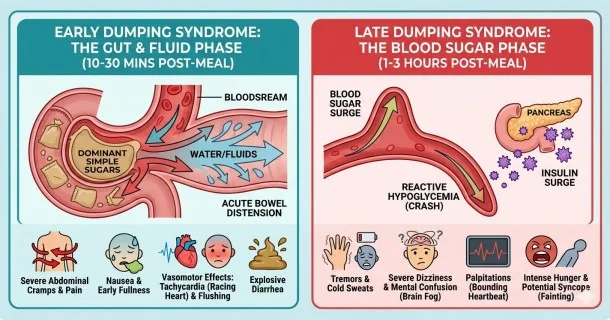
The early phase is primarily a gastrointestinal and fluid-shift event. When heavily concentrated, undigested food dumps rapidly into the small intestine, it acts like a sponge, quickly pulling water out of your surrounding blood vessels and into the bowel. This causes sudden bowel stretching and a temporary drop in blood pressure.
Within 10 to 30 minutes after eating, a patient may experience:
Gastrointestinal Signs
- Severe Abdominal Cramping and Pain: A sharp, twisting sensation as the intestines try to process the sudden influx of food.
- Nausea and Retching: A persistent urge to vomit, often accompanied by an uncomfortable feeling of early fullness.
- Bloating and Audible Borborygmi: Visibly painful distension of the stomach accompanied by loud, hyperactive gurgling or rumbling sounds from the abdomen.
- Sudden, Explosive Diarrhea: The rapid movement of fluid through the intestinal tract frequently forces a sudden evacuation.
Vasomotor (Blood Circulation) Signs
- Rapid Heart Rate (Tachycardia): The heart pumps faster to compensate for the sudden drop in blood pressure.
- Cutaneous Flushing or Warmth: A sudden red, warm sensation spreading across the face, neck, and upper chest.
- Profuse Sweating (Diaphoresis): Breaking into a cold or hot sweat while resting shortly after a meal.
- Dizziness or Lightheadedness: Feeling faint, weak, or unsteady upon standing up right after eating.
Late Dumping Syndrome Symptoms (1 to 3 Hours Post-Meal)
The late phase is entirely a metabolic and hormonal event. When the small intestine is flooded with sugars all at once, the body absorbs them rapidly, causing a sharp spike in blood sugar. In response, the pancreas overreacts by releasing an excessive surge of insulin, which causes blood sugar levels to crash dramatically—a condition known as reactive hypoglycemia.
Within 1 to 3 hours after eating, a patient may experience:
Hypoglycemic (Low Blood Sugar) Signs
- Tremors and Shaking: Uncontrollable shaking, particularly noticeable in the hands.
- Cold Sweats and Chills: Sudden clammy skin and sweating, distinct from the flushing seen in the early phase.
- Severe Dizziness and Mental Confusion: Difficulty concentrating, feeling spacey, or experiencing temporary brain fog.
- Palpitations: A bounding, heavy, or irregular heartbeat felt in the chest.
- Profound Weakness and Fatigue: A sudden, overwhelming feeling of exhaustion that makes standing or walking difficult.
- Intense Hunger or Syncope: A primal craving for sugar or, in severe clinical cases, fainting or loss of consciousness due to starved glucose delivery to the brain.
Clinical Symptom Comparison Matrix
To help determine which phase is driving your post-meal distress, use this quick temporal reference guide:
| Feature | Early Dumping Syndrome | Late Dumping Syndrome |
|---|---|---|
| Timing After Eating | 10 to 30 Minutes | 1 to 3 Hours |
| Primary Physiological Cause | Fluid shift into the bowel | Reactive hypoglycemia (insulin surge) |
| Dominant Gut Symptoms | Bloating, severe cramps, explosive diarrhea | Rare (minimal to no direct gut pain) |
| Dominant Body Symptoms | Skin flushing, rapid heart rate, lightheadedness | Shaking/tremors, mental confusion, cold sweats |
Severe Complications: When to Consult a Specialist
While dumping syndrome symptoms are highly uncomfortable, certain progression signs mean the condition is impacting your nutritional safety. You should consult a gastroenterologist or surgeon if you experience:
- Progressive, Unintended Weight Loss: Malabsorption and a fear of eating due to painful symptoms can cause severe caloric deficits.
- Frequent Fainting (Syncope): Severe blood sugar drops that pose an immediate risk of injury from falls.
- Signs of Nutritional Deficiencies: Chronic bone pain, severe muscle wasting, or profound anemia resulting from the small intestine bypassing key micronutrient absorption windows.
Frequently Asked Questions (FAQ)
Can you experience both early and late dumping syndrome symptoms from the same meal?
Yes. It is clinically common for patients with significant structural changes to the stomach to experience both phases after a single, high-sugar, or high-carbohydrate meal. They will first experience abdominal cramping and flushing within 30 minutes of eating, feel a brief window of relief, and then experience shaking, sweating, and weakness 2 hours later as their blood sugar crashes.
Why does late dumping syndrome cause anxiety-like symptoms like shaking and a racing heart?
The shaking, sweating, and rapid heart rate seen in late dumping syndrome are caused by the body's emergency response to a rapid drop in blood sugar. When glucose levels crash, the brain signals the adrenal glands to flood the bloodstream with epinephrine (adrenaline) to force the liver to release stored sugars. This sudden surge of adrenaline mimics a classic panic or anxiety attack.
Are rapid gastric emptying symptoms worse after drinking liquids with food?
Yes, symptoms are typically much more severe if liquids are consumed alongside solid food. Beverages liquefy the meal and reduce its density, which allows the stomach contents to easily bypass the stomach's natural holding zone and wash directly into the small intestine at an accelerated rate, worsening both fluid shifts and sugar spikes.