
What is functional dyspepsia? Learn the fundamentals of non-ulcer stomach pain, the differences between PDS and EPS subtypes, and how gut-brain interactions cause indigestion.
What Is Functional Dyspepsia? An Overview of Non-Ulcer Stomach Pain
Functional Dyspepsia (FD) is a highly prevalent, chronic digestive disorder affecting the upper gastrointestinal tract. It is characterized by persistent or recurring symptoms of indigestion—such as burning, early fullness, or aching—restricted to the upper abdomen.
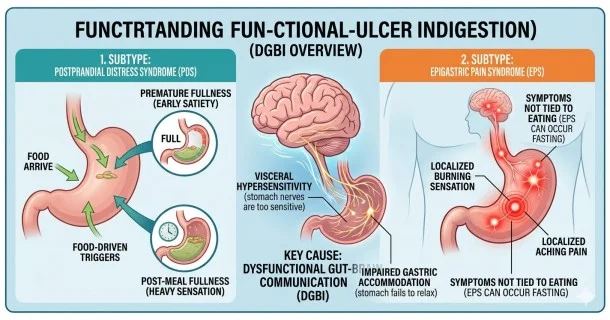
The defining medical hallmark of functional dyspepsia is that it is classified as a disorder of gut-brain interaction (DGBI). This means that while a patient experiences real, often debilitating physical discomfort, diagnostic tests like upper endoscopies, blood panels, and imaging scans reveal no structural abnormalities, inflammation, or ulcers to explain the distress. Instead, the condition stems from communication issues between the brain and the nerves lining the stomach.
The Two Primary Clinical Subtypes of Functional Dyspepsia
To help clinicians provide targeted management, the gold-standard Rome IV Criteria divide functional dyspepsia into two distinct categories based on when and how symptoms primarily manifest. A patient can experience one or both subtypes simultaneously.
- Postprandial Distress Syndrome (PDS): This subtype is directly driven or made worse by eating a meal. Patients experience an uncomfortable, premature feeling of fullness after eating only a small amount of food (early satiety), or a persistent, heavy sensation of food sitting uncomfortably in the upper stomach for hours.
- Epigastric Pain Syndrome (EPS): This subtype features localized pain or burning in the upper abdomen that is not strictly tied to eating. In fact, epigastric burning in EPS can occur during fasting periods and may sometimes be temporarily relieved by consuming food.
Why Does Non-Ulcer Indigestion Happen?
Because functional dyspepsia leaves no visible tissue damage or ulcers, it was historically misunderstood. Modern neurogastroenterology shows that FD is driven by a multi-factored breakdown in the communication network between the central nervous system and the enteric nervous system of the gut.
The primary mechanisms behind this condition include visceral hypersensitivity (where local stomach nerves become hyper-reactive to normal digestive movements) and impaired gastric accommodation (where the upper stomach fails to relax properly to store a meal). Additionally, external lifestyle factors like chronic psychological stress can alter gut motility and significantly lower a patient's pain threshold.
Frequently Asked Questions (FAQ)
What is the official medical definition of functional dyspepsia?
Functional dyspepsia is a disorder of gut-brain interaction characterized by chronic, relapsing symptoms of indigestion—such as post-meal fullness, early satiety, or epigastric pain and burning—that originate in the upper digestive tract, in the absolute absence of any structural or organic disease that could explain the symptoms.
Is functional dyspepsia a lifelong chronic illness?
Functional dyspepsia is classified as a chronic, relapsing condition, meaning symptoms typically fluctuate over time, featuring weeks or months of flare-ups alternating with periods of relative remission. While it can be a long-term condition, it is not progressive or life-threatening, and many patients successfully manage or minimize their symptoms through targeted medical care, stress management, and dietary changes.
Why does functional dyspepsia feel exactly like a stomach ulcer?
It feels identical because both conditions irritate the exact same sensory nerves in the upper abdomen. In peptic ulcer disease, the nerves are irritated by a physical, raw sore in the stomach tissue. In functional dyspepsia, the tissue is completely intact, but the nerves themselves have become hypersensitive (visceral hypersensitivity). This causes completely normal events, like basic stomach acid or muscle stretches, to be perceived by the brain as intense burning or ulcer-like pain.