
Discover what causes functional dyspepsia. Explore the roles of visceral hypersensitivity, gastric accommodation issues, micro-inflammation, and stress.
Functional Dyspepsia Causes: Why Non-Ulcer Indigestion Happens
Understanding functional dyspepsia causes requires shifting away from looking for traditional structural defects like large ulcers or visible tumors. Because Functional Dyspepsia (FD) leaves the stomach lining appearing completely normal during routine testing, medical research focuses heavily on changes in nerve function, cellular health, and muscle coordination.
Modern neurogastroenterology classifies functional dyspepsia as a disorder of gut-brain interaction (DGBI). This means the chronic pain, burning, and early fullness stem from a multi-factored breakdown in how the central nervous system communicates with the enteric nervous system of the digestive tract.
1. Visceral Hypersensitivity (Hyper-Reactive Gut Nerves)
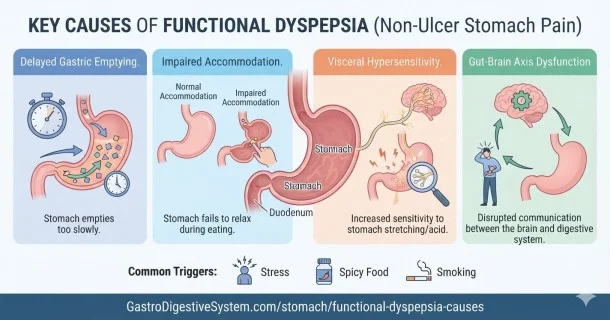
The primary reason patients with functional dyspepsia experience intense pain from normal digestion is a clinical state known as visceral hypersensitivity.
- The Mechanism: The sensory nerve fibers woven throughout the muscle layers of the upper stomach and duodenum are hyper-reactive.
- The Result: Completely routine events—such as the stomach expanding with a normal-sized meal, minor muscle contractions, or exposure to everyday levels of natural gastric acid—are misread by the nervous system. The brain processes these standard signals as intense localized burning, sharp aching, or deep pressure.
2. Impaired Gastric Accommodation and Motility Issues
The physical muscle tissue of the stomach often exhibits functional coordination failures in individuals diagnosed with functional dyspepsia.
- Gastric Accommodation Failure: In a healthy digestive tract, the upper portion of the stomach (the fundus) relaxes and expands automatically when food arrives to store the meal comfortably. In over 40% of FD patients, this relaxation reflex fails. The stomach stays rigid, creating rapid internal pressure that sends premature signals of fullness and nausea to the brain.
- Delayed Gastric Emptying: Also known as mild gastroparesis variants, the lower stomach muscles may grind and move food out into the small intestine at an abnormally slow rate, leaving a heavy sensation long after eating.
3. Microscopic Inflammation and Intestinal Permeability
Emerging clinical data shows that while the stomach looks healthy under standard visual inspection, evaluation at a cellular level often reveals low-grade microscopic inflammation in the first part of the small intestine (the duodenum).
- The Eosinophil Connection: Many individuals with FD show a significantly increased presence of activated eosinophils and mast cells (specialized immune cells) in the duodenal tissue. These cells release inflammatory chemicals that can irritate nearby nerve endings and weaken the tight junctions of the intestinal lining (increased permeability).
- Post-Infectious FD: A distinct percentage of patients develop chronic functional dyspepsia immediately following a severe bout of acute viral or bacterial gastroenteritis (stomach flu). This is known as Post-Infectious Functional Dyspepsia, where the initial infection triggers long-lasting, low-grade immune activation in the gut wall.
4. The Gut-Brain Axis and Psychological Triggers
The connection between emotional distress and physical stomach pain is a bi-directional highway driven by the gut-brain axis.
- The Stress Cascade: Chronic psychological stress, systemic anxiety, and panic disorders cause the brain to release high volumes of corticotropin-releasing factor (CRF) and adrenaline.
- Impact on the Stomach: These stress chemicals alter global stomach motility, trigger immediate muscle spasms, and directly increase visceral nerve sensitivity. This explains why psychological tension can instantly cause an intense physical indigestion flare-up.
Documented Functional Dyspepsia Triggers
While the root causes are genetic, neurological, and immunological, individual episodes are frequently set off or worsened by specific external lifestyle catalysts:
- Dietary Irritants: High-fat meals (which naturally delay stomach emptying), heavily fried items, spicy foods, caffeine, and carbonated beverages.
- Helicobacter pylori Infection: While an H. pylori bacterial infection can cause classic ulcers, it can also induce a localized, low-grade chronic gastritis that triggers functional dyspeptic pain.
- Medication Side Effects: Frequent use of Non-Steroidal Anti-Inflammatory Drugs (NSAIDs) like ibuprofen, which can alter protective gut coatings and lower the stomach's baseline pain threshold.
- Erratic Eating Habits: Skipping meals, overeating rapidly, or consuming large portions late at night before sleep.
Frequently Asked Questions (FAQ)
Can a past stomach infection or food poisoning cause functional dyspepsia?
Yes. This specific presentation is clinically known as Post-Infectious Functional Dyspepsia (PI-FD). If you suffer an acute bout of bacterial gastroenteritis or severe food poisoning (such as from Salmonella or Campylobacter), the infection can leave behind microscopic, low-grade inflammation in the lining of the duodenum. This localized immune activity can permanently alter local nerve function, leading to chronic visceral hypersensitivity and impaired gastric motility long after the original bacteria are gone.
How exactly does chronic anxiety or panic affect the way the stomach handles food?
The brain and stomach are in constant communication via the bi-directional gut-brain axis. When you experience chronic anxiety or panic attacks, your sympathetic nervous system is hyper-activated, flooding your digestive tract with stress hormones like cortisol and adrenaline. In people prone to functional dyspepsia, this chemical influx disrupts normal electrical rhythm signals in the stomach, directly paralyzing the muscle relaxation reflex needed to store a meal and causing food to be perceived as severe pain or burning.
What is the difference between a lack of stomach acid and visceral hypersensitivity?
A lack of stomach acid (hypochlorhydria) is a chemical deficit that can slow down protein digestion, often caused by autoimmune issues or long-term medication use. Visceral hypersensitivity is a neurological issue where the tissue and acid levels are completely normal, but the sensory nerves lining the stomach are over-reactive. Because these nerve endings have an unnaturally low pain threshold, completely normal events—such as standard stomach contractions or basic, healthy levels of gastric acid—are mistakenly interpreted by the brain as an intense burning sensation or severe pressure.