
Explore evidence-based treatments for functional dyspepsia. Learn about low-dose tricyclic neuromodulators, acid suppression, prokinetics, and Iberogast.
Functional Dyspepsia Treatment: Medical Protocols and Management
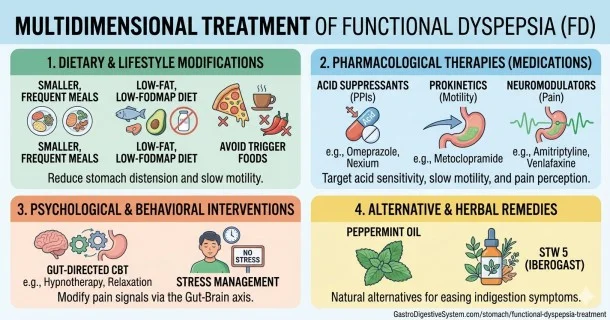
Successfully navigating functional dyspepsia treatment requires a specialized, multidimensional medical strategy. Because Functional Dyspepsia (FD) is classified as a chronic disorder of gut-brain interaction (DGBI), standard over-the-counter antacids alone are rarely sufficient to resolve symptoms.
An effective, evidence-based management plan focuses on a dual approach: optimizing stomach muscle function (motility) and desensitizing hyper-reactive enteric nerve endings (visceral hypersensitivity). Treatment plans are frequently tailored based on whether a patient suffers primarily from Postprandial Distress Syndrome (PDS) or Epigastric Pain Syndrome (EPS).
1. Pharmacological Treatments (Prescription Protocols)
When baseline lifestyle modifications do not provide sufficient relief, gastroenterologists introduce targeted prescription medications to stabilize the stomach's neuro-muscular pathways.
Central Neuromodulators (Nerve-Desensitizing Therapy)
- How It Works: Low-dose tricyclic antidepressants (TCAs)—such as amitriptyline or nortriptyline—are considered highly effective second-line therapies, particularly for Epigastric Pain Syndrome (EPS). At ultra-low clinical doses, these medications do not act as antidepressants; instead, they alter central neurotransmitter pathways to quiet hyper-reactive pain signals traveling from the stomach to the brain.
- Alternative Options: Selective serotonin reuptake inhibitors (SSRIs) or tetracyclic variants like mirtazapine are sometimes preferred for Postprandial Distress Syndrome (PDS), as they can simultaneously help the stomach relax to accommodate food.
Acid Suppression Therapy
- Proton Pump Inhibitors (PPIs): Medications like omeprazole, lansoprazole, or pantoprazole are commonly used as a first-line treatment trial for 4 to 8 weeks. They work by lowering overall gastric acid volume, reducing chemical irritation on hypersensitive abdominal nerve endings.
- H2 Receptor Antagonists: Drugs like famotidine may be substituted if a patient experiences mild symptoms or reacts poorly to long-term PPI protocols.
Prokinetic Agents (Motility Stimulators)
- How It Works: Prokinetics help coordinate and strengthen the muscle contractions of the lower stomach, accelerating delayed gastric emptying. This mechanism is highly beneficial for treating the heavy post-meal fullness and premature satiety characteristic of the PDS subtype.
2. Dietary Changes & Clinical Home Remedies
Nutritional re-education and behavioral therapies are critical components of long-term functional dyspepsia remission.
Macronutrient Modification
- Reduce Dietary Fat Intake: High-fat foods, fried items, and heavy oils naturally stimulate the release of cholecystokinin (CCK), a hormone that delays stomach emptying and increases visceral nerve sensitivity.
- Limit Spicy and Acidic Triggers: Capsaicin (found in chili peppers), citrus juices, and heavy tomato bases can directly irritate sensitive, unshielded mucosal nerve endings, triggering localized burning.
- Incorporate Small, Frequent Portions: Shifting from three large meals to 5 or 6 small, evenly spaced snacks minimizes physical stretching of the stomach wall, helping to bypass gastric accommodation failures.
Herbal Therapies with Clinical Evidence
- STW 5 (Iberogast): A clinically studied, multi-herbal liquid formulation containing bitter candytuft, peppermint, and chamomile. Peer-reviewed data shows it helps relax the upper stomach muscles while easing lower gastric spasms.
- Enteric-Coated Peppermint and Caraway Oil: This combination acts as a natural smooth-muscle relaxant. The enteric coating allows the capsule to pass through the stomach safely before releasing its oils, minimizing the risk of worsening acid reflux or heartburn.
3. Psychological and Vagal Nerve Interventions
Because the brain and gut are connected via a bi-directional highway (the gut-brain axis), treating psychological stress is an authentic method for resolving physical stomach pain.
- Gut-Directed Cognitive Behavioral Therapy (CBT): A specialized form of short-term therapy that helps change how the brain interprets chronic sensory feedback from the digestive tract, lowering visceral hypersensitivity.
- Hypnotherapy: Clinical studies show that gut-directed hypnotherapy can help improve stomach muscle relaxation (gastric accommodation) and lower global pain perception.
| FD Subtype | Primary Treatment Goal | Common Interventions Utilized |
|---|---|---|
| Postprandial Distress (PDS) | Improve stomach relaxation & motility | Small meals, Prokinetics, Mirtazapine, Iberogast |
| Epigastric Pain (EPS) | Lower visceral nerve burning/pain | Proton Pump Inhibitors (PPIs), Low-dose Amitriptyline, CBT |
Frequently Asked Questions (FAQ)
Why does my doctor want me to take amitriptyline for my stomach when I am not depressed?
In neuro-gastroenterology, tricyclic medications like amitriptyline are used as central neuromodulators at a tiny fraction of the dose needed to manage psychiatric depression. At these ultra-low doses, the drug acts directly on the complex network of nerves connecting your brain to your stomach. It helps "turn down the volume" on hyper-reactive gut signals, effectively raising your pain threshold and reversing visceral hypersensitivity.
How long does it typically take for functional dyspepsia treatments to show results?
The response timeline varies significantly depending on the therapy used. While acid-suppressing PPIs can provide mild relief from epigastric burning within 1 to 2 weeks, central neuromodulators (like low-dose amitriptyline) require a steady cumulative effect. It frequently takes 4 to 6 weeks of consistent daily use to see a meaningful reduction in nerve hypersensitivity and overall abdominal pain.
Can lifestyle remedies completely cure functional dyspepsia permanently?
Because functional dyspepsia is a chronic, relapsing condition driven by the gut-brain axis, there is no single permanent "cure." However, many patients successfully achieve complete, long-term symptom remission. This is accomplished by combining strict dietary adjustments (like eating small meals and limiting fats) with routine stress management techniques to prevent the sympathetic nervous system from triggering future flare-ups.