
Learn how to identify the key signs of pyloric stenosis. Discover how projectile vomiting affects infants, and how bloating and early satiety impact adults.
Pyloric Stenosis Symptoms: Recognizing the Signs
The symptoms of pyloric stenosis directly stem from a physical blockage at the stomach's exit (the pylorus). Because food and liquids cannot pass normally into the small intestine, the body forcibly expels them, leading to distinct clinical signs.
While the condition most commonly affects infants, it can also manifest in adults—though the symptoms present quite differently.
Pyloric Stenosis Symptoms in Infants
Signs typically emerge between two to six weeks after birth. Symptoms are progressive, meaning they worsen over time as the pyloric muscle grows thicker.
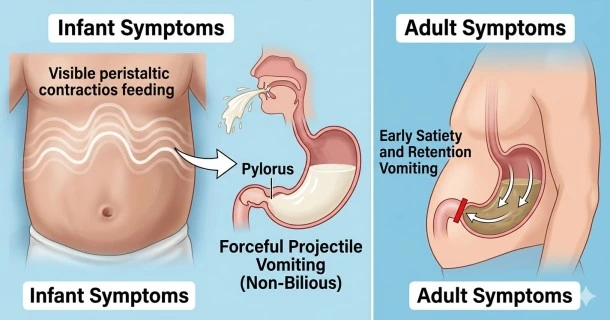
- Projectile Vomiting: This is the hallmark sign. Unlike normal baby spit-up, the infant forcibly ejects breast milk or formula several feet away. It usually occurs within 30 minutes of a feeding.
- Non-Bilious Vomit: The vomited material consists only of milk and stomach enzymes. It does not contain bile, meaning it will not look green or yellow.
- Persistent Hunger ("Hungry Vomiter"): Despite vomiting frequently, the baby remains hungry and will eagerly want to feed again immediately after throwing up.
- Visible Stomach Contractions (Peristalsis): You may notice wave-like ripples moving across the baby's upper abdomen shortly after feeding. This is the stomach muscle straining to force food past the blockage.
- Signs of Dehydration: Due to fluid loss, infants may cry without tears, have a sunken soft spot (fontanelle) on their head, become lethargic, and have significantly fewer wet diapers.
- Changes in Stools: Because very little food reaches the intestines, the baby may suffer from constipation or produce small, hard stools.
- Failure to Thrive: Weight loss or an inability to gain weight normally is a major medical concern.
Pyloric Stenosis Symptoms in Adults
In adults, pyloric stenosis is typically caused by complications from severe, chronic peptic ulcer disease or inflammation. The symptoms develop gradually and match general gastric outlet obstruction:
- Chronic Nausea and Retention Vomiting: Vomiting develops as the narrowing advances. Unlike infants, adults frequently throw up undigested food eaten many hours or even days prior, accompanied by a foul or sour taste.
- Early Satiety: Adults will feel completely full or bloated after eating only a few bites of food, as the stomach cannot empty itself into the intestines.
- Abdominal Bloating and Pain: Persistent fullness, upper abdominal distension, and cramping pain are common after meals as the stomach stretches against the blockage.
- Weight Loss and Malnutrition: Due to the inability to retain nutrients and a reduced appetite from discomfort, progressive weight loss occurs.
- Dehydration and Electrolyte Imbalance: Chronic vomiting causes a severe lack of fluids, leading to reduced urination, extreme fatigue, and muscle weakness.
Frequently Asked Questions (FAQs)
How can I tell the difference between normal baby spit-up and pyloric stenosis?
Normal baby spit-up happens effortlessly and usually slips out of the baby's mouth without force. In contrast, pyloric stenosis causes projectile vomiting, where stomach contents are forcefully launched a noticeable distance across the room.
Does pyloric stenosis ever cause fever?
No, pyloric stenosis itself does not cause a fever. It is a structural blockage, not an infectious disease. If an infant has a fever alongside vomiting, it is more likely related to a viral or bacterial gastroenteritis.
Why does a baby with pyloric stenosis want to eat immediately after throwing up?
Because the physical narrowing prevents milk from leaving the stomach and entering the intestines, the infant cannot absorb nutrients or calories. The baby remains genuinely starving, which is why they eagerly want to nurse or take a bottle right after vomiting.
Can adults experience visible stomach ripples like infants do?
While it is rare, extremely thin adults with severe, long-standing pyloric stenosis may occasionally display visible peristalsis (wave-like stomach contractions) across the upper abdomen as the stomach walls thicken to try and bypass the obstruction.