
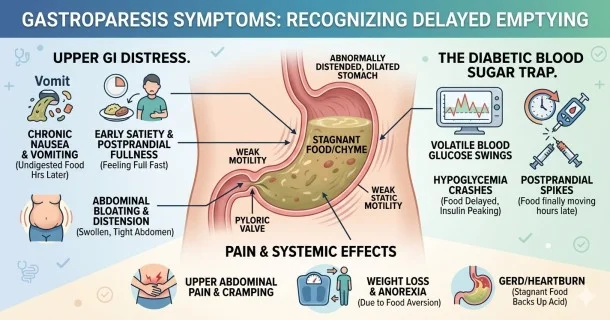
Learn to identify gastroparesis symptoms like early satiety, chronic bloating, vomiting undigested food, and volatile diabetic blood sugar swings.
Gastroparesis Symptoms: Warning Signs of Delayed Gastric Emptying
The symptoms of gastroparesis can vary significantly from person to person, ranging from mild, intermittent digestive discomfort to severe, debilitating flare-ups. Because the stomach cannot empty its contents into the small intestine at a normal rate, food remains stagnant in the stomach cavity. This delay triggers a distinct cluster of upper gastrointestinal symptoms that frequently intensify after eating.
Recognizing how these symptoms present—and how they impact metabolic functions like blood sugar control—is crucial for getting an accurate diagnosis.
Core Symptoms of Delayed Gastric Emptying
When stomach motility slows down, it causes a backup in the upper digestive tract, typically leading to several classic symptoms:
- Early Satiety: Experiencing a pronounced sensation of fullness after consuming only a few bites of a normal meal, making it difficult to finish food.
- Postprandial Fullness: A persistent, uncomfortable feeling of heavy fullness in the upper abdomen that lingers for hours after eating.
- Nausea and Vomiting: Chronic nausea is exceptionally common, often accompanied by vomiting up undigested food hours after a meal has been consumed.
- Abdominal Bloating and Distension: The abdomen feels visibly tight, swollen, or painfully stretched due to trapped gas and stagnant stomach contents.
- Upper Abdominal Pain: Felt as a dull ache, burning sensation, or cramp below the ribs, affecting anywhere from 46% to 89% of gastroparesis patients.
- Anorexia and Weight Loss: A progressive loss of appetite driven by the body associating eating with physical discomfort, which can lead to unintentional weight reduction.
- Gastroesophageal Reflux (Heartburn): Stagnant food creates upward pressure on the lower esophageal sphincter, causing stomach acid to back up into the throat.
How Symptoms Differ by Gastroparesis Type
Clinical data indicates that the primary, dominating symptoms can shift depending on the specific sub-type of gastroparesis a patient has:
Idiopathic Gastroparesis
- Dominant Features: Patients frequently experience high rates of severe, intractable nausea and frequent vomiting as their primary complaints.
- Secondary Features: Early satiety, severe bloating, and abdominal pain are also prominently noted.
Diabetic Gastroparesis
- Dominant Features: Severe abdominal fullness, heavy postprandial bloating, and volatile blood sugar fluctuations dominate the clinical picture.
- The Blood Sugar Trap: Delayed stomach emptying causes unpredictable spikes and crashes in blood glucose. If insulin is taken but food remains stuck in the stomach, severe hypoglycemia (low blood sugar) can occur. When the food finally moves hours later, blood sugar can spike unexpectedly.
Warning Signs of Advanced Complications
If delayed gastric emptying is left unmanaged over a long period, it can lead to secondary complications that require medical attention:
- Severe Dehydration and Malnutrition: Driven by persistent vomiting and the inability to retain essential fluids, vitamins, and calories.
- Bezoar Formation: Stagnant, undigested food material can gradually harden into a solid mass (bezoar) inside the stomach, which can cause a dangerous mechanical obstruction or worsen severe nausea.
Frequently Asked Questions (FAQ)
Why does gastroparesis cause a person to vomit undigested food hours after a meal?
In a healthy digestive system, the stomach completely clears out food within two to four hours after a meal. In gastroparesis, because the stomach muscles lack the coordinated contractions needed to push food forward, meals remain stagnant in the gastric cavity. As a result, when vomiting occurs, it often contains easily recognizable, un-degraded food pieces that were eaten six, eight, or even twelve hours prior.
How exactly does gastroparesis disrupt blood sugar control in diabetics?
Ideally, insulin delivery is timed to match the exact moment food enters the small intestine and releases glucose into the bloodstream. Gastroparesis breaks this timing; the stomach retains the food unpredictably. If a patient takes their mealtime insulin but the food remains stuck in the stomach, insulin levels peak without glucose, causing dangerous hypoglycemia. When the food finally passes hours later, it triggers an unbuffered blood sugar spike.
What is the difference between functional dyspepsia and gastroparesis symptoms?
Both conditions share overlapping symptoms, including upper abdominal pain, early satiety, and postprandial bloating. However, they are distinguished through an objective diagnostic scan called a Gastric Emptying Study (GES). Patients with functional dyspepsia experience these symptoms despite having a normal stomach emptying rate, whereas gastroparesis patients display a physically documented delay in clearing food.