
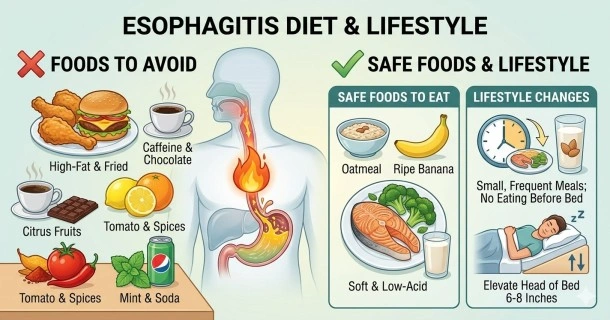
Learn how to manage esophagus inflammation with an esophagitis diet. Discover safe foods to eat, dietary triggers to avoid, and essential lifestyle modifications.
Esophagitis Diet: Managing Mucosal Inflammation Naturally
Dietary choices and daily habits play a definitive role in how quickly the esophageal mucosa recovers from inflammation. An effective esophagitis diet serves a dual medical purpose: it reduces the volume of corrosive stomach acid refluxing into the food pipe and eliminates mechanical irritants that cause friction against the already raw, vulnerable lining.
Foods to Avoid with Esophagitis (Dietary Triggers)
To promote tissue healing and protect the esophageal mucosa, specific dietary items should be restricted or completely omitted from your meals. These items are generally categorized by how they disrupt the upper digestive tract:
Sphincter-Relaxing Options
Certain substances chemically lower the resting pressure of the lower esophageal sphincter (LES), creating an open pathway for acid reflux:
- High-Fat and Fried Foods: Heavy fats slow down gastric emptying, keeping the stomach full and pressurized for longer periods.
- Caffeine and Cacao: Coffee, energy drinks, strong teas, and dark chocolate contain compounds that systematically relax the LES valve.
- Peppermint and Spearmint: Often found in teas or candies, mint oils are potent smooth-muscle relaxants that worsen acid backflow.
Direct Mucosal Irritants
These choices do not necessarily cause reflux, but they cause chemical irritation or structural friction when passing over inflamed tissue:
- Highly Acidic Consumables: Citric beverages (orange, grapefruit, and lemon juices), tomato-based products, and heavily carbonated sodas.
- Pungent Spices: Chili powder, cayenne pepper, black pepper, and intense curry blends can provoke immediate burning upon contact.
- Coarse or Hard Textures: During an acute flare-up, crunchy foods like nuts, seeds, crackers, tortilla chips, and raw vegetables can mechanically scratch the vulnerable lining.
Esophagitis Safe Foods (Nutritional Support)
When building a recovery menu, focus on nutrient-dense, easily digestible options that exert a soothing effect on the digestive tract:
- Soft and Pureed Textures: Lean proteins (cooked fish, skinless poultry, eggs), well-cooked grains (oatmeal), soft melons, bananas, and thoroughly cooked vegetables are gentle to swallow.
- Non-Citrus Fruits and Alkaline Vegetables: Plant options like broccoli, cauliflower, green beans, asparagus, and cucumbers help buffer gastric acids.
- Healthy Liquid Bases: Bone broths, non-dairy milk alternatives (almond or oat milk), and pure water provide essential hydration without triggering chemical irritation.
Home Remedies and Clinical Lifestyle Changes
Implementing structured behavioral changes provides continuous structural relief to the lower esophageal valve and accelerates mucosal healing:
- Optimize Meal Frequency: Divide your nutritional intake into five or six small, frequent meals rather than three large, heavy sittings to reduce intra-gastric pressure.
- Maintain Postural Elevation: Remain in a completely upright, seated, or standing position during meals and for at least 40 to 60 minutes afterward.
- Practice Mindful Mastication: Chew all solid food thoroughly into a smooth, liquid consistency before swallowing to reduce mechanical strain on the esophagus.
- Establish a Pre-Bedtime Buffer: Conclude your final meal or snack at least two to three hours before lying flat to allow the stomach to empty completely.
- Mechanically Elevate the Head of the Bed: Raise the head of your bed by 6 to 8 inches using physical blocks under the bedposts or a therapeutic mattress wedge pillow. This utilizes gravity to keep gastric contents inside the stomach cavity overnight.
- Eliminate Systemic Toxins: Avoid all forms of tobacco use, smoking, and alcohol consumption, as these chemical agents directly damage mucosal cells and weaken the LES.
- Reduce Abdominal Pressure: Wear loose, comfortable clothing that does not constrict the waist or stomach area, and manage body weight intentionally to reduce upward physical pressure on the stomach.
Frequently Asked Questions (FAQs)
What foods soothe an inflamed esophagus?
Soft, low-acid foods are highly soothing for an inflamed esophagus. Oatmeal, bone broth, ripe bananas, melons, pureed vegetable soups, and lean proteins like baked fish or scrambled eggs minimize mechanical irritation and are easy to swallow.
Can I drink milk if I have esophagitis?
While whole milk might provide temporary soothing relief due to its thick texture, its high fat content can ultimately trigger the stomach to produce more acid and relax the lower esophageal sphincter. Opting for low-fat milk or non-dairy alternatives like almond or oat milk is generally safer.
Why does elevating the head of the bed help esophagitis?
Elevating the head of the bed by 6 to 8 inches uses the natural asset of gravity to prevent stomach acid from traveling upward into the esophagus while you sleep. This prevents nighttime acid pooling, giving the esophageal mucosa an uninterrupted environment to heal.