
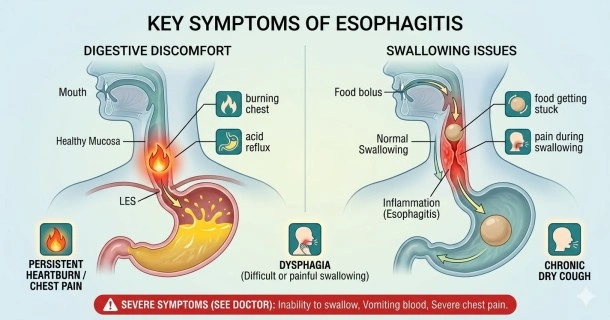
Learn to recognize the common and severe symptoms of esophagitis, including swallowing difficulties, persistent heartburn, chest pain, and signs that require immediate medical care.
Esophagitis Symptoms: Recognizing the Signs of Esophagus Inflammation
When the inner lining of the esophagus becomes inflamed, it disrupts the normal digestive process and causes a distinct set of physical discomforts. Esophagitis symptoms can range from mild, intermittent irritation to severe, debilitating pain that interferes with daily nutrition. Recognizing these signs early is essential to prevent long-term damage to the esophageal tissue.
Primary Symptoms of Esophagitis
Most individuals experiencing esophagus inflammation present with one or more of the following clinical signs:
- Dysphagia (Difficulty Swallowing): A persistent sensation that food or liquids are moving too slowly, sticking, or getting entirely lodged in the chest or throat.
- Odynophagia (Painful Swallowing): A sharp, burning, or squeezing pain that occurs immediately as food passes through the food pipe.
- Persistent Heartburn: A distinct burning sensation located in the upper abdomen or lower chest, directly behind the breastbone.
- Acid Regurgitation: The involuntary backflow of corrosive stomach acid, bile, or partially digested food particles into the back of the mouth, leaving a bitter or sour taste.
- Atypical Chest Pain: A localized discomfort or pressure behind the breastbone that mimics cardiac pain. This discomfort is often most noticeable while eating or drinking.
- Throat and Airway Irritation: A chronic dry cough, frequent throat clearing, a constant hoarse voice, or a lingering sore throat caused by micro-aspiration of acidic fluids.
- Nausea and Vomiting: A persistent feeling of gastric distress, which can sometimes escalate to vomiting.
- Globus Sensation: An uncomfortable feeling of a lump or a constant tightness stuck in the throat, even when not attempting to swallow food.
- Halitosis (Chronic Bad Breath): Persistent foul breath resulting from regular acid reflux or food particles failing to clear the inflamed lower esophagus properly.
When Are Symptoms Most Severe?
The discomfort associated with esophagus irritation is highly sensitive to gravity and internal pressure. Symptoms characteristically intensify during:
- Lying Down: Resting flat in bed—especially at night or shortly after a meal—allows stomach contents to travel upward into the esophagus more freely.
- Physical Postures: Bending forward at the waist, lifting heavy objects, or straining increases intra-abdominal pressure, forcing gastric juices upward against the inflamed mucosal lining.
Severe Symptoms Requiring Urgent Evaluation
Certain clinical signs indicate deep ulceration, severe structural blockage, or tissue tearing. Seek immediate medical attention if you experience:
- An inability to swallow any liquids or solids.
- Food becoming completely trapped in the esophagus.
- Vomiting blood or material that resembles dark coffee grounds.
- Black, tarry, or bloody stools.
- Shortness of breath or severe chest pain that radiates to the jaw, neck, or arm.
Frequently Asked Questions (FAQs)
What does esophagitis feel like in the chest?
Esophagitis typically causes a burning or aching pain located directly behind the breastbone (heartburn). It can also manifest as a sharp, squeezing chest discomfort that worsens noticeably when you swallow food or lie down flat.
Can esophagitis cause a persistent cough?
Yes. Chronic esophagus irritation can cause a persistent dry cough. This happens when microscopic amounts of stomach acid travel up the esophagus and irritate the throat or airways, triggering a constant cough reflex.
Why do esophagitis symptoms get worse at night?
Symptoms worsen at night because lying flat eliminates the natural benefit of gravity, which normally helps keep stomach acid down. This horizontal position allows corrosive fluids to pool in the esophagus, increasing tissue irritation.