
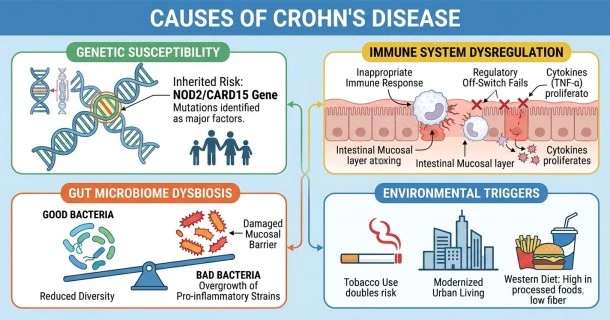
Discover what causes Crohn's disease. Explore the underlying genetic mutations, immune system dysregulation, and environmental factors that combine to trigger chronic gut inflammation.
Crohn’s Disease Causes: Understanding the Mechanisms Behind Intestinal Inflammation
While the exact primary cause of Crohn’s disease remains unknown, extensive clinical research reveals that it is not triggered by a single factor. Instead, Crohn’s disease is caused by a complex, multi-faceted interaction between genetic predisposition, an overactive immune system response, and environmental triggers.
Understanding these underlying mechanisms helps demystify why the disease develops and underscores why treatment requires managing the body's internal immune pathways rather than relying on a simple quick fix.
1. Genetic Factors and Inherited Susceptibility
Genetics play a critical foundational role in an individual's likelihood of developing Crohn’s disease. Clinical data shows that up to 20% of people diagnosed with the condition have a first-degree relative (parent, sibling, or child) who also suffers from Inflammatory Bowel Disease (IBD).
- The NOD2/CARD15 Gene: Scientists have identified specific mutations in the NOD2 (also known as CARD15) gene as strong genetic risk factors for Crohn's disease. This gene encodes a protein responsible for recognizing bacterial cell walls. When mutated, it impairs how the gut handles bacteria, paving the way for chronic inflammation.
- Polygenic Inheritance: Beyond NOD2, researchers have mapped over 200 distinct genetic loci associated with an increased susceptibility to IBD, particularly genes involved in the structural integrity of the intestinal mucosal barrier.
2. Immune System Dysregulation
In a healthy individual, the immune system populates the gut with protective cells that monitor foreign microbes while ignoring beneficial, symbiotic gut flora. In patients with Crohn’s disease, this regulatory mechanism fails entirely.
- Inappropriate Aggression: The immune system mistakes harmless resident gut bacteria, food particles, or environmental antigens for dangerous invaders.
- Unchecked Inflammatory Cascade: White blood cells flood the mucosal lining, producing high amounts of inflammatory proteins called cytokines (such as Tumor Necrosis Factor-alpha or TNF-α).
- Lack of an "Off-Switch": Instead of clearing a temporary threat and settling down, the inflammatory pathway remains permanently active, leading directly to the deep tissue damage, ulceration, and structural scarring seen in the intestines.
3. Alterations in the Gut Microbiome (Dysbiosis)
The human digestive tract is home to trillions of microscopic organisms collectively known as the gut microbiota. A severe imbalance in this ecosystem is a critical component in the development of Crohn's disease.
- Loss of Microbial Diversity: Patients with active Crohn’s disease typically display a significant drop in the variety of beneficial bacterial strains (such as Firmicutes).
- Overgrowth of Pro-inflammatory Strains: An overabundance of aggressive bacterial groups (such as Adherent-Invasive Escherichia coli or AIEC) penetrates the mucosal defense layer, constantly provoking the immune cells lying beneath.
4. Environmental and Lifestyle Influences
Genetics load the gun, but environmental factors often pull the trigger. Several distinct modern elements are strongly linked to the onset and progression of the disease:
- Tobacco Use: Cigarette smoking is the most significant, preventable environmental factor. Smoking doubles the risk of developing Crohn's disease, worsens flares, and increases the likelihood of requiring surgery.
- The "Western Diet": Diets high in refined sugars, ultra-processed foods, and unhealthy fats, paired with low fiber intake, physically alter the gut microbiome and weaken the protective mucus layer of the intestines.
- Sanitation and the Hygiene Hypothesis: The disease is drastically more common in urbanized, developed countries. The "hygiene hypothesis" suggests that limited exposure to diverse microbes during early childhood may lead to an underdeveloped, hyper-reactive immune system later in life.
Frequently Asked Questions (FAQs)
Can stress or bad eating habits cause Crohn’s disease?
No, neither psychological stress nor poor dietary habits cause Crohn's disease. However, if an individual already has the underlying genetic and immune susceptibility, chronic emotional stress or a diet heavy in highly processed foods can severely aggravate existing inflammation and trigger painful clinical flare-ups.
Is Crohn’s disease caused by a specific virus or bacteria?
No, Crohn's disease is not caused by a single infectious pathogen. While certain bacteria like Adherent-Invasive E. coli are found in higher quantities in inflamed tissue, the disease is the result of the immune system's widespread, inappropriate reaction to the entire ecosystem of normal gut microbes, rather than a traditional, contagious infection.
Why does smoking make Crohn's disease causes and progression worse?
Smoking directly introduces toxins that alter the protective mucus lining of the gut, reduce localized blood flow to the intestines, and upregulate systemic inflammatory pathways. While smoking worsens Crohn's disease, it curiously has the opposite, mildly protective effect in Ulcerative Colitis—highlighting the distinct biological pathways between the two conditions.