
Explore the comprehensive clinical symptoms of Crohn's disease. Learn to identify early digestive indicators, systemic signs, and advanced complications.
Crohn’s Disease Symptoms: Recognizing the Clinical Signs and Complications
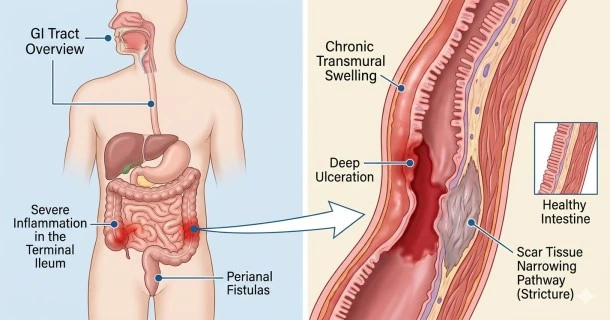
The symptoms of Crohn’s disease vary significantly based on the location and severity of the inflammation along the gastrointestinal (GI) tract. Because Crohn’s disease causes patchy, transmural (all tissue layers) inflammation, symptoms can fluctuate over time, cycling between active flare-ups and periods of quiet remission. Recognizing these indicators early is critical to stopping progressive bowel damage.
Core Gastrointestinal Symptoms
Most individuals experiencing an active flare-up of Crohn’s disease present with a distinct cluster of digestive symptoms. These are caused directly by tissue swelling, ulceration, and fluid shifts in the intestines:
- Chronic Diarrhea: Persistent loose or watery stools lasting for weeks, frequently accompanied by urgent bowel movements.
- Abdominal Pain and Cramping: Severe cramping usually localized in the lower right quadrant of the abdomen, where the small and large intestines meet (terminal ileum).
- Blood in the Stool: Visible bright red blood or dark, tarry stools caused by deep mucosal ulcerations bleeding into the intestinal lumen.
- Tenemus: A frequent, painful sensation of needing to pass stool even when the bowels are completely empty.
Systemic (Whole-Body) Symptoms
Because Crohn's disease triggers an intense, body-wide immune response, it frequently causes symptoms that extend beyond the digestive tract:
- Unexplained Weight Loss: A direct result of severe intestinal malabsorption, where damaged villi can no longer process vitamins, minerals, and macronutrients.
- Chronic Fatigue: Persistent, debilitating exhaustion driven by chronic systemic inflammation, poor nutrient intake, or underlying blood loss.
- Recurrent Low-Grade Fevers: Intermittent spikes in body temperature caused by active inflammatory flares or hidden intra-abdominal abscesses.
- Loss of Appetite: Nausea and a natural aversion to eating, as consuming food often worsens abdominal cramping.
Extraintestinal Manifestations (Symptoms Outside the Gut)
Up to 40% of individuals living with Crohn's disease experience immune-mediated symptoms targeting organs completely outside the gastrointestinal tract:
- Joint Symptoms: Inflammatory arthritis, swelling, and migratory pain primarily affecting large joints like the knees, ankles, and wrists.
- Skin Complications: Painful, red nodules on the shins (erythema nodosum) or deep, open skin ulcers (pyoderma gangrenosum).
- Ocular Inflammation: Painful, red, or light-sensitive eyes caused by underlying conditions like uveitis or episcleritis.
- Oral Lesions: Recurrent, painful aphthous ulcers (canker sores) developing inside the mouth during active flare-ups.
Symptoms of Advanced Structural Complications
If chronic inflammation goes untreated, it alters the physical architecture of the bowel, producing distinct emergency symptoms:
- Intestinal Strictures: Severe narrowing of the bowel due to scar tissue buildup, causing intense bloating, projectile vomiting, and an inability to pass gas.
- Fistula Tracts: Abnormal tunnels piercing completely through the bowel wall, leading to drainage of fecal fluid onto the skin or surrounding organs.
- Perianal Crohn's: Deep, painful tears (fissures), swollen skin tags, or draining pockets of pus (abscesses) around the anal opening.
Frequently Asked Questions (FAQs)
What are usually the very first signs of Crohn’s disease?
The earliest signs of Crohn's disease are frequently mistaken for standard stomach flu or irritable bowel syndrome (IBS). Most patients initially experience lingering low-grade fevers, unexplained fatigue, mild but persistent cramping in the lower right abdomen, and an increasing frequency of loose stools that does not resolve after a couple of weeks.
How do Crohn's disease symptoms differ from Irritable Bowel Syndrome (IBS)?
While both cause abdominal pain and altered bowel habits, Crohn's disease causes structural, visible tissue destruction, whereas IBS does not. Crohn’s disease symptoms feature elevated biological markers of inflammation, structural damage like ulcers, bleeding, and weight loss. IBS is a functional disorder where the gut looks completely normal upon endoscopic inspection.
When do Crohn's symptoms require emergency medical care?
You should seek emergency medical attention if you experience signs of a complete bowel obstruction or perforation. These red-flag symptoms include high fevers accompanied by severe, rigid abdominal pain, uncontrollable projectile vomiting, an inability to pass stool or gas, or massive, continuous rectal bleeding.