
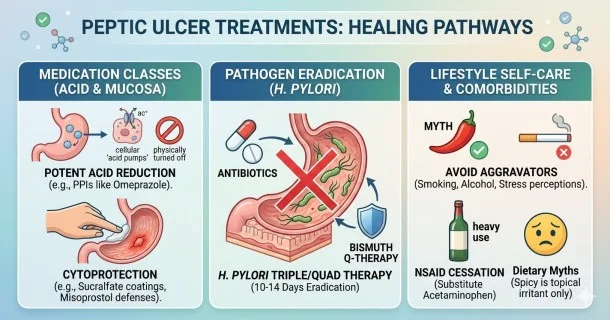
Explore modern peptic ulcer treatment options. Learn about PPI acid suppressors, first-line antibiotic triple therapy for H. pylori, and cytoprotective agents.
Peptic Ulcer Treatments: Medications, Eradication Therapy, and Core Management
Treating peptic ulcer disease (PUD) effectively focuses on neutralising aggressive gastric acids, eradicating underlying bacterial pathogens, and providing structural protection to the mucosal lining. Clinical intervention strategies are tailored directly to the verified cause of the mucosal break, most commonly an active H. pylori infection or chronic NSAID use.
Under proper medical oversight, modern pharmacological regimens allow the vast majority of ulcers to heal completely without surgical intervention.
Core Medication Categories for Peptic Ulcers
Gastroenterologists deploy several distinct classes of medication to suppress gastric acidity, protect raw tissue, or heal mucosal erosions.
| Medication Class | Primary Mechanism of Action | Common Clinical Examples | Key Side Effects & Clinical Notes |
|---|---|---|---|
| Proton Pump Inhibitors (PPIs) | Shuts down cellular acid pumps for potent, long-lasting acid reduction. | Omeprazole, Pantoprazole, Lansoprazole, Esomeprazole, Rabeprazole | Diarrhea, headache, dizziness. The most effective healing agents available today. |
| H2 Blockers | Blocks histamine signals on parietal cells to decrease acid production. | Famotidine, Cimetidine, Nizatidine | GI discomfort, headache. (Note: Ranitidine has been globally withdrawn due to safety risks). |
| Sucralfate | Forms a physical, protective chemical paste barrier directly over the open ulcer crater. | Carafate, Sucrafil, Sulcrate | Constipation (2-3%), bezoar risk. Take on an empty stomach 2 hours apart from other drugs. |
| Misoprostol | Synthetic prostaglandin that replaces defenses lost due to NSAID usage. | Cytotec | Abdominal cramps, diarrhea. Strictly contraindicated during pregnancy due to uterine risks. |
| Antacids | Instantly neutralizes existing hydrochloric acid in the stomach cavity. | Tums (Calcium), Milk of Magnesia, Mylanta, Gelusil | Calcium causes constipation; Magnesium causes diarrhea. Best for rapid, short-term symptom relief. |
Pathogen Eradication: H. pylori Combination Therapies
When diagnostic screenings confirm that Helicobacter pylori bacteria caused the tissue breakdown, a single antibiotic is completely ineffective. Doctors deploy multi-drug combination therapies for 10 to 14 days:
- Standard First-Line Triple Therapy: Combines a high-dose Proton Pump Inhibitor (PPI) taken twice daily with two broad-spectrum antibiotics—typically Amoxicillin and Clarithromycin.
- Alternative Triple Therapy: Substitutes Metronidazole for Amoxicillin in individuals with verified penicillin allergies.
- Bismuth Quadruple Therapy: Deployed for severe, drug-resistant bacterial strains. This adds a bismuth subsalicylate compound alongside a PPI and two antibiotics (such as Tetracycline and Metronidazole) to create a multi-layered antimicrobial attack.
Surgical Interventions for Ulcer Complications
Modern acid suppressants have made elective ulcer surgeries exceptionally rare. Surgical management is reserved strictly for acute, life-threatening complications, including wall perforation, severe uncontrolled bleeding, or mechanical gastric outlet obstruction:
- Vagotomy: The surgical severing of branches of the vagus nerve to permanently block brain signals that stimulate parietal cells to secrete hydrochloric acid.
- Antrectomy: The surgical excision of the lower part of the stomach (the antrum), which removes the primary cells responsible for secreting the acid-stimulating hormone gastrin.
- Pyloroplasty: A corrective procedure that surgically widens the pylorus valve, ensuring stomach contents can move freely into the small intestine when scartissue causes a physical blockage.
Evidenced-Based Lifestyle Modifications
- Discontinue NSAIDs and Aspirin: Immediately halt the use of ulcer-causing pain relievers. Under medical supervision, substitute acetaminophen for minor pain management.
- Cessation of Tobacco Smoking: Stop smoking immediately, as nicotine decreases duodenal bicarbonate production, restricts local blood flow, and delays tissue healing.
- Eliminate Dietary Aggravators: Avoid heavy alcohol and excessive caffeine. While they do not independently create ulcers, alcohol strips away protective surface lipids and caffeine stimulates excess acid secretion.
Frequently Asked Questions (FAQ)
Why is ranitidine no longer listed or used as a first-line peptic ulcer treatment?
Ranitidine (formerly sold as Zantac) was completely withdrawn from international markets by global regulatory health agencies. Laboratory testing revealed that ranitidine molecules can degrade over time or under warm storage conditions, creating unacceptable levels of NDMA—a chemical compound classified as a probable human carcinogen. Famotidine is now the preferred clinical substitute.
Is it safe to give bismuth subsalicylate (Pepto-Bismol) to children for ulcer symptoms?
No. Bismuth subsalicylate compounds must never be given to children or teenagers recovering from viral infections like influenza or chickenpox. The salicylate component carries a strong clinical association with Reye's syndrome—a rare but life-threatening condition that causes severe swelling in the liver and brain. Always use child-safe, calcium carbonate-based alternatives under a pediatrician's guidance.
Why does sucralfate need to be taken separately from other peptic ulcer medications?
Sucralfate works by reacting with stomach acid to form a thick, pasty physical shield over raw ulcer tissue. Because this sticky barrier lines the stomach wall and can physically bind to other substances, taking it at the exact same time as your antibiotics or PPIs can drastically reduce your body's ability to absorb those vital systemic medications. Always maintain at least a two-hour gap.