
Explore the most effective medical treatments for SIBO. Learn about Rifaximin dosages, combination therapies for methane SIBO, herbal antimicrobials, and relapse prevention.
How Do You Treat SIBO? Antibiotics, Diets, and Relapse Prevention
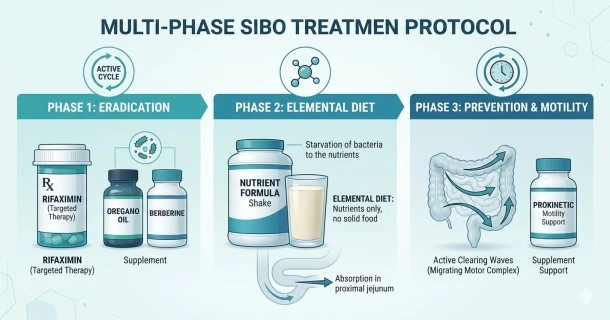
Successful treatment of Small Intestinal Bacterial Overgrowth (SIBO) requires a distinct three-phase strategy: eradicating the bacterial overgrowth, addressing the root cause, and restoring gut motility to prevent chronic relapse. Because SIBO has a high recurrence rate, a temporary course of antibiotics alone is rarely enough for long-term recovery.
The 3 Core Protocols for SIBO Eradication
Gastroenterologists and gut health specialists utilize three primary therapeutic paths to clear overgrown bacteria from the small intestine. The optimal option depends heavily on your specific SIBO subtype.
1. Targeted Antibiotic Therapy
Unlike systemic antibiotics that disrupt the entire colonic microbiome, the standard pharmaceutical treatments for SIBO are largely localized to the small bowel. According to clinical protocols detailed by Medscape, the choice of medication depends entirely on the gases identified during diagnostics:
- Hydrogen-Dominant SIBO: Treated primarily with Rifaximin (typically 550 mg three times a day for 14 days). Rifaximin is bile-activated, meaning it targets the small intestine specifically and has a minimal impact on the colon.
- Methane-Dominant SIBO (IMO): Methanogens are archaea, not bacteria, making them resilient against Rifaximin alone. Treatment requires pairing Rifaximin with either Neomycin or Metronidazole to effectively disrupt gas production.
2. Natural and Herbal Antimicrobial Protocols
For patients who do not tolerate standard prescriptions or experience recurrent failure with pharmaceutical interventions, clinically validated herbal protocols offer an equivalent alternative. Practitioners typically rotate high-potency herbal extracts for 4 to 6 weeks:
- Berberine and Neem: Commonly used to target hydrogen-producing bacteria.
- Allicin (Garlic Extract) and Oregano Oil: Highly effective at breaking down the defenses of methane-producing organisms.
3. The Elemental Diet
The elemental diet is a specialized medical dietary intervention used for severe or highly refractory SIBO cases. Patients consume only pre-digested nutrients in liquid form (amino acids, simple carbohydrates, fatty acids, vitamins, and minerals) for 14 to 21 days. Because these nutrients are absorbed within the first few feet of the small intestine, they completely starve the bacteria living further down.
SIBO Treatment Protocols: A Direct Comparison
| Treatment Path | Best Suited For | Typical Duration | Primary Benefit | Main Drawback |
|---|---|---|---|---|
| Rifaximin Monotherapy | Hydrogen-Dominant SIBO | 14 Days | High localized efficacy; minimal systemic side effects | Expensive without insurance coverage |
| Combination Antibiotics | Methane-Dominant SIBO (IMO) | 14 Days | Effectively targets stubborn methanogen strains | Neomycin carries minor risks of tinnitus/ear toxicity |
| Herbal Antimicrobials | Chronic relapsers; antibiotic sensitivities | 4–6 Weeks | Broad-spectrum action; accessible over-the-counter | Requires a significantly longer treatment window |
| Elemental Diet | Severe cases; multiple antibiotic failures | 14–21 Days | Up to an 80–85% success rate in clinical settings | High cost and difficult dietary compliance |
The Phase 2 Critical Step: Preventing SIBO Recurrence
Clearing the bacteria is only half the battle. To stop SIBO from returning immediately after treatment, you must keep the small intestine clear using prokinetic agents and strategic dietary modifications.
- Prokinetics for Motility Support: Low-dose prescriptions (like Erythromycin or Low-Dose Naltrexone) or natural supplements (like ginger and artichoke extracts) help stimulate the Migrating Motor Complex (MMC) to flush residual bacteria away between meals.
- The Low-FODMAP Diet: Restricting fermentable carbohydrates (Fermentable Oligosaccharides, Disaccharides, Monosaccharides, and Polyols) directly after an eradication protocol helps limit the immediate food supply for any remaining bacteria while the gut lining repairs.
Frequently Asked Questions (SIBO Treatment FAQ)
How fast does Rifaximin work for SIBO?
Some patients report symptom improvements within the first 4 to 7 days of starting Rifaximin. However, it is vital to complete the full 14-day course even if your bloating decreases early, as premature termination can leave resilient bacterial strains behind, increasing the risk of a relapse.
What can I eat during SIBO antibiotic treatment?
Unlike herbal protocols or post-treatment phases, many experts recommend eating a moderate amount of fermentable carbohydrates while taking antibiotics. Active, well-fed bacteria are easier for antibiotics to target and eradicate than dormant bacteria hidden behind protective biofilms.
Are probiotics recommended during or after SIBO treatment?
Probiotics remain highly controversial in SIBO management. Because SIBO is an overgrowth of bacteria in the small intestine, adding billions of additional live bacteria can sometimes worsen gas and bloating. Probiotics are generally avoided until the primary overgrowth is cleared.
What is the success rate of herbal antimicrobials compared to Rifaximin?
Clinical studies show that a structured, high-potency herbal protocol achieves comparable clearance rates to standard Rifaximin therapy. Herbals are particularly useful for mixed-gas presentations or patients who have developed resistance to repeated rounds of standard antibiotics.