
Explore what causes stomach polyps. Learn how chronic gastritis, H. pylori infections, and long-term PPI medication use trigger specific gastric polyps.
Stomach Polyps Causes: Understanding the Cellular Triggers
Stomach polyps (gastric polyps) develop when cells on the inner lining of the stomach multiply abnormally, forming raised masses. Rather than occurring at random, this tissue overgrowth is almost always a direct cellular response to chronic inflammation, tissue damage, or chemical alterations within the gastric environment.
Because different types of polyps are sparked by entirely different biological mechanisms, their causes are divided by their specific clinical types:
1. Causes of Hyperplastic Polyps (Inflammatory Triggers)
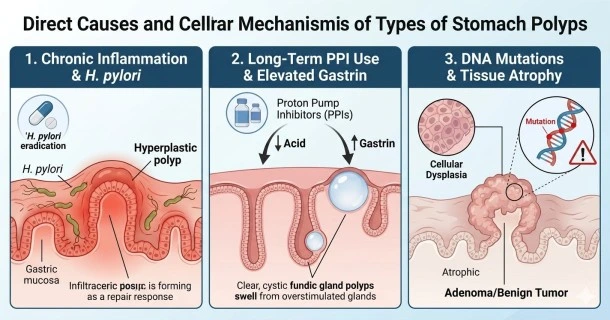
Hyperplastic polyps develop as an involuntary repair mechanism. When the stomach lining faces long-term, unyielding irritation, the body overproduces epithelial cells to protect itself, resulting in a polyp.
- Chronic Gastritis: Long-term inflammation of the stomach mucosa is the primary driving force behind this variety.
- Helicobacter pylori (H. pylori) Infection: This bacterium is the single most common cause of the chronic gastritis that leads to hyperplastic polyps. H. pylori burrows into the mucous layer, triggering a constant immune response that alters cellular growth patterns.
- Autoimmune Gastritis: In some individuals, the body's immune system mistakenly attacks its own parietal cells, causing persistent tissue damage that prompts hyperplastic tissue reactions.
2. Causes of Fundic Gland Polyps (Medication Triggers)
Fundic gland polyps arise from the fluid-secreting glands located in the upper body and dome (fundus) of the stomach. Their primary triggers include:
- Long-Term Proton Pump Inhibitor (PPI) Use: Daily, prolonged use of prescription or over-the-counter acid-reducing medications (such as omeprazole, lansoprazole, or pantoprazole) is heavily linked to these polyps. PPIs block the stomach's acid pumps, which causes the body to over-release a hormone called gastrin. Excess gastrin overstimulates the fundic glands, blocking their fluid outflow and causing them to swell into tiny glandular cysts (polyps).
- Genetic Syndromes: While medication is the most common cause, fundic gland polyps can also be triggered by an inherited genetic gene mutation called Familial Adenomatous Polyposis (FAP).
3. Causes of Gastric Adenomas (Benign Tumors)
Adenomas represent a completely distinct, more concerning pathway. Rather than being a simple inflammatory response or a fluid cyst, an adenoma is a benign neoplastic tumor.
- Atrophic Gastritis and Intestinal Metaplasia: Decades of severe, untreated chronic inflammation (often from severe H. pylori or aging) can cause the normal stomach lining to degrade (atrophy) and begin transforming into cells that resemble the lining of the intestines. This cellular chaos alters DNA structure, giving rise to adenomas.
- High Risk of Malignancy: Because their underlying cause involves direct cellular DNA damage and mutations, adenomas are highly unstable and are the most likely stomach polyp type to progress into malignant stomach cancer.
Frequently Asked Questions (FAQs)
Can your diet cause stomach polyps to develop?
Dietary factors do not directly cause stomach polyps in the way they might cause acid reflux. However, a diet high in heavily salted, preserved, or smoked foods can increase your risk of chronic stomach inflammation and H. pylori complications, which indirectly paves the way for inflammatory or adenomatous polyps to form.
Why exactly do acid reflux medications (PPIs) cause polyps?
Proton Pump Inhibitors (PPIs) turn down the acid production in your stomach. In response, your brain sends signals to release a hormone called gastrin to force the stomach to produce more acid. This chronic elevation of gastrin acts like a growth hormone on the glandular cells of your stomach, causing them to swell up and form fundic gland polyps.
If I treat an H. pylori infection, will my stomach polyps go away?
Yes, if the polyps are hyperplastic polyps. Because hyperplastic polyps are caused entirely by the inflammation triggered by the H. pylori bacteria, completely eradicating the bacteria with a prescribed course of antibiotics removes the trigger. This allows the stomach lining to heal, causing the polyps to shrink or vanish entirely.
Can stomach polyps be passed down through families?
Yes, certain types can. While most polyps are acquired from lifestyle factors or medications, conditions like Familial Adenomatous Polyposis (FAP) are heavily inherited genetic syndromes. Families carrying this genetic mutation often develop hundreds of fundic gland polyps and adenomas across their digestive tracts.