
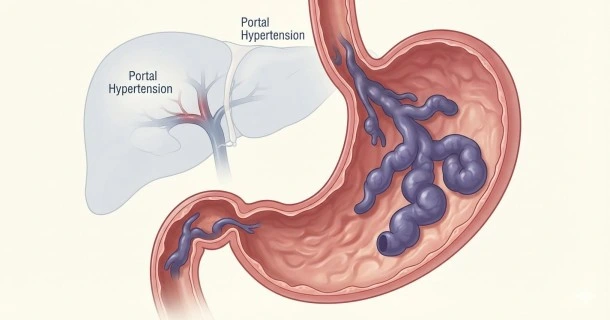
Learn about stomach varices (gastric varices), how they form due to portal hypertension, and how doctors classify these enlarged stomach veins.
Stomach Varices (Gastric Varices): An Essential Guide
Stomach varices, medically referred to as gastric varices, are abnormally dilated, enlarged, or swollen blood vessels that develop in the submucosal lining of the stomach. They primarily form when blood flow through the liver is obstructed, causing a dangerous backup of pressure within your digestive venous network—a condition known as portal hypertension.
While less common than esophageal varices (enlarged veins in the food pipe), stomach varices pose an exceptionally high risk of causing rapid, severe, and potentially life-threatening internal bleeding if they rupture. Understanding how these veins develop and how they are classified is vital for anyone managing chronic liver conditions.
Understanding the Types: How Stomach Varices are Classified
Medical professionals categorise gastric varices using the Sarin Classification System. This system groups them based on their exact location in the stomach and whether they are physically connected to esophageal varices:
1. Gastroesophageal Varices (GOV)
These are extensions of esophageal varices that slide down into the stomach structure.
- GOV1: Varices that extend along the lesser curvature of the stomach. They are the most common sub-type.
- GOV2: Varices that extend toward the fundus (the upper, rounded part of the stomach) near the cardio-esophageal junction.
2. Isolated Gastric Varices (IGV)
These occur entirely within the stomach without any accompanying esophageal varices.
- IGV1: Located strictly in the fundus of the stomach. While less common, these carry a remarkably high risk of severe bleeding.
- IGV2: Located in other distinct regions of the stomach, such as the antrum or body.
Navigating Your Care: Next Steps
Managing gastric varices requires a highly coordinated approach to lower portal venous pressure and safeguard your digestive health. Explore our dedicated resources to completely understand your diagnosis and care options:
- Recognise Stomach Varices Symptoms: Learn the warning signs of a variceal rupture, including hematemesis and melena.
- Learn the Causes of Stomach Varices: Dive deep into how liver cirrhosis, portal vein thrombosis, and blood clots lead to elevated venous pressure.
- Understand Your Risk Factors: Find out what elevates your likelihood of experiencing a variceal rupture or severe hemorrhage.
- How Stomach Varices Are Diagnosed: Learn what to expect during an Upper Endoscopy (EGD) or Doppler ultrasound imaging.
- Explore Advanced Treatment Strategies: Discover preventive medications, cyanoacrylate "glue" injections, and advanced interventional radiology procedures like TIPS or BRTO.
Frequently Asked Questions (FAQs)
Are stomach varices the same as stomach ulcers?
No. Stomach ulcers are open sores that develop on the physical lining of your stomach, usually caused by acid erosion, H. pylori infections, or NSAID medications. Stomach varices are physically engorged, high-pressure blood veins underneath the surface lining.
Can you prevent stomach varices from bleeding?
Yes. If your doctor identifies high-risk varices prior to a rupture, they can initiate primary prophylaxis. This commonly involves prescription medications like nonselective beta-blockers to lower pressure, or scheduling elective endoscopic therapies to proactively protect the blood vessels.
Why are gastric varices considered harder to manage than esophageal varices?
Gastric varices lie beneath a thicker layer of stomach lining, tend to be significantly wider, and receive high volumes of blood flow. Because of this anatomy, standard treatments like elastic band ligation—which work well in the esophagus—are harder to perform securely in the stomach, requiring specialized vascular techniques or tissue glues.