
What causes stomach varices to develop? Learn how portal hypertension, liver cirrhosis, and splenic vein thrombosis create high-pressure gastric veins.
Stomach Varices Causes and Risk Factors
Stomach varices causes are structurally linked to blockages or high pressure within the digestive system's primary venous networks. Medically classified as gastric varices, these abnormal, dilated blood vessels develop in the submucosal lining of the stomach.
They do not appear out of nowhere. Instead, they are secondary complications stemming from underlying vascular or hepatic diseases. Identifying what causes these veins to enlarge and the risk factors that lead to their rupture is essential for preventative care.
Primary Causes: How Gastric Varices Form
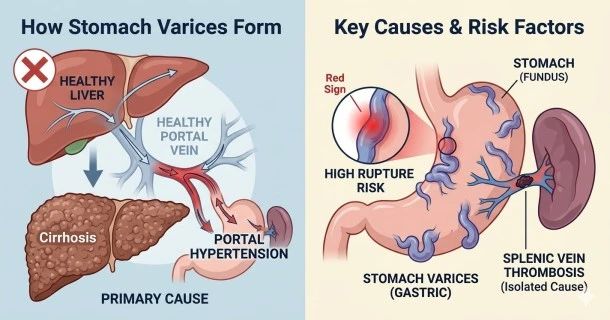
The underlying mechanism behind nearly all stomach varices is a profound alteration in blood pressure within the portal venous system, which routes blood from the digestive organs to the liver.
1. Portal Hypertension
When blood flow through the liver becomes slowed or obstructed, pressure builds up within the portal vein. To bypass this resistance, blood is diverted into smaller, fragile collateral pathways—such as the veins in the stomach lining. Under this intense pressure, these smaller veins balloon into large, thin-walled stomach varices.
2. Liver Cirrhosis
Cirrhosis is the leading clinical cause of portal hypertension and subsequent gastric varices. Chronic, long-term liver damage leads to widespread healthy liver tissue being replaced by permanent scar tissue. This stiff, fibrous scar tissue physically compresses the internal hepatic veins, severely obstructing normal blood flow.
3. Splenic Vein Thrombosis (Left-Sided Portal Hypertension)
Unlike esophageal varices, isolated stomach varices can be caused by a very specific localized vascular issue: a blood clot in the splenic vein (splenic vein thrombosis). Because the veins from the upper part of the stomach drain directly toward the spleen, a blockage here forces blood backward, exclusively engorging the gastric veins while leaving the liver and esophagus unaffected.
Key Risk Factors for Development and Rupture
While underlying vascular blockages cause the varices to form, certain clinical and lifestyle risk factors drastically increase the likelihood of developing them or experiencing a life-threatening rupture.
Medical Risk Factors
- Chronic Hepatitis B or C: Ongoing viral infections that accelerate liver scarring and cirrhosis.
- Alcohol-Associated Liver Disease: Chronic, excessive alcohol use that degrades liver function and promotes severe inflammation.
- Non-Alcoholic Steatohepatitis (NASH / MASH): Advanced fatty liver disease that progresses silently to cirrhosis.
- Pancreatitis: Severe acute or chronic inflammation of the pancreas, which sits directly adjacent to the splenic vein and can trigger blood clots.
Predictors of Variceal Rupture (Bleeding Risk)
Once stomach varices are present, the risk of a catastrophic bleed increases significantly if a patient possesses the following:
- Large Varix Size: Veins that are physically wide and visibly bulging are structurally weaker.
- The "Red Deformity" Sign: Distinct red spots or streaks seen on the varix wall during an endoscopy, indicating the vessel wall is dangerously thin.
- Severe Liver Failure (Child-Pugh Class C): Advanced stages of liver dysfunction impair the body's natural blood-clotting mechanisms, escalating bleeding risks.
Frequently Asked Questions (FAQs)
Can fatty liver disease cause stomach varices?
Yes. If non-alcoholic fatty liver disease progresses to its advanced stage, known as steatohepatitis (NASH/MASH), it causes progressive liver scarring. Once that scarring turns into full cirrhosis, it blocks portal blood flow and triggers stomach varices.
Why does a clot in the splenic vein cause stomach varices?
The spleen and the upper part of the stomach share interconnected blood pathways. When a blood clot blocks the splenic vein, blood can no longer exit properly. It backs up directly into the short gastric veins, causing isolated varices in the fundus of the stomach.
Can lifestyle changes reverse the causes of stomach varices?
While you cannot directly reverse varices once they have formed structurally, treating the root cause can prevent them from worsening or bleeding. Stopping alcohol consumption, managing fatty liver disease through diet, and taking prescribed antiviral medications can reduce liver inflammation and help stabilize portal pressures.