
What do stomach varices feel like? Learn the urgent symptoms of bleeding gastric varices, including black tarry stools and vomiting blood.
Stomach Varices Symptoms: Recognizing the Warning Signs
Stomach varices symptoms are completely unnoticeable until the enlarged gastric veins rupture and begin to bleed. Because these swollen blood vessels hidden deep within the stomach lining do not cause any localized pain, indigestion, or physical discomfort on their own, they are widely considered a silent condition.
When the pressure within these veins becomes too high, they can leak or burst. A bleeding gastric varix is a severe, life-threatening medical emergency that requires immediate intervention.
Emergency Symptoms: Signs of a Variceal Rupture
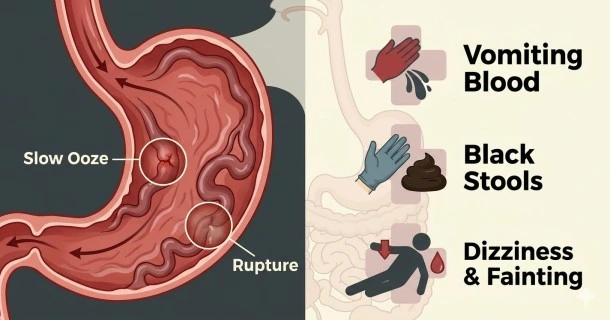
If a stomach varix ruptures, the internal bleeding is usually rapid and heavy. Seek emergency medical care immediately if you or a loved one experience any of the following acute symptoms:
- Vomiting Blood (Hematemesis): Discharging bright red blood. It may also look like dark coffee grounds.
- Black, Tarry Stools (Melena): Passing dark, foul-smelling, sticky feces. This is caused by altered blood passing through the digestive tract.
- Bloody Stools (Hematochezia): Passing maroon or bright red blood. This occurs during massive, rapid internal bleeding.
- Severe Dizziness: Feeling suddenly lightheaded or faint. This happens due to a rapid drop in blood pressure.
- Fainting (Syncope): Losing consciousness unexpectedly.
- Signs of Shock: Experiencing cold, clammy skin. Rapid breathing and a weak, fast pulse are also key indicators.
Subtle Symptoms: Signs of a Slow Variceal Leak
In some cases, stomach varices do not burst catastrophically. Instead, they may develop a small, slow ooze. This chronic blood loss can cause gradual symptoms over time:
- Unexplained Fatigue: Feeling constantly exhausted or weak.
- Chronic Anemia: Having a low red blood cell count. This is often caught during routine blood tests.
- Pale Skin (Pallor): Looking unusually pale in the face, lips, or fingernails.
- Shortness of Breath: Feeling winded during mild physical activities.
Overlapping Symptoms of Portal Hypertension
Because stomach varices are caused by high pressure in the portal vein system (usually due to liver cirrhosis), patients often experience accompanying symptoms of advanced liver disease. These include fluid buildup in the abdomen (ascites), yellowing of the skin and eyes (jaundice), and mental confusion (hepatic encephalopathy).
Frequently Asked Questions (FAQs)
Can you feel stomach varices before they start to bleed?
No. You cannot feel stomach varices physically. They do not cause nausea, stomach aches, cramping, or bloating. They are typically only discovered during an upper endoscopy or after a bleeding episode occurs.
What does bleeding from stomach varices feel like?
A patient will not feel the actual vein tearing. Instead, they will suddenly feel intensely dizzy, nauseous, or sweaty. This is quickly followed by vomiting blood or passing black, tarry stools as the stomach fills with blood.
How quickly do stomach varices symptoms escalate?
Symptoms can escalate within minutes. Because gastric veins are large and carry high-pressure blood, a rupture can cause sudden, massive blood loss leading to cardiovascular shock very quickly.