
Explore advanced stomach varices treatment options. Learn about BRTO, cyanoacrylate tissue glue injection, TIPS, and long-term portal pressure management.
Stomach Varices Treatment and Management Risks
Stomach varices treatment requires specialized interventions to manage high-pressure blood vessels and prevent life-threatening internal bleeding. Medically known as gastric varices, these swollen veins are structurally complex and require distinct management strategies compared to esophageal varices.
Modern medicine approaches gastric varices by separating care into two primary goals: proactively preventing an initial rupture (primary prophylaxis) and stopping acute, active hemorrhages (emergency management).
Primary Treatment Options for Gastric Varices
Because stomach varices are typically buried deep within thick gastric tissue and carry high blood volumes, specialized therapeutic options are required:
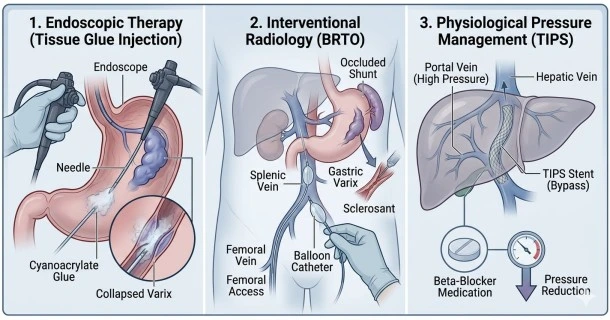
1. Endoscopic Cyanoacrylate Injection (Tissue Glue)
This is a first-line endoscopic intervention for isolated stomach varices. A gastroenterologist uses an endoscope to inject a specialized medical-grade cyanoacrylate glue directly into the dilated vein. The glue polymerizes almost instantly upon contact with blood, completely blocking off the varix and stopping or preventing blood flow through the weakened vessel wall.
2. Balloon-Occluded Retrograde Transvenous Obliteration (BRTO)
BRTO is an advanced interventional radiology procedure highly effective for isolated gastric varices. A small catheter is guided through the veins into the abnormal vascular pathways (specifically gastrorenal shunts) connecting to the stomach. A balloon is inflated to isolate the area, and a specialized sclerosing medication is injected to collapse and scar the stomach varices.
3. Transjugular Intrahepatic Portosystemic Shunt (TIPS)
TIPS is an advanced radiological procedure used to treat the root cause of stomach varices: portal hypertension. A radiologist creates a synthetic tunnel (stent) inside the liver to link the portal vein with the hepatic vein. This bypass unblocks the blood flow, instantly lowering overall abdominal venous pressure and causing the stomach varices to shrink over time.
4. Nonselective Beta-Blockers (NSBBs)
For stable patients with small or moderate varices, daily oral medications like carvedilol or propranolol are prescribed. These medications work systemically to reduce heart rate and dilate blood vessels, lowering the baseline pressure within the portal vein network.
Key Risks and Complications of Treatment
While these advanced clinical interventions are essential for saving lives, each procedure carries specific medical risk factors that must be weighed by your care team:
- Glue Embolization: During cyanoacrylate tissue glue injections, there is a small risk that fragments of the hardening glue can travel through the circulatory system, potentially causing a blockage (embolism) in the lungs or brain.
- Hepatic Encephalopathy: Because a TIPS procedure reroutes blood around the liver, toxins like ammonia are no longer filtered efficiently. This buildup can pass into the bloodstream and cause temporary mental confusion, memory issues, or lethargy.
- Stent Occlusion: Over time, the synthetic shunt placed during a TIPS procedure can become narrowed or blocked by tissue buildup, requiring a follow-up outpatient procedure to clear it.
Frequently Asked Questions (FAQs)
Can stomach varices be treated with standard band ligation?
While endoscopic variceal ligation (rubber band clipping) is the gold standard for esophageal varices, it is less effective for stomach varices. Gastric varices are wider, have thicker overlying tissue, and carry high blood flow volumes. Banding them carries a high risk of the bands slipping off prematurely, which can cause severe, immediate bleeding.
How long does recovery take after a BRTO procedure?
A BRTO procedure is minimally invasive and typically requires an overnight hospital stay for close monitoring. Most patients can return to mild daily activities within a few days, though heavy lifting and intense exertion should be avoided for a couple of weeks based on your physician's guidance.
Does treating liver cirrhosis cure stomach varices?
Treating the underlying cause of liver damage (such as using antiviral medications for Hepatitis C or completely stopping alcohol use) can stabilize liver health and lower portal vein pressure. While this significantly reduces the risk of the varices bleeding, structural vein changes often remain, meaning regular endoscopic surveillance is still necessary.