
What are the signs of tropical sprue? Learn to recognize chronic gastrointestinal symptoms, stool changes (steatorrhea), and systemic nutrient deficiencies.
Understanding Tropical Sprue Symptoms and Signs
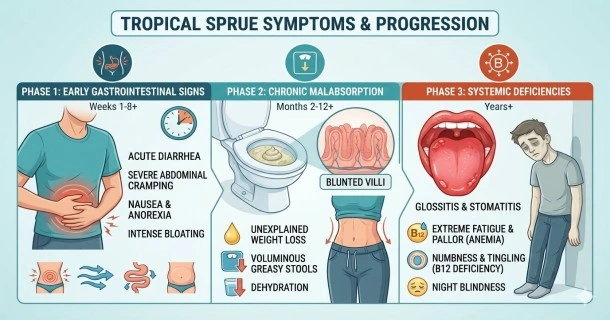
The clinical presentation of Tropical Sprue is characterized by a progression from acute gastrointestinal distress to chronic small bowel malabsorption and severe systemic nutrient depletion. Because this disorder damages the inner mucosal lining of the small intestine, it halts the body's capability to absorb liquids, macronutrients, and vitamins.
Symptoms can manifest as early as a few days following travel or exposure to an endemic tropical region, but they frequently delay their onset for months or even years. Knowing how to identify the signs of this rare condition is essential for securing a prompt, curative medical diagnosis.
Phase 1: Early Gastrointestinal Symptoms
In its initial stages, the presentation of tropical sprue frequently mimics a standard bout of infectious gastroenteritis or "traveler's diarrhea". However, unlike typical food poisoning which resolves independently, these intestinal symptoms fail to normalize:
- Persistent Watery Diarrhea: Frequent, loose bowel movements that do not abate with traditional over-the-counter anti-diarrheal treatments.
- Abdominal Cramping & Fullness: Persistent, generalized pain concentrated primarily around the periumbilical region (belly button), signaling inflammation of the small bowel.
- Intense Bloating & Borborygmi: Noticeable abdominal distension accompanied by loud, hyperactive gurgling or rumbling noises from gas moving through the damaged gut.
- Nausea & Anorexia: A distinct loss of appetite combined with mild, lingering nausea that reduces overall food intake.
Phase 2: Chronic Malabsorptive Signs
As the disease progresses and structurally flattens the intestinal villi, the small bowel loses its functional surface area. The body is no longer capable of reabsorbing fats, carbohydrates, and liquids, leading to clear malabsorptive signs:
- Steatorrhea (Greasy Stools): Stools become voluminous, foul-smelling, light-colored, and noticeably greasy. They typically float in the toilet bowl and are difficult to flush due to unabsorbed dietary fat passing entirely through the GI tract.
- Unexplained Weight Loss: Rapid, unintentional wasting of body mass caused by the absolute failure to process macronutrients.
- Dehydration & Electrolyte Imbalance: Prolonged fluid loss that leaves individuals suffering from chronic thirst, dry skin, and muscle weakness.
Phase 3: Systemic Vitamin Deficiency Indicators
The most dangerous tier of tropical sprue symptoms stems from long-term, profound nutritional deficiencies. Because the jejunum and ileum are progressively compromised, the body runs completely out of crucial water-soluble vitamins, primarily folate (vitamin B9) and vitamin B12:
| Deficient Nutrient | Secondary Symptom/Sign | Clinical Presentation & Description |
|---|---|---|
| Vitamin B12 & Folate | Megaloblastic Anemia | Causes extreme fatigue, visible skin pallor, shortness of breath, and exertional dyspnea. |
| Folic Acid / B-Complex | Glossitis & Stomatitis | The tongue becomes bright red, swollen, and painfully smooth; sores or fissures appear at the corners of the mouth (cheilitis). |
| Protein / Macronutrients | Pedal Edema | Fluid retention causing visible swelling in the feet, ankles, and lower legs due to lowered serum albumin levels. |
| Niacin (Vitamin B3) | Casal Necklace | A distinct, hyperpigmented, rough rash that forms symmetrically around the neck area. |
| General Nutrition | Systemic Malnutrition | Manifests as chronic cold intolerance, high irritability, poor wound healing, and a weakened immune system prone to recurrent infections. |
Frequently Asked Questions (FAQs)
How long after visiting a tropical country do tropical sprue symptoms start?
The timeline varies drastically. While some individuals develop acute diarrhea within their first few weeks in a tropical climate, many do not experience the hallmark malabsorption signs until months, or even years, after they have returned to a non-tropical location.
What do tropical sprue stools look like?
In the chronic stage, stools present as classic steatorrhea. They are typically bulky, loose, pale or clay-colored, and oily or greasy in appearance. Because of the high unabsorbed fat content, they emit an intensely foul odor and routinely float.
Can tropical sprue symptoms cause neurological issues?
Yes, indirectly. If the condition is left untreated for an extended duration, the profound depletion of vitamin B12 can eventually result in neurological complications. This includes numbness or a "pins and needles" tingling sensation in the hands and feet (peripheral neuropathy), cognitive sluggishness, and poor concentration.
How do doctors tell the difference between tropical sprue and chronic parasite symptoms?
Because parasitic infections like Giardiasis also cause greasy stools and lingering diarrhea, a conclusive diagnosis requires strict exclusion. Physicians utilize comprehensive stool cultures and microscopic tests to rule out active parasites, alongside an endoscopic biopsy showing structural villous atrophy to confirm tropical sprue.