
What is the standard treatment for tropical sprue? Read our clinical guide on antibiotic therapies, high-dose vitamin supplementation, and mucosal healing timelines.
Tropical Sprue Treatment: Antibiotics and Nutritional Recovery Protocol
The medical treatment of Tropical Sprue is highly effective and aims to eradicate underlying small bowel bacterial overgrowth while correcting profound systemic nutrient malabsorption. Unlike chronic autoimmune digestive diseases that require lifelong restriction or therapy, Tropical Sprue is entirely curable.
A standard clinical intervention utilizes a dual approach: a long-term course of broad-spectrum oral antibiotics alongside aggressive replenishment of critical water-soluble vitamins.
Step 1: Broad-Spectrum Antibiotic Therapy
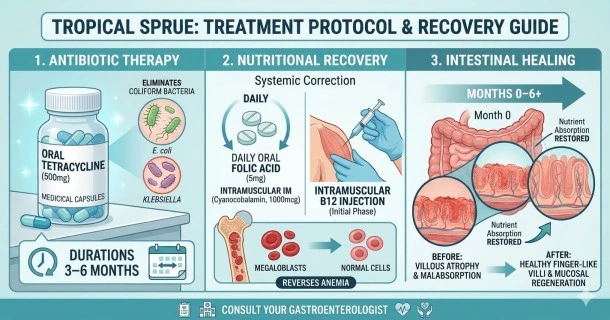
To eliminate the chronic colonization of toxigenic coliform bacteria (such as E. coli and Klebsiella) within the small intestine lumen, targeted antimicrobial therapy is mandatory:
- First-Line Standard Regimen: Tetracycline (typically administered orally at 250 mg to 500 mg four times daily) is classically prescribed for a duration of 3 to 6 months depending on disease severity.
- Alternative Interventions: For individuals with tetracycline contraindications (such as pregnant patients, nursing mothers, or young children) or those displaying intolerance, clinicians regularly opt for Doxycycline, Sulfamethoxazole-Trimethoprim (Co-trimoxazole), or non-absorbable options like Rifaximin.
Step 2: High-Dose Nutritional Supplementation
Because the flattened intestinal villi compromise the terminal segments of the small bowel, immediate nutritional support is critical to reverse systemic deficiencies and drive mucosal tissue regeneration:
- Folic Acid (Vitamin B9): Administered orally at 5 mg per day for up to 6 months. This high dose bypasses damaged mucosal receptors, treats underlying megaloblastic anemia, and gives the enterocytes the essential cofactors needed to rebuild healthy, finger-like villi.
- Vitamin B12 (Cyanocobalamin): Due to active mucosal atrophy in the distal ileum, oral B12 cannot be adequately absorbed initially. It is typically administered via intramuscular (IM) injections (1,000 mcg weekly for the first month, transitioning to monthly injections) until intestinal transport mechanics normalize.
- Fluid & Electrolyte Correction: In severe, acute cases presenting with profound malabsorptive steatorrhea, initial intravenous hydration may be indicated to stabilize fluid volumes and electrolyte balances before oral regimens begin.
Step 3: Assessing Clinical Milestones and Recovery
Patients typically demonstrate an encouragingly rapid initial response to this therapeutic combination:
| Timeline / Phase | Expected Clinical Milestone | Underlying Physiology |
|---|---|---|
| Weeks 1 – 2 | Significant reduction in watery diarrhea and abdominal cramping. | The antibiotic reduces toxic bacterial loads; fluid reabsorption improves. |
| Weeks 3 – 4 | Resolution of skin pallor and exhaustion; rise in reticulocyte count. | Systemic folate and B12 clear the megaloblastic blocks in bone marrow cells. |
| Months 3 – 6 | Steady weight gain, resolution of steatorrhea, and normalization of stool texture. | Small bowel villi structurally lengthen, restoring complete macronutrient uptake. |
Managing Recurrence: Triggers to Avoid
While a single standard course usually yields a permanent cure for short-term travelers, long-term expatriates or residents living in endemic zones face a notable risk of relapse:
- Re-exposure Triggers: Returning directly to environments with sub-optimal water sanitation infrastructures can cause a secondary acute bacterial infection, starting the post-infectious loop over again.
- Long-Term Prevention: Patients recovering from Tropical Sprue should strictly practice safe food and water habits. This includes drinking bottled or boiled water, avoiding raw or unpeeled produce, and maintaining excellent hand hygiene protocols.
Frequently Asked Questions (FAQs)
Can Tropical Sprue be treated with a gluten-free diet?
No. While the small bowel tissue damage in Tropical Sprue looks visually similar to Celiac disease under a microscope, it is completely independent of dietary gluten. Eliminating gluten will not resolve the underlying bacterial overgrowth or treat the condition; antibiotics and targeted vitamin therapies are required.
Why do antibiotics need to be taken for several months?
Short courses of antibiotics (such as a 3-day or 5-day regimen used for traveler's diarrhea) only address superficial, acute infections. In Tropical Sprue, the coliform bacteria have deeply disrupted the small bowel's ecosystem over time. A prolonged 3-to-6-month course ensures these bacterial colonies are fully cleared while giving the damaged mucosal lining enough time to structurally regenerate.
What happens if a patient cannot tolerate Tetracycline?
If a patient experiences side effects or has contraindications to Tetracycline, physicians can substitute it with alternative broad-spectrum antibiotics. Doxycycline is a common option, as are trimethoprim-sulfamethoxazole or rifaximin, all of which successfully target the causative coliform bacteria.
Is it safe to stop taking vitamin supplements once diarrhea stops?
No. The resolution of diarrhea is simply an early indicator that the bacterial load is decreasing. Systemic tissue stores of folate and vitamin B12 take several months of consistent supplementation to fully rebuild, and stopping vitamins too early can lead to a return of megaloblastic anemia or lingering fatigue.