
Discover effective lifestyle changes to reduce GERD and heartburn. Learn about optimal sleep positioning, eating habits, and stress management for reflux relief.
Essential Lifestyle Modifications for GERD and Heartburn Relief
While clinical interventions and medications are highly effective at suppressing stomach acid, lifestyle modifications form the foundational cornerstone of long-term Gastroesophageal Reflux Disease (GERD) management. Making targeted adjustments to how you eat, sleep, move, and rest can significantly reduce the physical workload on your lower esophageal sphincter (LES) and lower the frequency of acid backup.
Implementing these behavioral shifts can help minimize your reliance on higher doses of medication and accelerate the natural healing of the esophageal lining.
Mealtime Habits and Dietary Mechanics
The physical volume and composition of what enters your stomach directly impacts how hard your esophageal valve has to work.
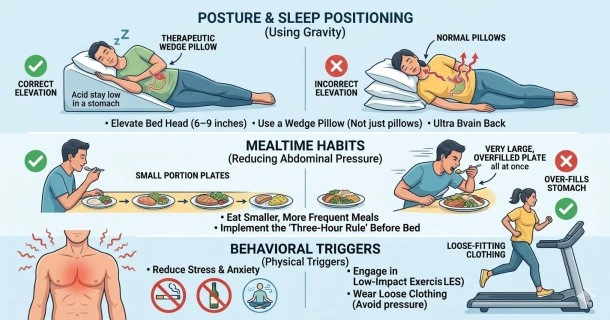
- Practice Smaller, More Frequent Meals: Consuming large portions stretches the stomach lining, creating immediate mechanical pressure that forces the LES valve to open. Transitioning to smaller meals spaced throughout the day keeps stomach volume at a safe level.
- Implement the "Three-Hour Rule" Before Bed: Avoid eating any food or heavy snacks within three hours of going to sleep. Lying down flat with a full stomach removes the natural asset of gravity, allowing stomach contents to press directly against the LES.
- Chew Thoroughly and Mindfully: Digestion begins in the mouth via salivary enzymes. Chewing food to a smooth consistency ensures that the stomach can process and empty its contents much more rapidly, minimizing the time acid spends sitting in the stomach cavity.
- Manage Fluid Intake Volumes: While sipping water during meals is perfectly healthy, drinking large volumes of beverages can unnecessarily expand the overall volume of the stomach, increasing upward pressure. Try consuming your primary fluids between meals rather than during them.
GERD Trigger Foods (Foods to Minimize)
Certain categories of foods are clinically proven to aggravate acid reflux symptoms. They generally trigger symptoms through two pathways: by chemically relaxing the lower esophageal sphincter (LES) or by delaying stomach emptying, which increases internal pressure.
- High-Fat and Fried Foods: French fries, heavy cuts of red meat, fast food, and full-fat dairy delay gastric emptying. When food sits in the stomach longer, pressure builds up against the LES, increasing the likelihood of acid leakage.
- Caffeine and Chocolate: Coffee, energy drinks, and chocolate contain chemical compounds (like methylxanthines) that directly relax the smooth muscle tissue of the LES.
- Citrus Fruits and Tomato Products: Oranges, grapefruits, lemons, tomato sauces, and salsas are highly acidic by nature. While they do not necessarily relax the sphincter, they cause intense, direct chemical irritation when they come into contact with an already inflamed esophageal lining.
- Peppermint, Garlic, and Onions: Though healthy in other contexts, these ingredients contain volatile oils and compounds known to reduce the resting pressure of the esophageal valve, making backflow much easier.
- Carbonated Beverages: Fizzy sodas and sparkling waters introduce gas bubbles into the stomach. This expands stomach volume (gastric distension), forcing the LES to open to release air, which brings acid along with it.
GERD Supporting Foods (Foods to Include)
Supporting foods do not mechanically block acid reflux, but their chemical composition helps neutralize excess gastric juices, absorb acid safely, or move food quickly through the digestive tract.
- High-Fiber Foods: Whole grains (like oatmeal, brown rice, and whole-wheat bread), root vegetables (sweet potatoes, carrots), and green vegetables supply dense fiber. Fiber promotes optimal gut motility, preventing delayed stomach clearance.
- Alkaline Foods: Foods with a higher pH value can help offset strong stomach acid. Excellent options include melons, bananas, fennel, cauliflower, and nuts.
- Watery Foods: Foods with high water content can dilute gastric juices slightly and keep the body hydrated. Celery, cucumbers, lettuce, and watermelons are gentle on a sensitive digestive tract.
- Lean Proteins: Chicken breast, turkey, fish, tofu, and egg whites provide crucial nutrients without the excessive fat content that stalls digestion. Baking, grilling, or broiling these proteins is ideal.
Posture and Sleep Positioning
Physical alignment plays a massive role in whether gastric juices stay contained or travel upward.
- Elevate the Head of Your Bed: Nighttime reflux is particularly destructive because acid can sit in the esophagus for hours. Elevating the head of your bed by 6 to 9 inches using solid bed risers or a specialized therapeutic wedge pillow uses gravity to keep acid down. Simply stacking regular pillows is ineffective, as it bends the neck and can compress the abdomen.
- Maintain an Upright Posture After Eating: Avoid slouching, reclining, or bending over for at least two hours following a meal. Sitting or standing straight ensures that gravity works in your favor while primary digestion takes place.
- Wear Loose-Fitting Clothing: Restrictive clothing, shapewear, and tight belts apply external pressure to the abdomen, physically squeezing the stomach and pushing acid upward through the LES.
Behavioral and Lifestyle Triggers
Systemic factors can directly weaken the physical integrity of the esophageal sphincter.
- Quit Smoking and Minimize Alcohol: Both nicotine and alcohol acts as direct smooth-muscle relaxants that lower the resting pressure of the LES, creating an easy pathway for acid reflux.
- Incorporate Stress Management Techniques: Chronic stress causes the nervous system to hyper-sensitize pain receptors in the esophagus, making even minor reflux feel intensely painful. Utilizing regular relaxation methods like mindfulness, yoga, or deep-breathing exercises can reduce symptom severity.
- Engage in Moderate, Low-Impact Exercise: Regular physical activity supports healthy digestion and aids in weight management, which directly reduces abdominal pressure. However, avoid high-impact jumping, heavy weightlifting, or intense bending immediately after eating, as these can mechanically induce reflux.
Overview of Multi-Faceted GERD Management Options
Effectively managing chronic acid reflux involves exploring multiple clinical pathways tailored to your unique biology:
- Targeted Dietary Guidance: Systematically identifying and removing personal trigger foods (such as high-fat meals, chocolate, caffeine, and citrus) while introducing gut-supportive options.
- Medical Evaluation of Current Prescriptions: Certain daily medications for asthma, blood pressure, or anxiety can relax smooth muscle tissue and worsen reflux. Review your full medication list with a physician to see if alternative options are available.
- Supervised Acid Suppression: Utilizing short-term or maintenance over-the-counter and prescription therapeutic strategies, such as H2 blockers or Proton Pump Inhibitors (PPIs), to facilitate tissue healing when lifestyle changes alone aren't enough.
Note: Please make sure to double-check the physical labels and documentation of any current daily medications to confirm their known side effects, and never alter a prescribed medication protocol without explicit guidance from your healthcare provider.
Frequently Asked Questions (FAQs)
Why can't I just stack extra standard pillows to stop nighttime reflux?
Stacking normal pillows only elevates your head and bends your neck, which can actually curve your torso and compress your stomach, increasing intra-abdominal pressure. To effectively stop reflux, your entire upper chest and torso must be elevated at a continuous slant using structural bed risers or a firm wedge pillow.
Does drinking water during a meal really dilute your stomach acid?
No, this is a common myth. The human stomach is highly adaptive and dynamically regulates its internal environment; drinking normal amounts of water with a meal will not dilute your digestive enzymes or stomach acid to a degree that impairs digestion. However, drinking excessive amounts can over-fill the stomach, creating physical pressure against the esophageal valve.
How does losing weight help reduce GERD symptoms?
Excess weight around the midsection acts as a physical weight pressing down on your abdominal organs. This continuous pressure forces the contents of your stomach upward against the lower esophageal sphincter, making it much easier for acid to leak through. Losing even a modest amount of weight can noticeably relieve this structural pressure.