
Compare the main types of GERD medications. Learn how antacids, H2 blockers, PPIs, and mucosal protectants work to manage chronic acid reflux safely.
Gastroesophageal Reflux Disease (GERD) Medications and Treatments
When lifestyle modifications alone do not provide adequate relief from chronic acid reflux, pharmacological management becomes the next step in treating Gastroesophageal Reflux Disease (GERD). Medical therapies primarily focus on neutralizing stomach acid, reducing acid production, or physically protecting the delicate lining of the esophagus.
Because different drug classes target distinct digestive mechanisms, finding the right treatment plan requires understanding how these medications function and how to use them safely under medical supervision.
Classes of GERD Medications
Gastroenterologists categorize medical reflux treatments into several primary classes based on their active chemical roles in the gastrointestinal tract.
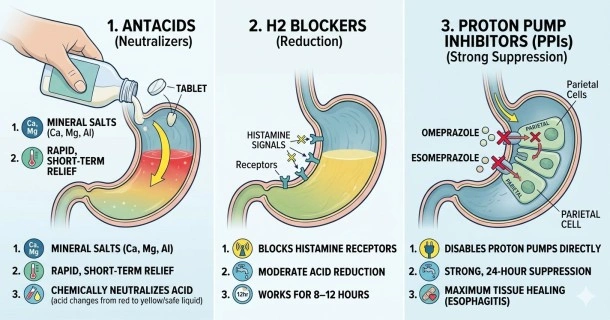
1. Antacids (Acid Neutralizers)
Antacids are designed for immediate, short-term relief of occasional heartburn.
- Mechanism of Action: They utilize basic mineral salts—such as magnesium hydroxide, calcium carbonate, and aluminum hydroxide—to chemically neutralize existing hydrochloric acid within the stomach cavity.
- Considerations: Antacids do not reduce acid production or heal an inflamed esophagus. Side effects vary by mineral; magnesium can cause diarrhea, whereas calcium and aluminum can cause constipation. Brand combinations often balance these minerals to minimize bowel disruption.
2. H2 Receptor Antagonists (H2 Blockers)
H2 blockers provide moderate, longer-lasting relief than antacids and are suitable for mild to moderate GERD symptoms.
- Mechanism of Action: These agents—including famotidine and cimetidine—block specific histamine receptors on parietal cells, signaling the stomach to produce less acid. They provide up to 12 hours of acid suppression.
- Considerations: They are effective at controlling both baseline acid production and meal-stimulated reflux. However, some individuals can develop a tolerance (tachyphylaxis) to H2 blockers if used continuously over long periods.
3. Proton Pump Inhibitors (PPIs)
PPIs are the most potent acid-suppressing medications available and serve as the cornerstone therapy for severe GERD, erosive esophagitis, and complications like Barrett's esophagus.
- Mechanism of Action: Compounds such as omeprazole, esomeprazole, lansoprazole, and pantoprazole directly disable the microscopic acid pumps (proton pumps) within the stomach lining. This significantly lowers overall acid volume, allowing damaged tissue time to heal.
- Considerations: PPIs are most effective when taken consistently 30 to 60 minutes before the first meal of the day.
4. Mucosal Protective Agents and Surface Barriers
These therapies focus on physical tissue protection rather than altering stomach chemistry.
- Foaming Barriers (Alginates): Formulations containing sodium alginate create a physical, buoyant gel raft that floats on top of the stomach contents, mechanically blocking acid from entering the esophagus.
- Cytoprotective Agents: Medications like sucralfate form a thick, protective paste over open ulcers or raw erosions. Because sucralfate requires an acidic environment to bind effectively to damaged tissue, it should generally not be taken at the exact same moment as heavy antacids or strong acid suppressants.
5. Prokinetic Agents (Motility Enhancers)
Prokinetics help clear the stomach more rapidly, minimizing the volume available for reflux. Due to potential side effects affecting the nervous system (such as fatigue or movement disorders), modern prokinetics like metoclopramide or domperidone are tightly regulated and reserved for specific cases like gastroparesis. Older options like cisapride have been largely removed from standard use due to cardiovascular safety concerns.
Long-Term Considerations and Safety Guidelines
While acid-suppressing therapies are vital for preventing severe complications, chronic, unmonitored use over several years requires careful medical tracking:
- Nutrient Malabsorption Risks: Prolonged reduction of stomach acid can lower the absorption efficiency of essential micronutrients, particularly Vitamin B12, calcium, and magnesium.
- Bone Health: Epidemiological studies indicate that long-term, high-dose PPI use may correlate with an increased risk of bone density loss or fractures, secondary to altered calcium metabolism.
- Infection Vulnerability: Stomach acid serves as a natural biological filter against ingested pathogens. Long-term acid suppression slightly alters the digestive microflora, which can occasionally increase a patient's vulnerability to gastrointestinal infections like Clostridium difficile or mild respiratory micro-aspiration risks.
Note: Always double-check the physical label and manufacturer instructions of any over-the-counter or prescription GERD medication to confirm accurate dosages, timing constraints, and listed warnings.
Long-Term Management and Untreated GERD Risks
Ignoring severe, chronic reflux or relying solely on short-term antacids to mask persistent pain can lead to serious physical complications. Over time, constant exposure to gastric acid can permanently alter the anatomy of the esophagus. Potential progressive risks include:
- Esophageal Strictures: Chronic inflammation causes scar tissue to form, progressively narrowing the esophagus and creating a physical obstacle that makes swallowing difficult.
- Esophageal Ulcers: Deep, painful sores that can bleed, making swallowing painful and potentially leading to localized tissue damage.
- Barrett’s Esophagus: A condition where the chronic cellular lining of the esophagus changes to resemble the lining of the intestine. This shift requires routine monitoring via upper endoscopy, as it represents a primary pre-cancerous risk factor for esophageal adenocarcinoma.
An integrated management pathway involves working closely with a gastroenterologist to combine lifestyle shifts, targeted medication windows, and regular monitoring to maintain optimal upper digestive health.
Frequently Asked Questions (FAQs)
What is the main difference between an H2 blocker and a PPI?
H2 blockers reduce acid production by blocking histamine signals to stomach cells, offering relatively fast relief that lasts for about 8 to 12 hours. Proton Pump Inhibitors (PPIs) shut down the actual acid-producing pumps directly, providing much stronger, 24-hour acid suppression that is ideal for tissue healing but takes a few days of consistent use to reach full efficacy.
When is the best time of day to take a PPI medication?
To achieve optimal acid suppression, most standard PPIs should be taken on an empty stomach roughly 30 to 60 minutes before your first meal of the day (usually breakfast). This timing ensures the medication is fully absorbed and present in the bloodstream exactly when your stomach's proton pumps turn on to digest food.
Can I stop taking my daily PPI medication suddenly?
Stopping a daily PPI abruptly after weeks or months of continuous use can cause a phenomenon known as "rebound acid hypersecretion." This occurs because the stomach overcompensates for the sudden removal of the medicine by producing temporary surges of excess acid, causing severe heartburn symptoms to return. It is best to work with a doctor to gradually taper the dose down.