
Explore the most common symptoms of Gastroesophageal Reflux Disease (GERD). Learn to identify atypical signs like chronic cough, sore throat, and chest tightness.
Recognizing Gastroesophageal Reflux Disease (GERD) Symptoms
Gastroesophageal Reflux Disease (GERD) presents with a wide variety of symptoms. While many individuals associate chronic acid reflux exclusively with a burning sensation in the chest, the condition can manifest in less obvious ways, affecting the throat, mouth, and respiratory system.
Identifying these signs early is important for seeking appropriate care and avoiding long-term complications.
Typical Esophageal Symptoms of GERD
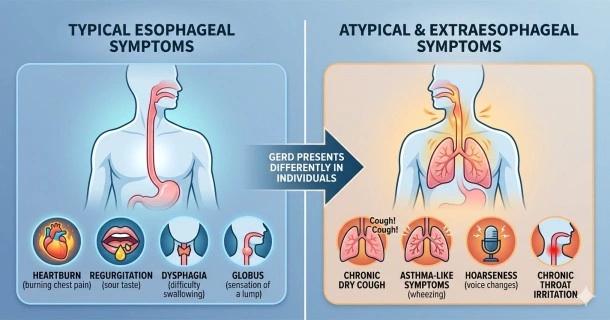
The most frequent signs of GERD involve direct chemical irritation of the esophagus by backflowing gastric acid.
- Heartburn: A sharp, burning chest pain located behind the breastbone. It typically intensifies after eating, when bending over, or while lying flat in bed.
- Regurgitation: The effortless backflow of partially digested food or bitter, sour-tasting stomach acid into the throat or mouth.
- Dysphagia: Difficulty swallowing or a sensation that food is moving too slowly down the esophagus, often caused by chronic tissue swelling or narrowing over time.
- Globus Sensation: The persistent feeling of having a lump in the throat, or feeling as though food is stuck in the chest, despite no physical blockage being present.
Atypical and Extraesophageal Symptoms
When stomach contents travel past the upper esophageal sphincter, they can irritate structures outside the digestive tract. These are often referred to as extraesophageal or "silent reflux" symptoms because they may occur without obvious heartburn.
Respiratory Signs
- Chronic Dry Cough: A persistent cough triggered by acid micro-aspiration (tiny amounts of acid entering the airways) or a nerve reflex caused by esophageal irritation.
- Asthma-Like Symptoms: Wheezing, shortness of breath, or bronchial spasms. In individuals with underlying asthma, acid reflux can frequently aggravate or exacerbate airway reactivity.
- Hoarseness and Voice Changes: A raspy or strained voice, particularly noticeable upon waking in the morning, caused by acid vapor irritating the vocal cords during sleep.
Throat and Oral Manifestations
- Chronic Throat Irritation: A frequently sore, dry, or raw throat. Some individuals experience waking up choking or coughing abruptly during the night.
- Sour or Bitter Taste: A recurring unpalatable taste in the mouth that persists throughout the day.
- Dental and Oral Issues: While not a direct cause of infection, severe acid reflux can wear away protective tooth enamel over time, potentially leading to increased tooth sensitivity or secondary gum irritation.
- Nausea and Upper Abdominal Fullness: Early satiety, frequent belching, or a general sense of bloating following regular meals.
GERD Symptoms in Children and Specific Populations
Symptoms can present differently depending on age. Children under the age of 12, as well as some adults, frequently experience GERD without classic heartburn. Instead, their primary clinical signs may look like a recurrent respiratory issue, persistent dry coughing, or sudden nutritional issues from feeding difficulties.
Note: Chest pain can indicate a serious cardiovascular event rather than digestive issues. If you experience severe chest pain, tightness, or pain radiating to your arm or jaw, seek emergency medical evaluation immediately.
Frequently Asked Questions (FAQs)
Can you have GERD without experiencing heartburn?
Yes. This presentation is often referred to as atypical GERD or Laryngopharyngeal Reflux (LPR). Individuals may only experience respiratory or throat symptoms, such as a chronic cough, frequent throat clearing, or hoarseness, without the classic burning chest sensation.
Why do GERD symptoms worsen when lying down or bending over?
When you stand or sit upright, gravity naturally helps keep acidic stomach contents down in the stomach. When you lie flat or bend forward, you lose this gravitational advantage, making it much easier for acid to slip past a compromised lower esophageal sphincter into the esophagus.
How do I know if my chronic cough is caused by acid reflux?
If a persistent dry cough does not respond to standard allergy or respiratory treatments, or if it worsens at night and after heavy meals, it may be linked to GERD. A healthcare provider can perform diagnostic tests to confirm if acid irritation is the primary trigger.